Loading component...
At a glance
- The CFO role is shifting quickly toward AI fluency, systems leadership and greater strategic foresight.
- ESG, ethics and data governance are rapidly becoming core elements of financial stewardship.
- Accountants can future-proof their careers by developing adaptability, curiosity and strong human skills.
The role and functions of tomorrow’s finance leaders will look very different to those of today. As 2050 approaches, CFOs will be responsible for overseeing autonomous financial systems, developing and managing highly predictive data ecosystems, multiplying their personal performance levels with digital twins, and coping with increasing demands concerning ethics, strategic leadership and sustainability.

Much of this is possible today. Ralph Khoury FCPA, CFO of the MENA region at WPP Media, says the relevant technology exists right now — it simply has not been stitched together at scale.
“When you go to bed as a CFO in 2050, your digital twin, which knows exactly what you know and how you think, will be deployed,” he says.
“So, if you are managing markets that are outside of your normal time zone, colleagues in those markets will have access to your twin to be able to make decisions, have things approved and get things done.”
This vision is far from science fiction. “You are going to have data at your fingertips,” he says. “You will have supercharged real-time reporting. All of your systems will interface with anything they need to interface with, internal or external... it will be seamless.”
Today’s finance leaders say that the role of the CFO will expand in ways that would have been considered unrecognisable even five years ago. And certain parts of the role may disappear forever as the function simultaneously becomes broader, more human, more technical and much more strategically relevant.
Autonomy and intelligence
By 2050, Khoury believes, CFOs and their finance teams will not touch any transactional activities. All of that will have been automated long ago.
“Everything will be about managing people and using technology to continue to drive business decisions,” he says.
Quality control of data and reporting will be managed by smart machines. Those same systems will constantly validate new data, identify and check anomalies in real time and surface challenging exceptions automatically for human intervention.
That is an important point, Khoury says. Human judgement will remain essential.
"You’ve got these tools and an increasing abundance of data. It will be your role to simplify it and tell stories in ways that help committees and boards make critical decisions."
“It requires someone who understands the business to recognise issues and manage the machines to ensure that they are making decisions based on the right logic,” he says. “It could just be simple things. For example, your inventory cannot be negative. It could be anything from deeply complex issues to very basic anomalies that can end up becoming embarrassing if not dealt with properly.”
The continued expansion of the CFO’s responsibility into data, AI governance and system orchestration raises the key question of who holds ultimate responsibility for these advanced outputs, particularly considering most organisational decisions will be based on them.
“It is not much different to today,” Khoury says. “Today, if you are running SAP, its output is your responsibility. I see it the same way once we are all using AI. Its output will be our responsibility.”
The main change is that the CFO will become responsible for more organisational data. Their role will intensify, not diminish, with technology.
Accelerated change
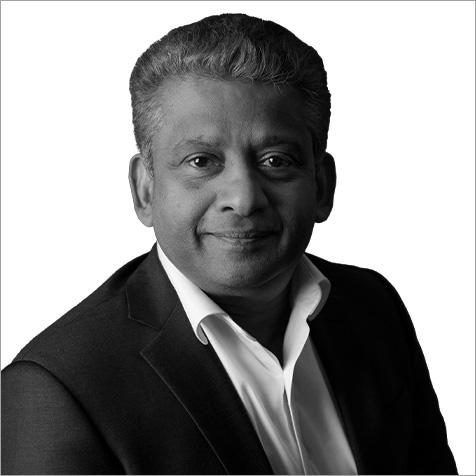
Technology systems are one important ingredient in the future CFO’s recipe for success. Another, says Rohit Selvaratnam FCPA, CFO at Mindhive Global, is the dramatically increased focus on the human challenge behind rapid change.
“We know AI is now beginning to play an increased role in terms of the workplace and how we do things,” he says. “But emotional intelligence in the leadership and management of people will become increasingly important.”
Selvaratnam believes the next-generation CFO will be as focused on managing people through cultural, technological and workplace transitions as they will be on interpreting and managing numbers.
"We know AI is now beginning to play an increased role in terms of the workplace and how we do things, but emotional intelligence in the leadership and management of people will become increasingly important."
That is partly because there will be people within the business who will adopt to change and new technologies quickly, and there will be people who do not. “We’ve got to understand that and always be wary of it.”
He sees the two long-term challenges for CFOs as helping people to adopt new technology while concurrently helping them to prevent becoming professionally obsolete.
“Every individual needs to manage that very real risk,” he says. “That is about being comfortable and conversant with new technologies, while also building one’s own emotional intelligence to work within the business in a different way.”
An ESG architect

In many organisations, CFOs already play a significant or ownership role in environmental, social and governance (ESG) responsibilities.
The difference in 2050, Selvaratnam explains, is that the role will be deeper and felt across the organisation.
“If you are taking ESG to be a compliance matter, that is different,” he says. “But if you are taking ESG to be a part of the firm’s culture, which it absolutely should be, then it is a shared responsibility.”
Khoury agrees, noting that stewardship, governance and sustainability are all set to intensify as CFO priorities, but also become priorities for all organisational leaders. “AI is not going to help you with that.
You are going to have to ask, ‘What do we want to do when it comes to these targets?’, whether it is the use of fuel, your carbon footprint, how you are treating the environment or your people, and so on. Ethics will stand above all of this.”
"Today, if you are running SAP, its output is your responsibility. I see it the same way once we are all using AI. Its output will be our responsibility."
Corporate culture suffered a great deal during the various recent economic and social crises, Khoury says, and it is still something a lot of organisations are struggling with. As ESG becomes a deeper focus for the CFO function, culture will be another long-term challenge for finance leaders.
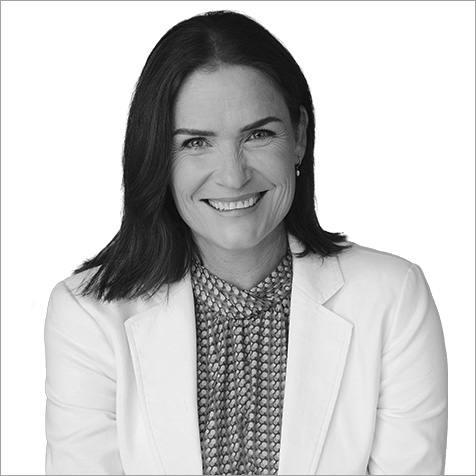
For Kerri Ryan FCPA, executive general manager of corporate services and CFO at RSL Queensland, ESG responsibility intersects with generational change, and will continue to do so over the next several decades.
“As the younger generation starts to vote and enter the workplace, they are going to want to see an organisation’s impact and make sure it is meaningful,” she says.
Ryan has spent much of her career in the not-for-profit sector, where ethical decision-making is tightly interwoven with organisational purpose. She agrees that the human side of management will become increasingly important in the future workplace.
“Because my work and my personal values are ethics based... integrity has to be one of my strongest values,” she says. “Even if that means you have to say no to the chair or the CEO.” For Ryan, this depth of human stewardship is what will separate tomorrow’s CFOs.
Human strategists
Human connection will matter more as the profession moves into an era dominated by intelligent machines, Ryan believes. Despite, or perhaps because of, the complexity and capability of future systems, strong links and communication between people will become more important for business success.
“CFOs will need the ability to understand the new generations coming through, and appreciate how remarkable they are,” she says. “To be great managers of people, finance leaders must also spend time learning about themselves and becoming more self-aware. Through that, they will learn to be resilient and thrive in uncertainty.”
Of course, this is not in lieu of managing the core finance functions within the organisation, but in addition to those functions. The core finance responsibilities will be almost entirely strategic, a direction they may already be heading in today.
Ryan has shifted RSL Queensland’s finance culture from backward-looking compliance to forward-looking strategy.
“I think the game has already lifted for CFOs,” she says. “All quality conversations should now be about strategic finance.”
Tools powered by technologies such as AI will simply enhance that communication, rather than replace it.
“Technology should help you articulate better. It should help you simplify the complex,” Ryan says. “You’ve got these tools and an increasing abundance of data. It will be your role to simplify it and tell stories in ways that help committees and boards make critical decisions.”
3 C-suite leaders share smart career advice
Ethics in the AI age
Navigating ethics in a data-driven world is another area of increasing complexity for future CFOs.
As with the management of change and the ability to communicate clearly, ethics is also a very human challenge, says Nicole Gorton, regional director at recruitment agency Robert Half and a specialist recruiter in the CFO market.
The future CFO’s responsibilities are increasingly tied to the implications of automation, data collection and AI adoption, she says, as well as to conflicts of interest.
“As AI relates to financial data — ‘How do we use it? How do we protect it?’ — that will fall to the role of the CFO.”
When organisations are innovating and operating with such technologies, there must be appropriate checks and balances in place to ensure a level of transparency, clarity and understanding, as well as to help eliminate unethical behaviour.
The responsibility for these checks and balances will lie with the CFO, often working closely with the chief information officer where additional technical support or guidance is needed.
While this oversight grows and as CFOs are increasingly responsible for developing, explaining, implementing and enforcing the various levels of supervision, Gorton says, interpersonal effectiveness will have enormous influence on which finance professionals rise to the top, and which do not.
“CFOs are hired based on behaviours and interpersonal effectiveness,” she adds. “The difference between a finance director and a CFO is usually the interpersonal gravitas that a particular individual has.”
Advice for accountants
What should today’s accountants — the potential CFOs of tomorrow — do to prepare for this new world?
Selvaratnam believes continuous learning is essential. “Our body of knowledge needs to change or grow almost exponentially,” he says. “Love learning and constantly seek to build your emotional intelligence.”
Ryan agrees and says that adaptability and mindset will be critical. “To survive and thrive in uncertainty, you have to love learning, be curious and accept every single challenge thrown your way.”
Gorton recommends younger finance professionals choose workplaces that embrace modern platforms and a culture of learning, but that are also populated by people they want to learn from.
Khoury says the finance leaders of tomorrow must be able to tell a compelling business story. “You have all this technical knowledge, and now you have to home in on your soft skills, your ability to build relationships, build alliances and tell stories.”
What will never change is the need for human judgement, ethical courage, clear communication and the ability to lead through change. Those deeply human abilities are the most important next-generation CFO skills of all.