3 C-suite leaders share smart career advice


Loading component...
At a glance
- Three finance leaders outline their core values and decision-making approaches.
- Modern leaders favour empathy, openness and care over a command-and-control style.
- Balance between personal and professional lives is essential for true success.
The road to a C-suite role rarely takes a predictable path. Behind the balance sheets and boardroom strategies are tales of talent, resilience, pivotal career decisions and leadership wisdom.
These three CPAs have carved out impressive executive careers. Through candid Q&A-style reflections, they discuss the mentors who influenced their outlook, the values that underpin their executive decision-making, and the defining moments that tested — and ultimately strengthened — their leadership styles.
They also provide insight into staying healthy on the job, embracing technology and hiring the best talent.
What emerges is a blueprint for the modern accounting leader: firm but fair and empathetic, disciplined but inventive, and intelligent but willing to listen and learn.
Caroline Spencer FCPA
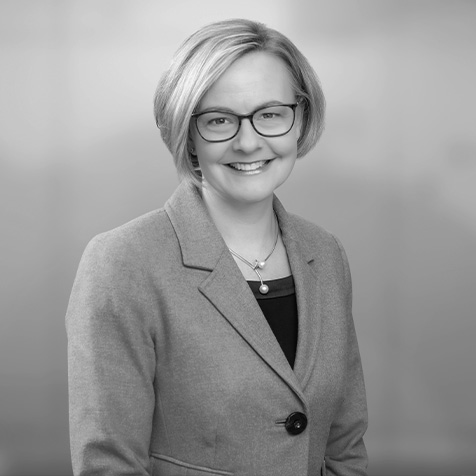
Auditor General for Western Australia and chair of the State Records Commission / Former founding partner, Vista Advisory
Which leadership traits do you believe are indispensable?
Self-awareness, resilience, sound judgement, decisiveness, as well as an openness to broadly consider issues, consult with colleagues and be accountable.
The ability to drop the ego and laugh at ourselves, or the absurdity of some situations, is crucial too — because we all have both good and bad days.
Can you describe a pivotal decision that significantly shaped your organisation’s culture or success?
During COVID-19, it was very clear to me that if my office and I were not doing our job in scrutinising public finances and performance, then no one was. Service in the public interest became more important than ever to me, and it is now one of our office’s explicit rather than implicit values.
My office issued early guidance on the importance of maintaining good governance, financial controls and accountable decision-making. We also provided rapid assurance on health-system preparedness, the vaccine roll-out, hotel quarantine and the procurement of rapid antigen tests, as well as reporting a record level of breakdowns in critical financial and system controls.
Interestingly, the archives of my office prove that my forebears did just that during prior world wars, as well as during a typhoid outbreak in the early years of the Australian colony.
That decision served the entire public sector, the Parliament and the community well by shining a light on some of what was happening during an unusual tempo of public policy response. This enabled a more informed examination of the various experiences and provided important lessons for the future.
How do you stay ahead of emerging trends and new technologies?
On a personal level, endless curiosity, reading widely and staying engaged with a diverse network of interesting people within, across and outside the profession is essential.
It is also helpful to recognise that there is nothing new under the sun, even though the technology and particular players might change. This is useful when considering problems and their possible solutions.
As a species, we have used different tools at different times to achieve outcomes, but the tools themselves are rarely the main game or the purpose of our lives. They certainly won’t change the essence of human nature — although we know they can certainly amplify our worst traits.
How do you identify top talent?
When recruiting, I personally look for attitude, aptitude and alignment of values. You cannot train for these, and if they are absent there’s not much you can do.
After a few costly misses over the years, I have a policy that, if in doubt, keep the seat vacant and acknowledge the capacity constraint until you find a candidate you’re comfortable with.
Also, “try before you buy” wherever you can, with a lengthy probationary period, secondment or placement opportunity.
What single piece of advice would you give aspiring executives?
Know thyself. Sitting above everything is self-knowledge, and we must know our values so we know what we will stand for and what we won’t.
Melisa Hendrawati CPA
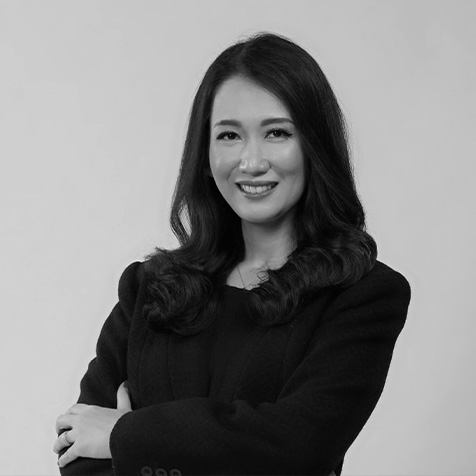
CFO, Superbank / Former head of credit risk and COO, DBS Bank Indonesia
Can you tell us about a formative leadership experience?
My first leadership role shaped my approach and taught me that genuine leadership isn’t about control but empowerment. I learned to step back and trust my team’s capabilities, recognising that a leader’s true strength lies in unlocking the collective power of people.
It is about understanding each team member’s unique strengths and fostering an environment where they feel confident to take initiative and own their work.
This approach transformed me into a coach who is dedicated to nurturing future leaders and building a resilient “super team” instead of a “super individual”. A strong team can achieve more together than any one individual can alone.
What core philosophies have influenced your leadership approach?
My personal philosophy is anchored in a growth mindset — the conviction that intelligence and ability are not fixed but can be developed through dedication and hard work.
This mindset has been crucial throughout my career, especially when faced with daunting challenges like entering the fast-paced fintech world.
I believe that challenges are not punishments but staircases to the next level.
How do you perform your role effectively while coping with highly stressful corporate environments?
What I call “good stress” means I genuinely care about what I’m doing and am motivated to level up and become a better version of myself. My key to managing this is finding fulfillment in the impact I create.
By thinking beyond myself and focusing on our mission to serve the underbanked, I find a sense of purpose that recharges my energy and perspective. This external focus helps me stay grounded.
Can you describe a pivotal decision that significantly shaped your organisation’s culture or success?
A key decision at Superbank was to make our mission the core of our business strategy: accelerating financial inclusion and providing access to financing for Indonesia’s underserved population.
This led us to develop customer-centric products that integrate with our shareholders’ ecosystems to solve customer pain points. This mission-driven approach has been a powerful motivator, unifying our team and guiding every decision.
How do you identify the best talent when recruiting?
My focus is on what I call the “founder’s mentality”. This means seeking individuals with an innate drive, passion and a sense of ownership over their work. I look for people with a high adversity quotient, the resilience to bounce back from setbacks and the ability to find opportunity in challenges.
What advice would you give aspiring executives?
Cultivate a growth mindset and embrace a spirit of continuous learning. Your most valuable asset is not what you already know, but your ability to unlearn and relearn. See every challenge as an opportunity to level up and every failure as a valuable lesson.
Focus on building a strong network of mentors and peers who will challenge you and celebrate your successes. Find your “why” and have a purpose that is bigger than yourself, because that is what will fuel your passion and drive sustained high performance.
Resilient teams: What great leaders do differently
Wayne Stokes FCPA
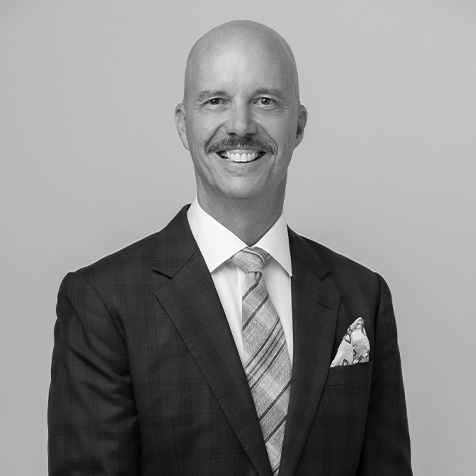
Non-executive director, Port Authority of New South Wales and City West Housing / Former CFO and senior vice-president of business development Asia, Carnival Corporation Australia
What core values or traits have most influenced your leadership approach?
Openness, curiosity and care. Openness is crucial for a senior executive, because you are constantly working with all parts of the business, including the board. People need to feel comfortable that you are approachable and reliable — it is the only way to build trust.
With curiosity, remember that you’re a key guardian of the business, and you can only fulfil that task if you’re genuinely curious about the internal workings of the business and the external market. Care comes in different guises. For example, CFOs have a level of care around employees, and there is also an expectation for employees to care about their role and performance.
But “care” shouldn’t be construed as being soft. I’m firm, but also incredibly fair, and that is the balance you’ve got to find.
How do you perform your role effectively while coping with highly stressful corporate environments?
Balance — which entails a solid dose of professional focus, personal relationships and a healthy mind and body. One week it might be all about work, another week could see a focus on family and friends, and the next might be all about health.
In terms of performing well on the job, a colleague recently told me to treat feedback as a gift and don’t take it to heart.
What advice do you have regarding staying ahead of emerging trends and new technologies?
Find time for professional development across multiple components — technical, interpersonal and future career. CPA Australia provides this, as do many external companies.
I would also encourage finance professionals to join one of the many committees, councils or centres of excellence in the industry. This will bring you in direct contact with other members, many of whom are thought leaders in their respective specialties.
How do you convey challenging feedback to an employee without damaging morale?
There is a step before feedback! As a leader, you need to take time to build rapport and trust with employees by having the one-to-ones and getting to know the individual. When you then need to give feedback, both positive and negative, it will generally be provided and received with much more openness.
What mentors have influenced you?
There are two: the late Albert Aiello, an ex-board member of Lendlease, and Ann Sherry, former CEO of Carnival Corporation Australia and current chancellor of the Queensland University of Technology.
Both helped me significantly, improving my thought processes and ability to prepare succinct board papers. They also pushed me to take on a broader remit both functionally and geographically.
Perhaps most importantly, they convinced me to champion my skill set within their respective organisations. We all need a leader to support and nurture our careers.
Do you have any other advice you’d like to share?
The accounting professional is here to stay. Our remit will continue to broaden and evolve. Be your authentic self, be astute in your interactions and bring care and ethics to the table.