Loading component...
At a glance
Every day, CFOs and the businesses they are guiding are being challenged by a fast-changing technological environment, constrained talent markets and constantly shifting stakeholder expectations around issues such as sustainability, governance and financial outcomes.
If that is not enough, they are doing it in a global environment characterised by volatility and chaotic trade parameters.
In business today, CFOs need to pair cautious realism with immediate action and resilience. Issues such as financial performance, technology, security, sustainability and culture all have the potential to derail company viability.
So what are the four biggest issues that play on the minds of CFOs in the Asia-Pacific region, and how are they responding in an environment where the only certainty is uncertainty?
1. Navigating global volatility
For many CFOs, the greatest threats are the ones they cannot control.
The biggest concerns from outside organisations right now are those resulting from the global instability that reshapes markets, alters consumer behaviour and affects the performance and capabilities of supply chains.
RSL Queensland’s CFO and executive general manager of corporate services, Kerri Ryan FCPA, says such geopolitical shifts keep her up at night for reasons that are both professional and deeply personal.
“For me, the geopolitical situation is actually really scary,” Ryan says. “I have kids and so all of that terrifies me. The childhood we had was so different, and being a mum means I am very concerned for future generations.”
At the same time, global instability directly affects her organisation’s ability to support veterans.
“We’re a not-for-profit, and our success really depends on people having the discretionary ability to spend,” she says.
“We’re seeing global issues impacting our top line, which then means we’re more challenged in being able to support vulnerable veterans and their families. I do ruminate on all of this, but it really is completely out of our control.”
Managing these pressures comes down to controlling what can be controlled, Ryan says. At RSL Queensland, that has meant building organisational resilience. Her team has responded with an “aggressive transformation program” that aims to diversify revenue streams and strengthen core operations.
“We are doing a lot that helps us to win back a sense of control in a very uncertain world,” Ryan says.
2. AI adoption in the finance sector
Artificial intelligence (AI) is one of the most talked about organisational challenges and opportunities right now. CFOs must focus on whether technology delivers real value, weighing its potential benefits against uncertainties such as return on investment (ROI) and issues with data quality and governance.
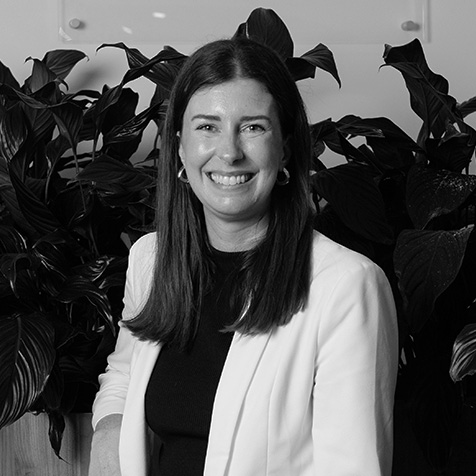
At Norco Co-operative, CFO Laura Wedmaier FCPA has trained her 30-strong finance team on Microsoft Copilot and is also testing AI-based forecasting tools. This process is being conducted with deliberate caution through smaller pilot projects.
“We’ve implemented AI to enhance the productivity of individuals,” Wedmaier says. “But the real challenge is bringing together the promises of what AI can do with the governance and scale we need in a mature finance function.”
“Doing a pilot is cool, but how do you scale that? Some do not pay returns after the upfront costs and ongoing subscriptions. So, my team is assessing multiple use cases, particularly around revenue forecasting, then seeing how it can scale in a profitable way.”
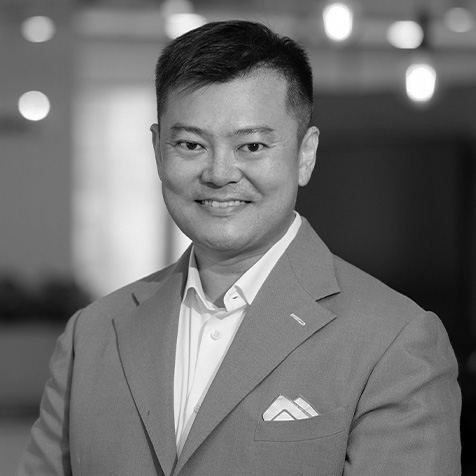
Head of assurance at EY Singapore, Wei Hock Lee FCPA, notes that though technological change is forcing the profession itself to evolve, it is not necessarily a negative.
“Many businesses, our clients and ourselves are seeing a lot of changes, especially with the introduction of AI, technology advancement and so on,” Lee says.
“The question that is front of mind is always about how this profession, which has existed for so long, will be disrupted and ought to be disrupted. How would the service that we currently deliver to our clients continue to be delivered in a way that is still relevant to our stakeholders?”
3. Managing the finance talent gap
As a widening talent gap emerges across the region both generationally and in terms of skills, many finance leaders are making “the talent issue” a high priority.
Wedmaier is tackling the issue head-on by reskilling her entire team.
“We’ve invested heavily in training everyone in Power BI and data analytics, so they can have quicker access to insights, make forward-looking decisions faster and can spend their time having valuable conversations with the business rather than making sure the data is right,” she says.
"We’ve implemented AI to enhance the productivity of individuals. But the real challenge is bringing together the promises of what AI can do with the governance and scale we need in a mature finance function."
This has the doubly positive effect of ensuring her team is future-ready while also making its individual members feel valued and supported.
“The training and the technology to build the dashboards is an investment,” she says.
“But at Norco, we are committed to keeping our teams up-to-date and relevant to keep pace with the rapid changes in industry and the future of accounting.”
4. Their own wellbeing
Perhaps the most unexpected and universal issue keeping CFOs awake is not to do with balance sheet issues or geopolitical tension. Instead, it is their own wellbeing.
Wedmaier says her biggest realisation came not from spreadsheets but from a Stanford executive program exploring the neuroscience of decision-making.
“Eighty to 90 per cent of the decisions we make are gut feel or emotionally driven,” she says. “As someone who loves data, I thought surely this couldn’t be true.”
CFOs will always refer to data, but the research says the final decision after gathering all of the context will still be made outside of the data, Wedmaier says.
“The neuroscience of decision-making is such that it ends up being driven by your gut reaction,” she adds.
"The question that is front of mind is always about how this profession, which has existed for so long, will be disrupted and ought to be disrupted. How would the service that we currently deliver to our clients continue to be delivered in a way that is still relevant to our stakeholders?"
“When you can’t make a decision or when the decision is complex, there’s science to back up the fact that you should sleep on it and set a deadline,” Wedmaier suggests.
“So, as long as you’ve done all of your research and considered the different variables, commit to making the decision tomorrow morning at nine o’clock.”
A problem arises, she says, if a professional has not been looking after their wellbeing through fitness, meditation, breathwork and so on. If this is the case, the decision is less likely to be a high-quality one.
The processes that lead to wellbeing, therefore, are not just lifestyle practices, but also strategic tools.
“This is the thing you can control, and you are likely to get measurable results at work and in your enjoyment of life,” Wedmaier says.
In a profession defined by pressure, not being kept up at night may just be the most important leadership priority of all.