Inside the mindset of a senior APS finance leader


Loading component...
At a glance
- Experience across a range of public-service portfolios has helped Matt Yannopoulos FCPA land the role of secretary at the Department of Finance.
- As part of his mandate to help deliver the government’s agenda, he draws on a leadership style that has evolved from “directive” to “highly collaborative”.
- Internally, Yannopoulos wants to ramp-up the use of AI, as well as improve the financial and accounting literacy of departmental employees.
For someone who is part of the “Canberra bubble” where ambition and politics often go together, Matt Yannopoulos is a gratifying reminder that nice guys do not always come last.
Late in 2025, Yannopoulos gained the prized appointment of secretary of the Department of Finance for a five-year term, capping a journey from the lowest levels of the public service to now being one of Australia’s most senior and trusted public sector leaders.
Secretaries of the various public service departments are answerable to relevant government ministers and play a crucial role in ensuring government agendas succeed.
The finance post, especially, is one for leaders with an exceptional track record of implementation, which is where Yannopoulos comes in. His task is to oversee the nation’s financial stewardship while sitting at the intersection of policy, funding frameworks and governmental decision-making.
What got him across the line? The Canberra-born-and-bred official, who got his accounting degree from the University of Canberra, says he simply strives to do every project to the best of his ability, as well as treating all people with dignity and respect.
“I think part of the reason I am here is because I have done a lot in the budget, accounting and IT areas that are important to our economy,” Yannopoulos says. “And most people do not have bad things to say about me!”
Exceptional track record
Before his new job, Yannopoulos was associate secretary at the Department of Defence, overseeing elements such as service delivery, the workforce, finances, facilities, information and communications technology, and data management in support of national security initiatives.
In addition to another stint in the Department of Finance, he has also worked in the health, education and immigration portfolios, while his public service career was interrupted by a four-year stint two decades ago at the Australian Taxation Office.
He finished his time at the ATO as acting chief design officer, earning praise for reshaping its outdated tech stack — an early sign of the skills that have since forged his reputation as a changemaker.
“My career background has been crucial to my ability to understand the different pressures that go on in different parts of government, but also to have a level of empathy with my colleagues, the other secretaries, who are operating in those domains,” Yannopoulos says.
Despite a stellar résumé, he admits that up until about five years ago the prospect of being a secretary would have seemed unlikely. The key has been to keep delivering successful projects while earning the faith of government ministers.
“It is about having the confidence of ministers and their teams that you offer solutions to whatever the issue of the day is, as well as delivering on something that you said you could do. To get to this role, you need a track record of doing that and, while being respectful, sometimes saying, ‘Well, I cannot deliver on that in the way that you seek’.”
Improving Aussie lives
For Yannopoulos, job satisfaction comes from delivering projects that improve the lives of Australians, and a few projects stand out for him.
He is honoured to have been awarded a Public Service Medal in 2019 for his work in the Department of Education, reforming the delivery of child-care payments through a new IT system. The changes, which involved thousands of childcare providers and around a million families, changed the subsidy arrangements for children in day care and early childhood learning centres.
“That is one I am particularly proud of, because the project was having trouble when I joined the department,” Yannopoulos says.
While working in the Department of Defence, Yannopoulos also rolled out programs that delivered improvements to HR, health and information management systems, while a major enterprise resource planning implementation helped the department support the Royal Commission into Defence and Veteran Suicide.
He says such projects have succeeded on the back of strong governance, stakeholder engagement and teamwork. They are particularly rewarding for him personally because of their difficulty to execute.
Evolving leadership style
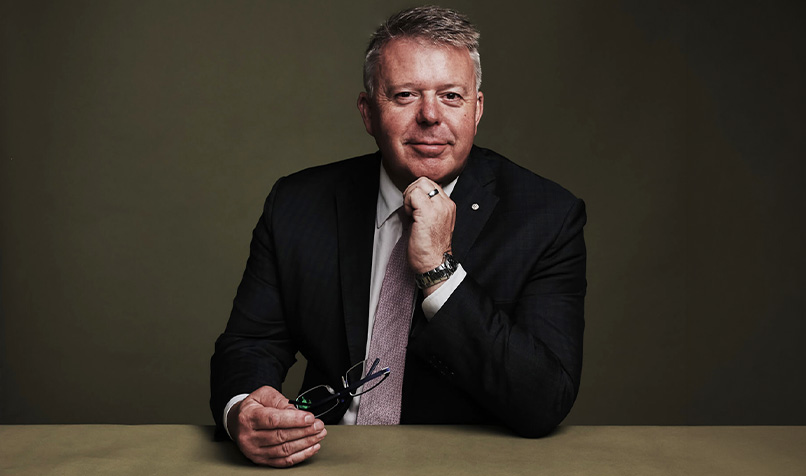
Part diplomat, part pragmatist and part strategist, Yannopoulos believes his people skills and ability to offer informed, impartial advice to everyone from a colleague to the Prime Minister have been crucial. Less than a year into the job, he is relishing the challenge.
“You get to participate in the government’s most senior decision-making forums where decisions about our future — whether that is national security, social policy or economic policy — are being made and your opinion is listened to. It is an absolute privilege, but the stakes are high in terms of the data that we use to try and give our point of view.
It is not just ‘opinion from Matt Yannopoulos’, but well informed by teams that work in this institution to provide that advice”.
As secretary of finance, he leads a departmental team of over 1800 employees.
Over time, Yannopoulos says his leadership style has evolved from being “directive” to “highly collaborative”. Instead of telling employees, “I know how to do this, so just do it the way I say,” his approach is now, “I can do nothing without others”.
“As the secretary of finance, I need other secretaries, I need my minister and I might need other ministers on board,” he explains.
Does he need a bit of ego, too? “You certainly need self-confidence,” says Yannopoulos, who adds that good listening skills are also an imperative, as “some of my colleagues will be blunt with me and say, ‘We are not doing that, Matt’”.
On the job, core traits such as integrity and curiosity are crucial, while trust is built through honesty and maintaining respectful relationships. “For me, it is always about operating with integrity and being honest about any challenges with your teams. I have always been very lucky that the teams that I have worked with love working on a challenge.”
Risk management matters too, but it is about being practical, not theoretical. Yannopoulos focuses on understanding what could go wrong, what he can tolerate and how to mitigate what he cannot.
Rather than rigid processes, he values honest management conversations about real concerns. When risks visibly guide decisions, governance feels useful, purposeful and clearly linked to delivering outcomes for teams and stakeholders.
“If people see that you govern the project with an eye to those risks, they can see that there is a point to all this. It is not just frameworks for the sake of it. This all helps to deliver the outcome.”
A focus on delivery
In his supervision of Australia’s finances, Yannopoulos has one overarching goal: to deliver on the government’s agenda of the day, which is set by the Prime Minister and various ministers.
For now, that means improving the productivity of the Australian economy, an issue that has been a sticking point for governments of all persuasions in recent times.
There is also a commitment to mitigate the burdens of regulation, including red tape and compliance costs for businesses, while preserving necessary safeguards and delivering quality outcomes for all Australians. Regulation, he concedes, can “accumulate over time” and may not be efficient, “so I have a specific role to pursue regulatory reform options”.
In a nod to his technology background, Yannopoulos also wants to champion more extensive and effective adoption of artificial intelligence (AI) in the public service.
In pursuit of such goals, he can draw on the lessons passed down by mentors such as fellow CPA Martin Bowles, a former secretary of the departments of Health and Immigration (who encouraged him to expand beyond IT and technology roles to embrace finance); and Greg Moriarty, the secretary of the Department of Defence, who has been named Australia’s ambassador to the United States (who extolled to Yannopoulos the virtues of teamwork and partnerships).
Yannopoulos’s experience underlines the importance of surrounding yourself with people who you can trust. “They will help you when you need to make difficult choices.”
AI and public administration
Given the scale and significance of Yannopoulos’s responsibilities, which will include reforms to improve the sustainability of the National Disability Insurance Scheme, it is fair to ask if he ever gets a good night’s sleep.
“Rest assured that I usually do,” Yannopoulos says, “because I have a great team”.
To take some of the pressure off government staff while driving efficiencies, Yannopoulos is counting on smarter, safer and more widespread use of AI to help public service departments.
He is optimistic about generative AI improving public administration, noting that it is already helping to summarise huge volumes of submissions and briefing materials “that normally tie up 25 people just to read them all”. The technology advances should also cut administrative workloads and improve call-centre efficiency across government departments via automated call summaries.
Like many other leaders, Yannopoulos believes it is crucial to keep a “human in the loop”. AI should assist decision-making, not replace human judgment, especially when Australians’ eligibility or entitlements are concerned.
With accounting running in his blood — (Yannopoulos’s father was a tax accountant) — it is fitting that another of his passion projects is to lift financial and accounting literacy across the public service, including skills related to reading budgets and understanding the financial elements of service delivery.
“One of the things I think about as a CPA is how to build broader financial acumen, because that is essential in advising government, particularly in the economic environment that we find ourselves in,” he says. “It is challenging.”
As he ponders potential future success, Yannopoulos says it is “energising and humbling” to be leading the Department of Finance after starting in the junior ranks of the public service. He is intent on making a difference to the way the department is governed, not only for efficiency’s sake, but for the benefit of the people. “That is a great opportunity as a new secretary.
One piece of advice
“Stay curious! Also go out into the field and listen and see what is happening with projects. That way, you gain a much better understanding of your work and any challenges.”