Loading component...
At a glance
- Josie Pane FCPA believes that strong leadership comes from transparency, empathy and confronting difficult problems rather than avoiding them.
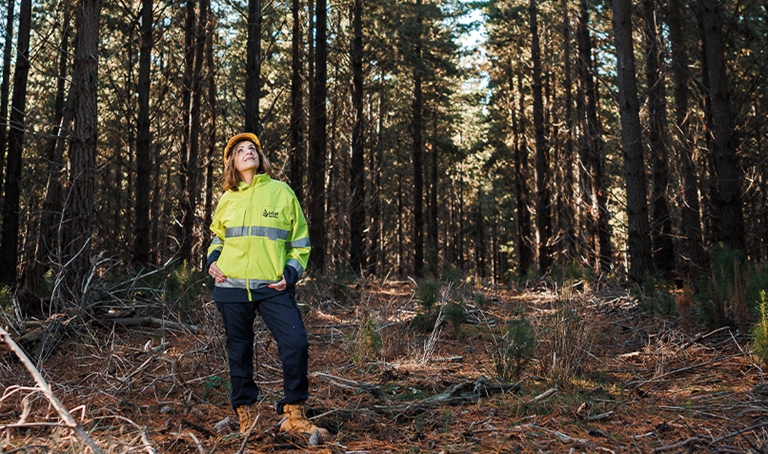
- As CFO at HVP Plantations, one of Australia’s largest private timber companies, Pane’s role extends to fire prevention and suppression.
- The January Walwa-Mt Lawson State Park fire highlights the enormous financial and operational risks faced by the forestry sector.
My role: Confidence in the numbers
I am a leader that gives my team autonomy. I think it is good to trust people and let them shine, which, in turn, gives me confidence in how we are performing.
At times, the CFO role can be very stressful, especially when cash is tight and you need to talk to the banks every month. Luckily, I have a strong team with robust controls and real confidence in how we do things.
For example, I have never in my career seen such a clean audit process. I give credit to the team that I have, as they make sure everything is transparent and every box is ticked so there are no surprises. That is how I like my team to be with me, and that is how I like to be with them. It is the way we are with the board, too.
From the CFO perspective, which also involves IT and legal reporting lines, I make sure deadlines are met, internal controls are in place, that we pay and receive money on time, and people follow the purchasing policies.
My workdays are filled with too many meetings, but to be across the whole business you need to get involved, learn, understand, ask questions and know how everything translates into value.
As a CFO, it is important to be across everything that is going on because everything has a financial impact — especially emergency events such as the January 2026 Walwa-Mt Lawson State Park bushfire in Victoria that took so much of our Shelley pine plantation. Many of our people, including myself, are deeply involved in responding at such times.
Game changers: The corner office
The biggest turning point in my career occurred 21 years ago, when I first became a CFO.
I had been a financial controller for a while and had worked with one particular business for a decade. However, it was time for a change.
The company that employed me sold a subsidiary to an organisation run by an entrepreneurial chap, and I forwarded my résumé to him. He invited me into the business, which was in the engineering and energy space, to be his CFO and run his finance team.
We continued making acquisitions, and we also floated the company on the Australian Securities Exchange in 2007 — my top career highlight to date.
There was one particular comment that I have always carried with me, because it taught me a great deal. I had a nice corner office, and one day I was speaking with the CEO about how things were being done. There were some problems, and as I was relatively young and new to such a leadership role, I thought he might deal with the problems I raised.
Instead, he said, “You need to confront those problems and go and address them. You do not get the corner office without doing such things.” That very much resonated with me. You cannot be in a leadership position without tackling some of the hard stuff, or without approaching people and communicating effectively with them.
However, there is a right way to approach people, which involves a level of empathy and also a commitment to values. If you do not have the confidence to have those discussions, including the hard ones, then it could get in the way of you being associated with “the corner office”.
My son recently completed a Bachelor of Business, majoring in supply chain management. He is in a graduate role now and he recently asked me how I ended up in a senior role. I told him he has to keep working hard to deeply understand the business and the sector. He must speak up when he needs to and find people who will support him.
Most importantly, if he is ever bored, he should not just sit there and lounge around and look like he is not doing anything. Instead, he must always ask for new challenges and opportunities to grow.
Climate change and business: Forecast for the next decade
My challenges: Managing risk
When your revenue relies on trees that take 25 years to grow, natural disasters become an almost existential risk.
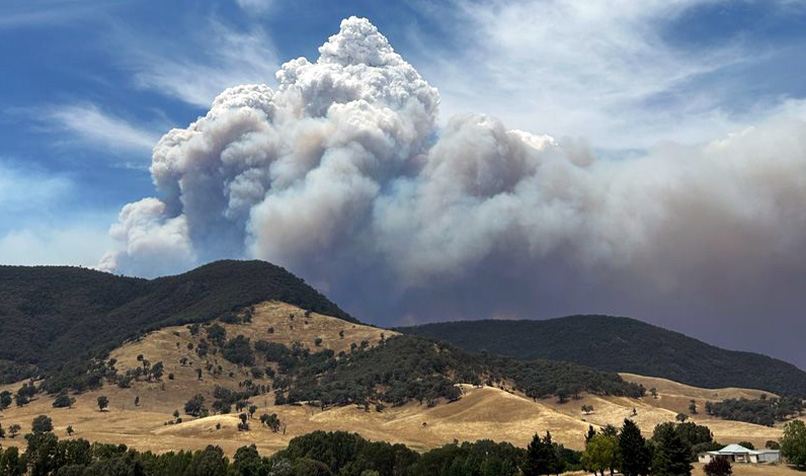
That danger became a reality during the recent Walwa-Mt Lawson bushfire in January, which burned about 10,800 hectares of our Shelley pine plantation in North-East Victoria.
That sort of disaster really changes a business like this. There were many customers we were going to supply from that plantation crop, and it is not as simple as just replanting it. The land needs to be rehabilitated and prepared first, which means it will take five years to replant, then the trees need decades to grow.
The value loss after an event like that is quite heavy. In addition, we needed to salvage the burnt trees that still had useful timber inside and pay the cost of clearing areas that could not be salvaged for replanting. These are big dents in our balance sheet and in our profit and loss.
For that reason, we do a lot in terms of fire prevention and suppression, which includes both how we prevent fires and also how we respond when a fire starts. Of course, it is something we cannot completely control — once a fire takes off in extreme or catastrophic conditions, it is very hard to stop.
Many of our staff are trained firefighters and we have seven of our own Forest Industry Brigades under the Country Fire Authority in Victoria. I am statewide duty officer for one week in every four during fire season, which is probably quite unique for a CFO coordinate calls with all of our regional offices and regional duty officers if there is a fire or potential threat over a certain level of fire danger.
During the Walwa-Mt Lawson fire, my personal assistant, who is also our office coordinator, travelled to the area and stayed for two weeks in a town where we set up a staging space. She worked on logistics, hotel bookings, supplies and so on. Our IT administrator was also deployed on location.
When we travel to such an affected area, we work alongside agencies and local communities, coordinated through an Incident Control Centre. We need to make sure everybody is prepared.
Do our people or other firefighters need any extra help? What sort of help is needed? How are local teams setting up for the fire? Do they have the resources they need or do we need to find more? Who is ready to leave home to come and help?
When there is a fire, everybody knows their role. Outside of times of fire, there is still plenty to do to prepare and train for the next season. We want to protect our assets — our timber resource — which drives value in our business and in turn generates further value through our supply chain.
Outside of natural disasters, there is a lot to keep us busy. High interest rates affect everybody and we have many customers who are impacted by that, particularly in the housing market.
As a result, interest rates, market conditions and the current unsettled global environment impact the amount of logs we can supply. In that situation, we focus on staying in close contact with our customers and working with them as much as we can to develop solutions.
Another issue I am constantly keeping an eye on is cyber risk. Of course, we constantly make sure our systems are updated and in order, but you can never really do enough.
I have to make sure we are mitigating the risk to reduce both the likelihood and consequence of a cyber event.
To prevent this, we are adopting the Essential Eight baseline cybersecurity mitigation strategies published by the Australian Signals Directorate. These are eight sets of controls designed to help organisations reduce the risk of cyber compromise and improve their resilience against common cyber threats.
The controls include patch applications, multi-factor authentication, restricted administration privileges and regular backups, which significantly reduce the size of the potential attack surface.
We are also doing a lot of work to modernise our digital experience. We went live with a new finance system last year, which was a very quick and efficient process.
Now, we are moving to a new digital workplace for the entire organisation, which is a major change project.
For all of this, we have a business improvement panel that defines the projects, prioritises them and most importantly makes sure the resourcing is right, so we do not overload people or departments.
There are some major challenges in this role, but you know what they say — how if you love what you do, you never work a day in your life. That is how I feel working here with my colleagues.
I enjoy learning. I enjoy adding value. I think my natural style of communication and empathy allows that to happen. Even if I am having a bad day, I look forward to coming to work, and that is a bit of a blessing.
Lessons learned
- Focus on values: When everybody in the business lives and operates by the values of the company — responsibility, respect, integrity and trust, to name a few — then the company will have a great culture.
- Listen deeply: Do not jump to conclusions. Always listen before acting.
- Lead with empathy: Read between the lines on how someone is feeling. If they do not look OK, or if you feel like there is a bigger problem, dig a little deeper. If you are just going full-steam ahead as a leader and you are not aware of what is happening, it will not help the people you are trying to lead.
- Communicate openly: It is essential to be a very open communicator. Do not be afraid to ask questions or give feedback.