The energy and ESG challenges behind data centre growth


Loading component...
At a glance
- The rapid rollout of data centres across Australia and Asia is crucial to fast-track the AI revolution and should drive economic growth and employment.
- Environmental concerns remain over the impact of data centres given their voracious appetite for electricity and water, especially as AI use increases.
- Accountants have a key role to play in the data-centre evolution in areas such as capital allocation, risk management, assurance and ESG reporting.
The massive data centres springing up across Australia and the Asia-Pacific region are a polarising presence.
Some see them as critical infrastructure to power the growth of the digital economy. Others think they are eyesores that will guzzle energy and water, and harm communities and the environment.

Craig Scroggie is in the former camp as CEO of ASX100-listed digital infrastructure company NextDC, which has more than 20 data centres either operating or in the planning phase across Australia. He says such facilities are crucial economic and productivity drivers for modern society.
“Connectivity is the lifeblood of the modern economy,” Scroggie says. “Online banking, government services, cloud computing and consumer platforms such as Netflix, Spotify and TikTok all depend on it. Metropolitan fibre, intercity fibre, undersea cables and satellites form the digital nervous system that connects users, applications, cloud platforms and data centres, which enable the modern economy to operate every second of every day.”
Scroggie adds that the rollout of data centres from NextDC and other providers come on the back of demand from the world’s AI power players such as Amazon Web Services and Microsoft. “We do not build speculative capacity. Capacity matched to demand is the foundation of our strategy. That discipline is why hyperscale and AI customers commit to us for the long term.”
Big deals
Governments and enterprises are investing heavily in data centres to meet soaring demand for computing power and data storage.
Globally, real estate services giant JLL forecasts the sector will experience an infrastructure investment “super cycle” requiring spending of up to US$3 trillion (A$4.2 trillion) by 2030. Almost 100 gigawatts (GW) of new data centres will be added between 2026 and 2030, doubling global capacity and necessitating energy innovations to alleviate grid constraints. Asia-Pacific data-centre capacity will expand by 24 GW by 2030, JLL predicts.
These investments are likely to drive jobs and economic prosperity, but “not in my backyard” resistance to the centres is increasing. In 2025 in the United States alone, data-centre projects worth an estimated US$156 billion (A$222 billion) were blocked or delayed, according to Data Centre Watch. Concerns over energy consumption and environmental, social and governance (ESG) factors are typically behind the backlash.

The Australian Industry Group has also warned that the nation’s power grid is “not ready for the projected growth in power demands for these centres”. However, Jannat Maqbool FCPA, a member of the CPA Australia Digital Transformation Centre of Excellence, says data centres are becoming foundational economic infrastructure for the next phase of the digital economy — not just technical assets or back-end facilities.
“They will enable AI, advanced analytics, cloud, cybersecurity, research, automation and new forms of digital service delivery,” says Maqbool, who is business development manager at the Australian Urban Research Infrastructure Network, The University of Melbourne.
For customers, she says the data centres will enable access to more reliable, secure and scalable digital services. “More importantly, it should mean businesses can access sophisticated tools and computing capability without necessarily having to build everything themselves.”
The point many commentators miss, according to Scroggie, is that data centres do not create the underlying demand for “compute” — that is, the ability of computer systems to process and execute tasks, calculations and operations.
“They aggregate it into purpose-built infrastructure that is far more efficient than what it replaces. Run those workloads back across the office buildings and on-premise server rooms they came from, and national electricity consumption would be higher, not lower. Aggregation is one of the largest energy productivity gains in the economy.”
He says the sector is also “underwriting the energy transition, rather than competing with it”.
APAC benefits
Other industry groups are upbeat about the impact of data centres in Australia.
Elizabeth Whitelock, CEO of the Australian Information Industry Association (AIIA), says the data-centre pipeline is “one of the most consequential industrial investments Australia will see this decade”.
“The sector is committing about A$26 billion to Australia by 2030, and that capital is doing far more than building facilities,” she says. “It is laying the foundation for every part of the modern economy, from cloud services and AI to financial services, health care and government service delivery.”
Whitelock says such investment will also translate to reliable, scalable computing power. This will enable Australian businesses to adopt AI, modernise operations and compete globally.
The AIIA says an annual AI opportunity of A$142 billion exists for Australia by 2030, including A$18 billion from building sovereign domestic AI capability and A$11 billion from becoming a regional AI hub. “None of that is possible without the underlying compute infrastructure,” Whitelock says.
“We also need to talk more openly about jobs — Australia’s data centre workforce needs to grow from about 9600 today to 17,900 by 2030. That is 8300 new roles for electrical trades, HVAC, network engineering, cybersecurity and ICT professionals.”
More broadly, economies in the Asia-Pacific region are set to reap the benefits of data centres, with Deloitte predicting that the region will become the world’s next data-centre hub on the back of about US$800 billion (A$1.14 trillion) in data-centre investment by 2030. Scroggie says the sector has shifted from merely being part of a technology cycle to an industrial one.
“Electricity is the input and intelligence is the output. For the economy, the opportunity is productivity itself. Developed economies have seen weak productivity growth for a decade, and AI is one of the few technologies capable of changing that.”
Environmental concerns
Amid the excitement around data centres, the criticism is that they are highly energy-intensive facilities that consume significant amounts of electricity to power servers and maintain cooling systems.
As AI workloads increase, there are fears for electricity grids and the potential impact on carbon emissions. Water consumption is another issue — many facilities rely on large volumes of water for cooling, creating challenges in regions already facing water scarcity or climate-related stress.
The Australian Conservation Foundation (ACF) believes power- and water-hungry data centres could derail Australia’s clean energy transition unless they are properly regulated. National climate policy adviser at ACF, Annika Reynolds, says that while it remains difficult to sort fact from fiction when it comes to the likely trajectory of AI data-centre growth in coming decades, Australian governments and regulators are incorporating significant AI data-centre uptake into energy planning.
The ACF notes that the Australian Energy Market Operator’s Draft 2026 Integrated System Plan for the national electricity market now expects data centres to use up to 29 TWh of grid energy by 2050, which is 90 per cent higher than current consumption levels.
“This has profound implications for the planned transition of Australia’s energy system,” Reynolds says. “Without safeguards, the data-centre industry could be used to justify the extension of Australia’s coal power clunkers and the building of new, expensive and polluting gas power plants.”
Reynolds says ACF will continue to advocate strongly to government that AI data giants should be compelled to adhere to BYOE — bring your own energy — principles. Without strong conditions, it also contends that AI data centres pose a serious risk to water security in Australian regions and cities.
At NextDC, Scroggie concedes that data centres consume significant energy.
“The question is not whether they consume it. It is whether they create enough economic and social value to justify it,” he argues. “They do.”
Scroggie says data centres now consume about 2 per cent of Australian electricity, or 3.9 TWh, rising to about 6 per cent by 2030. While that is “significant”, Scroggie says data centre operators “pay their own way”, with A$3.1 billion having been invested in the electricity grid since 2020, and an extra A$7.2 billion committed to 2030.
Corporate response
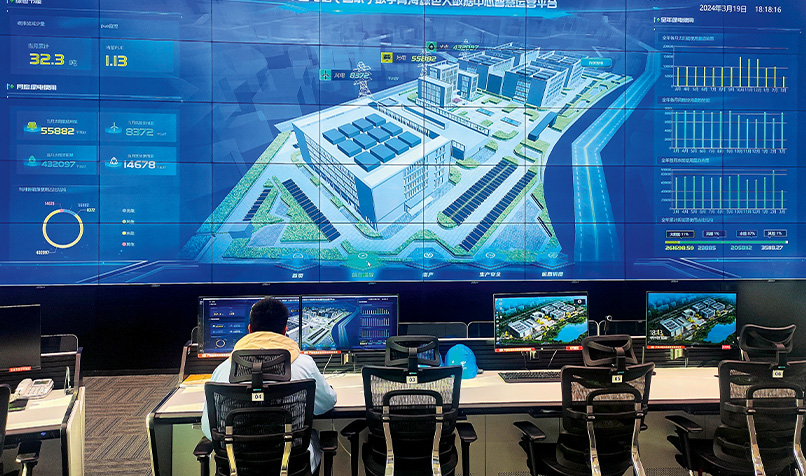
Given such environmental worries, corporate leaders are facing a delicate balancing act. Investors, regulators and customers are demanding stronger sustainability credentials, while simultaneously expecting organisations to leverage digital technologies and AI to remain competitive.
Whitelock, however, thinks the framing of “growth versus sustainability” is misplaced. “The evidence shows these two goals are mutually reinforcing.” Globally, she says, 45 per cent of corporate power purchase agreements (PPAs) involve data-centre operators, while large-scale generation certificates (LGCs) — the tradeable financial certificates designed to reward the generation of renewable energy from large-scale sources — are also important.
“That investment certainty is what unlocks new renewable generation projects,” she says. “Major operators and their hyperscale customers have committed to matching 100 per cent of their power use with renewable energy by 2030, and they are putting capital behind those commitments through PPAs and LGCs.”
Whitelock says governments, organisations and companies need to focus on coordination. “That means aligning data-centre development with energy and water roadmaps, integrating digital infrastructure into grid planning, and supporting innovation in cooling technologies like closed-loop liquid cooling, which uses near-zero water while handling high-density AI workloads.”
Maqbool agrees that governments and organisations should treat digital infrastructure, energy infrastructure and sustainability strategy as connected decisions, not separate conversations.
“AI and cloud growth will require significantly more computing capacity, and to do that you need physical infrastructure,” she says. “Of course, that means needing more energy to power the infrastructure, but that should not mean we slow digital transformation. We just need to be far more deliberate about where, how and why this infrastructure is built.”
Regulatory oversight
As governments respond to the rapid growth of data centres, the ACF wants the Albanese government in Australia to adopt in full the joint public interest principles for data centres into binding regulations that “provide clarity and confidence to the community”.
“In particular, AI data giants should be required to contract for 100 per cent additional renewable energy to power their facilities, providing demand pull for the buildout of the additional energy that will be needed to power these facilities,” Reynolds says.
Trust will be crucial, Maqbool notes, as data centres deliver in areas such as AI, cybersecurity, digital sovereignty and advanced connectivity. “If countries get it right, they will be better positioned in the next phase of the digital economy,” she says. “It is as simple as that. Trusted, secure and sustainable digital infrastructure is what it is about.”
Maqbool has no doubt the accounting and finance profession has an important role to play given that capital allocation, risk management, assurance, ESG reporting, governance and “thinking about long-term value creation sit at the heart of this”.
“Investors want to know that the ‘digital growth’ is not simply shifting costs on to the energy system, the environment or local communities,” she says. “Sustainability cannot be an afterthought — it needs to be built into the commercial model, the governance model and the operating model.”
Scroggie is confident that the business case and capital investment will add up for data centres in Australia. He notes that the nation has “mobilised on this scale before”, citing the Snowy Mountains Hydro-Electric Scheme and the National Broadband Network. “This cycle is larger than both in capital intensity. The capital is here. The customers are committing. The infrastructure is funded by operators, not households. The opportunity is extraordinary. Execution is what matters now.”
Ultimately, according to Whitelock, Australia can either become a regional digital infrastructure hub — capturing investment, jobs, exports and sovereign capability — or watch capital flow to other global jurisdictions with clearer settings.
“The window is open, but it will not stay open indefinitely.”
What the national AI plan means for businesses in Australia
The Australian opportunity
Australia has a genuine chance to help shape how AI is developed, deployed and governed over the next decade, according to CEO of the Australian Information Industry Association, Elizabeth Whitelock.
Nevertheless, she says the nation must shift from a mindset of “Should we build this?” to “How do we build this well?” In this sense, three elements matter:
- Predictable, transparent policy frameworks — investors making decisions about where to deploy multi-billion-dollar facilities need confidence in timelines for land, power and permits.
- Genuine community benefit — support is required for apprenticeships and training pathways, local supply chain participation, transparent reporting on energy and water use, and contributions to grid infrastructure that benefit surrounding communities.
- Coordinated planning — a national approach to digital infrastructure is crucial, integrated with energy roadmaps and supported by a single coordinating body of the kind the AIIA has recommended at state level. This would reduce conflict between commercial imperatives and community expectations.
“Most of the friction we are seeing is the product of fragmented decision-making, not unbridgeable interests,” Whitelock says.
Production credit
Banner image onurdongel/E+ via Getty Images