Loading component...
At a glance
- Dr John Miller AO FCPA argues that the true value of accounting lies not in recording past results but in management accounting that connects financial data to operations, context and strategy, to explain and influence performance.
- Through early industry experience, Miller learned that simplicity and strong communication — focusing on a few key variables rather than overwhelming detail — are essential for accountants to have real impact on decision-making.
- As technology automates routine tasks, he believes the future of accounting depends on strategic insight and interpersonal qualities such as courage, empathy and integrity, positioning accountants as leaders rather than reporters.
Much accounting is, by its nature, backward-looking. It measures and records, and is then asked to explain what has already happened.
Dr John Miller AO FCPA, whose accounting career in industry, public practice, government and academia has been celebrated widely, decided early on that the real value of accounting lay elsewhere.
At 15 years of age, his general career path was set not by lofty ambition but instead by his father’s quiet assessment. “My father was a bank manager,” the 96-year-old says. “Being a bank manager and knowing what I was interested in, he thought I should be a cost accountant.”
That guidance, and the realisation early in his career that his passion lay in management accounting, set the thread of his entire working life.
One early experience during his time at Wangaratta Woollen Mills — where his mentor suggested he work after he spent five years at a firm that would eventually become Pitcher Partners — captures the insights that management accounting offers.
After profits significantly exceeded expectations one year, the finance team could not understand the reason for the overly positive results. The figures were correct, but they made little sense.
The explanation, when it arrived, was not in the ledger.
“This yarn sold at 15 per cent moisture, so it ran through the knitting machines nicely,” Miller says. “But in the drought at the time, and with the lack of air conditioning in factories, our customers wanted more water in their yarn.
However, the quality-control people had not told me they had enacted that change. So, we were selling a higher percentage of water in our yarn, meaning our profits were greater than I had anticipated.”
The result was higher effective output by weight and therefore higher profit.
While Miller tells the story as a minor case study, its lesson is far greater. Accounting on its own, he says, does not guarantee insight or understanding. It has to be connected to operations, behaviour and context.
When those ingredients are in place, management accounting does so much more than track performance. It explains it, challenges it and can be used to predict it.
“If you do not have good management accounting, you go broke,” Miller says. “Sometimes I would be introduced to clients who would say, ‘The more we sell, the bigger our losses’. That is a clear sign that your direct costs are greater than the selling price, and a good management accountant knows immediately when your pricing is wrong.”
This is the shift that excited Miller throughout his career — a change in viewpoint from hindsight to foresight, from reporting outcomes to influencing them. It is where accounting becomes a strategic function.
The power of simplicity
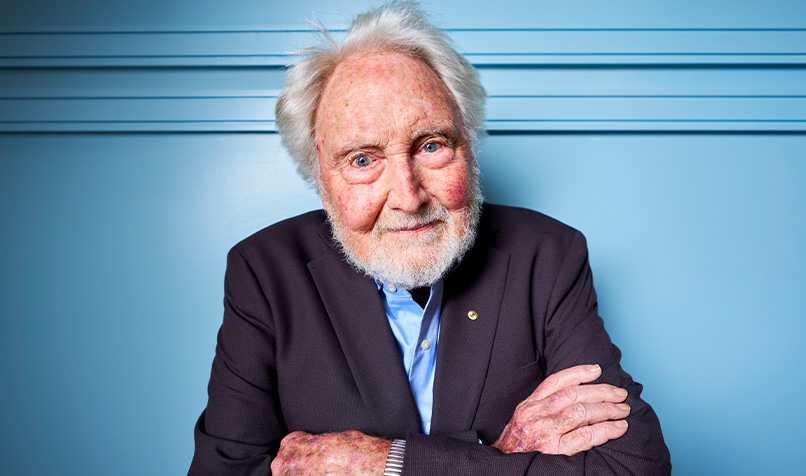
During his time with the public accounting firm as a 21-year-old, Miller was told by his mentor — Melbourne insolvency practitioner Ernest Harding Niemann — to move out of public accounting and get his feet wet in a “real business”.
The lessons learned during his time with the woollen mills, which employed over 500 people, were immediate and consequential. However, before experiencing true success he had to learn powerful lessons in communication.
To have a measurable effect within a business, the information gathered by management accountants must be understood by all who are involved in the decision-making process. It is at this point, Miller says, that many accountants struggle.
In his early days at the mill, he was not immune from this challenge. Miller produced detailed reports for senior managers that contained information that was accurate and comprehensive. But originally, those reports were ineffective. The solution, he discovered, was not more data, but less.
“I reduced the amount of information in those weekly reports from 10 variables to just three key ones,” he says. “Suddenly, I got their attention.
“To work out the key variables worth communicating, I first had to become a listener, which my wife and kids say is still an issue for me,” Miller says. “This is very important in working out what it is that decision-makers really need to know.”
That adjustment changed everything. As a result, his managers began to engage with his work and their decisions improved. Miller’s role shifted from observer to contributor as clarity drove his influence within the organisation.
That was 70 years ago, but still accounting and business education — a field in which Miller spent much of his career — remains heavily and almost exclusively focused on technical knowledge, he says. Interpersonal skills such as communication, empathy and persuasion receive little attention.
“You are communicating information that is terribly important, but unless you can sell the value of that information, you are failing,” Miller says. “I think in MBAs they start to look at that sort of thing. But that is, on average, 10 years too late.
“I was lucky enough to have insightful parents, an insightful employer and an insightful mentor, so the evolution for me was quite natural. It is just about information that is conveyed in a way that the recipient can absorb it.
I had too many variations each week for the senior managers at the woollen mills, and when I lessened it to three per week, they were interested. So often it is a matter of keeping it simple.”
During the investigation period for his PhD titled Training for a profession: The early years in accounting, Miller discovered that coaching in interpersonal skills during the first few years of any profession leads to a more satisfying career. “If you do not have that training, you tend to be a less interesting and less convincing person,” he says.
The strategic path
Over the course of Miller’s career, the accounting profession has undergone repeated change. Some of the shifts have been structural and others technological. All have reshaped the accounting role.
One of the most significant, he says, was the move from manual bookkeeping to automated systems.
“Accountants began as bookkeepers,” Miller says. “But as we moved to automation it left more scope for strategic work.” This transition is continuing today, with rapid advances in data processing, analytics and artificial intelligence.
As routine tasks are increasingly automated, the value of the accountant lies less in recording information and more in interpreting it for a company’s needs, Miller says.
Success in this changing environment requires a shift in mindset. The profession has long placed emphasis on compliance, reporting and standards — and these are still essential. However, they are no longer sufficient to offer maximum value from the accounting role.
What brings that value today is strategic insight. It is the ability to identify and communicate financial data to influence excellent business decisions.
“My guru, who wrote a textbook on management accounting, was a Chicago professor named James O. McKinsey, who later founded a little consulting firm,” Miller smiles. “He showed the importance of management accounting’s input into strategy development.”
As Miller himself moved from practice to industry, through consulting, academia and the public sector — holding such roles as head of the School of Management at the David Syme Faculty of Business at Monash University, and president of CPA Australia — the core skills of management accounting remained relevant.
“That is where management accounting can lead you,” he says. “It is not a narrow discipline. It is a foundation for broader leadership.”
6 trends shaping management accounting in 2026
Anything is possible
Under Miller’s leadership in 1982–83, CPA Australia (at that time known as The Australian Society of Accountants) took a strong line on the need for tax reform.
“I still think Australia is abysmally weak in public policy development, including in taxation,” Miller says.
At the same time, Miller and CPA Australia national marketing director Ray Andrews developed the now iconic Not Your Average Accountant marketing campaign to promote the exceptional talent of CPAs.
“We were saying that CPAs are different, that we are quality practicing accountants who are very well trained,” he says. The other thing I introduced was compulsory professional development annually.
“My PhD research showed me that, in essence, a profession is based on high levels of competence and high levels of integrity. If we promoted the integrity and we promoted the professional skills through compulsory professional development, that would leave its mark.”
The bold actions did not go unnoticed. In 1985, Miller became president of the Confederation of Asian and Pacific Accountants, where he played a major role in introducing elements of Western accounting practice into new contexts, including post-reform China.
“I think I have been incredibly lucky in my career, often in the right place at the right time,” he says.
Miller was awarded the Order of Australia for contributions to education and the community and, on level 19 of CPA Australia’s headquarters in Melbourne, an executive meeting room has been named in his honour: the Miller Room.
On his retirement from Swinburne University, CPA Australia threw a party for Miller. Among the attendees at the event were former Governor General Sir Zelman Cowen, former Victorian Premier Sir Rupert Hamer, future Victorian Governor John Landy, former Chair and CEO of the Australian Auditing and Assurance Standards Board Merran Kelsall AO and many more.
“I decided to produce a little medallion called the John Miller Medal,” he says. “On the medallion, it lists the five ingredients of success. First is ability. Second is courage, which is vital in business and in life, speaking up, advocating the role, advocating your point of view and so on.
Then there is energy, empathy and integrity. They are the five things that back crucial interpersonal skills, the things I have always tried to encourage.”
Miller says while much in the accounting profession has changed since his father first suggested it be his career, many key aspects have also remained the same. The tools have evolved and the environment is more complex, he says, but the core principles endure.
Technical capability will always matter, but that is now just the starting point.
As routine tasks continue to be automated, the five capabilities he outlines on his medal — ability, courage, energy, empathy and integrity — will only ever become more important, he says. The future of accounting is not defined by technology. It is instead defined by how accountants choose to use it and, more importantly, how they position themselves within organisations.
"Miller’s career offers a demonstration of what is possible when accounting is applied beyond its traditional boundaries. It is also a reminder that the value of accounting lies not in the numbers themselves, but in what an accountant does with them."
One piece of advice
“You cannot progress without self-improvement and the key to that is education. Select what suits your needs from a wide range of professional development courses that CPA Australia offers.”