Loading component...
At a glance
- Thomas Chacko FCPA came to accounting in his late 30s and quickly learned the ropes with some of Australia’s biggest manufacturing firms.
- While the building industry has seen an inflation-induced rise in the cost of components and materials, he has found ways to mitigate the problem.
- Chacko has trebled Best Sheds’ profit since joining in 2018, which he puts down to smart systems, unorthodox sourcing and strong relationships
Thomas Chacko FCPA is proof that age is nothing when you have the right mindset and conditions.
In 1999, at the age of 35, Chacko left a solid job in the Indian Government to seek out opportunities in Australia, a land thousands of kilometres away. With no accounting experience, no job organised and no family or business connections waiting for him, he set off for a new life with his wife and two small children.
“A bit of a risk? New culture, new country? I wasn’t really that worried,” he reflects. “One should take a risk. It makes you more resilient and more capable of trying new things. I did not lack confidence.”
How skills mapping can future-proof your workforce
People remain paramount
Chacko arrived at the start of Australia’s digital turnaround and now, over 25 years later, finds himself amid the world’s AI mania.
He notes that the best thing to do when this kind of once-in-a-generation “revolution” comes along is to remain calm while others are wavering in their focus.
As the now Wollongong-based CEO of shed manufacturers Best Sheds, Chacko believes the same principles still apply — businesses need reliable data and level-headed people. Processes and systems are helpful, he notes, but they are just vehicles. It is the people delivering the numbers who remain paramount.
It is an interesting stance given that Chacko has a degree in higher mathematics. Before he came to Australia and embarked on a career in accounting, he worked for the Indian Home Office as a forensics investigator.
Details and numbers were core to the role, Chacko explains, but they existed merely to serve the decision-making. Someone still has to review, tailor and deliver the information.
After working in various accounting roles while earning his tertiary and professional qualifications, Chacko worked his way up through the ranks at some of the country’s best known manufacturing companies including BlueScope Global Building, Fletcher Building Group, Downer EDI Rail and Reece Group.
“My roles and responsibilities grew only as the trust itself grew,” he recounts. “It is about building trust over a long period.”
His experience working for Fair Dinkum Sheds (part of the Fletcher Building group) and Ranbuild (part of the BlueScope group) gave him an authoritative knowledge of the market he was working in, as well as a unique and valuable set of skills.
In 2018, Chacko was given the chance to run well-established family business Best Sheds. When he joined, it was the fifth largest shed manufacturer in Australia, selling 4500 sheds and garages with revenue of around A$48 million per annum.
A small-to-medium business of around 50 people, Best Sheds was treading water and needed a data-friendly CEO with a penchant for people management. Chacko jumped at the opportunity. Seven years later, the company is the top shed-maker in Australia, selling 11,000 units annually with a total revenue of A$150 million. Profitability has tripled since he arrived.
Safety first
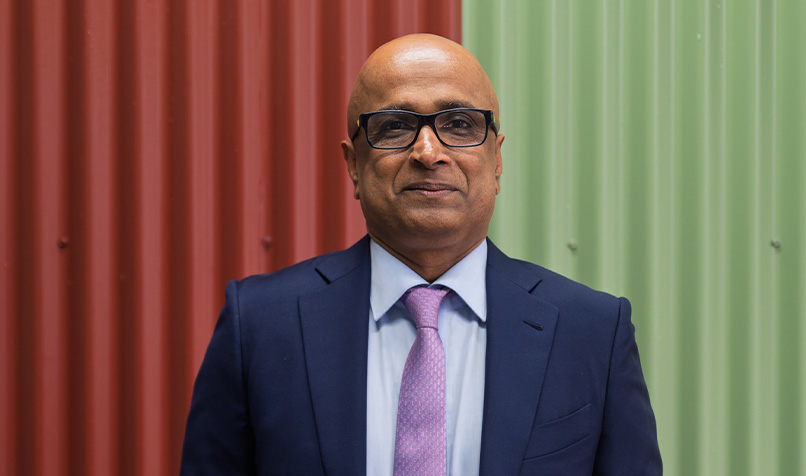
Upon his arrival at Best Sheds, Chacko set out to reform the least expected area: health and safety. The fact that it was not a profit-yielding part of the business did not make it unimportant, he says.
“We put special emphasis on safety because every employee coming to Best Sheds needs to have the feeling of security and safety at work, especially in the manufacturing area. Setting up safety and processes for all the heavy equipment was my first objective.”
Employees need to know that leadership values their protection, Chacko says. “If we show that we will go to lengths to protect them, then they will return their trust in other ways.”
While the building industry has seen an inflation-induced rise in the cost of components and materials, Chacko has found ways to mitigate the problem. “In a volume-driven business like ours, we won’t allow inflation to affect our destiny,” he says.
“We avert this by diversifying the supplier base, through bulk procurement and intelligent contract negotiation, and by optimising the supply chain and production.”
Chacko describes this strategy as a “lean manufacturing method of production”. To him, the term “lean” means refining processes and materials. Most of Best Sheds’ components are locally manufactured in Port Kembla, south of Sydney, and are sold in kit form directly to the customer.
The lean manufacturing method of production is designed to reduce the time taken to produce items and increase supply-chain efficiency. The manufacturing plant is largely automated, reducing waste and further improving productivity.
Chacko and the Best Sheds’ team have been working steadily on further improving manufacturing efficiency through the development of skills matrices and the introduction of new technologies.
How to rebuild and maintain trust in your business
Moral leadership
Nurturing middle management has been central to reform at Best Sheds.
Chacko gave very clear six- and 12-month key performance indicators (KPIs) to the sales teams, section leaders and floor supervisors.
“I know what growth I want in each part of the business, and so there it was for all to see — an Excel spreadsheet that shows what is expected,” he says. “I know my budget for next year, as does each section. The sales offices know what dollars they have to generate, what calls they need to make and the conversion rates. They have it and I have it. There is no lack of transparency here.”
Chacko believes that there is a strong moral dimension to management. He lost his father at the age of eight, which gave him both a sense of resilience and empathy for others. A director of his local Lions Club, Chacko says community is in his blood.
“My employees can always knock on my door. They can always discuss an issue. We have a lot of rules and regulations, but they are set forward in a compassionate way.”
While he admits that the KPIs can be tough, Chacko believes that in the right environment, pressure works for employees, not against them. Nobody needs to ask for a pay increase, because the incentives are built into the system. “They know that if the numbers are reached, they will get an annual wage increase.”
The success of Chacko’s efficiency-based reward system is reflected in the company’s growing revenue. “I work for every section in the business by providing resources, business intelligence and regular feedback to ensure all sections succeed.”
One piece of advice
“As a leader, work for every section in the business by providing resources, business intelligence and regular feedback. Ensure that all parts of the business are complementing each other.”