Loading component...
At a glance
- The concept of leadership is evolving along with employee expectations and emerging technologies.
- Successful leaders are expected to combine data, technology and human capital to drive long-term value.
- Modern leadership requires sound ethical judgement, strategic agility, purpose and vision.
Ask any business leader about the view from the top and they’re sure to offer a mixed outlook. Geopolitical and financial headwinds continue to batter the global economy. Talent attraction and retention remain a source of pressure.
Capital investment in technologies like artificial intelligence (AI) continues to grow, but the payoff remains unclear. And while stakeholder expectations around sustainability are sharpening the focus on environmental, social and governance (ESG) performance, regulatory change is turning up the heat on non-financial disclosures.
Welcome to the world of modern leadership. Though high performance earned many leaders their senior position, the skills that helped them climb the ladder do not guarantee success in the current paradigm. Adaptive challenges demand a fresh approach.
Beyond sharp business acumen and financial stewardship, leaders of today are required to employ emotional intelligence, be inclusive and innovative, lead with purpose, care for the mental health of employees and manage remote teams.
They need to possess visionary qualities, embrace sustainability and grasp the potential of emerging technologies while balancing ethical judgement and strategic agility.
Demands on modern leaders have arguably never been higher. Aspiring leaders must prepare for the complexities of the task and those in the top job must find ways to maintain their resilience.
Doing more with less
A confluence of trends is shaping the expectations of modern leadership. Workplaces today are more diverse than ever, with five generations working side-by-side for the first time. The shift to remote and hybrid work models has also created new challenges around workplace culture and collaboration.
“In a world of growing technology, people feel more and more disconnected,” says Melinda McCormack, founder and director of leadership consultancy MYM&Co. “People in organisations want to feel seen, heard and valued. That traditional top-down control approach doesn’t work anymore.”
Megumi Miki, leadership and culture consultant and author of Quietly Powerful, says the current economic climate has increased the focus on productivity, which creates additional challenges for leaders.
“They face internal pressure from shareholders and the board to be more productive and to do more with less,” she says. “At the same time, employees expect care, connection, authenticity and psychological safety.”

Attracting and retaining talent also remains a struggle in industries like accounting. Data from recruitment firm people2people suggests a persistent talent gap, with more than half of accounting teams in Australia and New Zealand reporting that they are under-resourced.
Chuang-Li Khoo FCPA, senior finance director and Penang site lead at multinational technology company AMD, names talent retention as a primary challenge for modern leaders.
“Of course, money is important, and people also want career progression, but culture and a sense of purpose really matter,” she says.
A measured approach
Technology like AI has experienced explosive growth in recent years, presenting leaders with both opportunity and risk. Data from Mordor Intelligence shows that while the market size of AI in accounting reached US$7.52 billion (A$11.28 billion) in 2025, it is expected to hit US$50.29 billion (A$75.43 billion) by 2030.
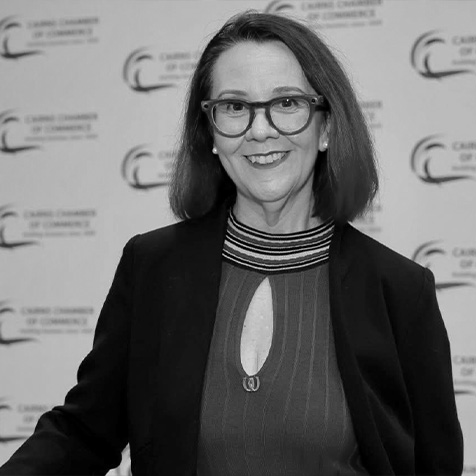
Tracy Sheen, technology consultant and author of AI & U, says leaders must invest in their own digital literacy and accept a degree of uncertainty in a rapidly evolving environment.
“We need to foster curiosity and show a willingness to almost think like a toddler by exploring the ‘why’ of technology,” she says. “Ethics also needs to be front and centre of any new technology discussion. Just because we can, doesn’t mean we should.”
Sheen adds that leaders who succeed in digital transformation are those who ground investment in long-term strategy rather than current trends.
"We need to foster curiosity and show a willingness to almost think like a toddler by exploring the ‘why’ of technology. Ethics also needs to be front and centre of any new technology discussion. Just because we can, doesn’t mean we should."
“We need to test AI adoption like a fire drill, so we know what to do before it happens,” she says. “For example, if OpenAI releases artificial general intelligence next week, what would that mean for us?”
Hafizuddin Sulaiman FCPA, CFO of Malaysian property development company UEM Sunrise, says tech investment requires a measured approach.
“We have developed internal AI leads in our teams,” he explains. “For example, in some teams, we rely on systems that we already have in terms of licensing.
One of them is Microsoft Copilot, and we typically give additional licences to select members of our teams who take a sandbox approach to increasing user knowledge and seeing how it impacts our business, rather than going with a full system procurement.”
Hafizuddin believes that this is the best way to implement new tech into an organisation.
“If you have a new limousine, but you are not equipped to drive it, you may not get the best value and experience out of it.”
The ESG effect
Technological advancements and a changing regulatory landscape have transformed financial reporting, and leaders must now navigate real-time reporting, ESG metrics and predictive modelling to remain competitive and compliant.
Sustainability and governance are also sources of competitive advantage. Analysis by McKinsey & Company shows companies that achieve better growth and profitability than their peers while improving sustainability and ESG, not only outgrow their peers, but exceed them in shareholder returns.
Stakeholders increasingly expect leaders to act on ESG issues, while concerns around greenwashing are also attracting regulatory scrutiny.
“There’s a big push for the ESG agenda and, unfortunately, greenwashing exists,” says Hafizuddin. “As a property developer, how do we make a real business case for ESG as part of our strategic pillars? To me, you have to believe it to operationalise it. It can’t be a branding exercise.”
UEM Sunrise currently maintains 343 acres of regional open space just north of Singapore, known as SIREH Park, as part of its ESG commitment.
“It was recently recognised by the Malaysian Book of Records as the largest urban green recreational park in Malaysia,” says Hafizuddin. “You can imagine the challenge of maintaining that, but we feel that it is important.
“Being a property developer, it is easy for me to just be the capitalist, but leaders cannot be solely motivated by returns.”
AI-Driven Cost Reduction Strategies
People first
As leaders continue to juggle competing demands, McCormack says that they “can’t stick to their old formula”.
“As you come up the ranks, it is all about managing a task successfully,” she says. “But, when you’re asked to lead an organisation or lead teams, it is not about who is the best person technically. It is about who can get the most out of their people.”
Jamie Getgood, founder and CEO of People Avenue, says people-centred leadership has never been more important.
“Every organisation needs to focus on how to embed AI or it will be left behind, but it is people who will underpin that, so leaders can’t lose sight of what people need,” he says. “They want someone who is visionary, who has purpose and who can empower them.”
"Leaders get a lot of glory when things go right, but it is important to recognise that success is never achieved alone. True leadership shines when you work together as one team."
Getgood was head of HR for Holden manufacturing in Australia when its local operations closed in 2017. Prior to its closure, he says the organisation was transformed through people-first leadership. Every leader at Holden was required to dedicate 30 minutes to get to know their people, he recalls.
“When leaders organise their businesses or departments, it is very easy to take a project-management approach by setting goals and objectives and moving forward. They don’t often spend enough time with individuals, asking about their goals and getting to know the employee,” he says.
Research from Gallup shows that engaged teams achieve 23 per cent higher profitability and 18 per cent greater productivity.
Employee engagement is closely linked to purpose, Khoo says. This year, she introduced a theme called “GROW” — an acronym for Great, Relevance, Opportunity and Will — to guide her team’s culture and mindset.
Khoo says leaders cannot succeed in isolation from their teams.
“Leaders get a lot of glory when things go right, but it is important to recognise that success is never achieved alone. True leadership shines when you work together as one team.”
Lead with integrity
Modern leaders carry an increased load. Research into workplace wellbeing by Deloitte and Workplace Intelligence shows more than 40 per cent of C-suite leaders are stressed, 36 per cent are exhausted and almost 70 per cent are considering quitting their job to find something that better supports their wellbeing.
According to Hafizuddin, leaders need to develop an ability to let go. “If you are supported by people who understand your vision, that’s much easier to do,” he says.
Miki agrees that letting go is essential to building resilience among modern leaders.
“A sign of a good leader today is a willingness to put your hand up and say, ‘I don’t know everything, and I need to draw on the expertise and insights of others in my team’,” she says.
Hafizuddin believes professional integrity can help modern leaders navigate demanding terrain.
“There are many challenges today, such as how to stay focused while keeping the team motivated. How do you leverage technology to free up the team to do more strategic work? How do you empower your teams to take ownership and drive the business forward while giving them a safety net? I anchor that with ensuring that we have total trust.
“Long-lasting business relationships are always anchored on integrity and trust. To me, that is non-negotiable.”
Strategies to support leadership challenges
The challenges of modern leadership — and the strategies to combat them — vary, depending on career stage. Here are some strategies for three key leadership stages.
Early-career leadership
Challenge: Transitioning from peer to leader
Strategy: Seek mentoring and guidance from more experienced senior leaders. Establish open lines of communication with the team and set clear boundaries. Be humble and embrace the opportunity.
Challenge: Building trust
Strategy: Focus on enhancing interpersonal skills, seek to influence through collaboration and set clear goals for the team. “You can be very good technically, but you need to have communication skills to take people along with you,” says Hafizuddin Sulaiman FCPA, CFO of Malaysian property development company UEM Sunrise.
Challenge: Developing leadership confidence
Strategy: Step out of your comfort zone and seek out new experiences. “When I was progressing in my career, I consistently volunteered for challenging projects, some across regions,” says Chuang-Li Khoo FCPA, senior finance director and Penang site lead at multinational technology company AMD. “Taking on a really tough project gave me the opportunity to venture into an unfamiliar environment.”
Mid-career leadership
Challenge: Leading through complexity
Strategy: Use scenario planning and involve diverse perspectives to navigate uncertainty. Jamie Getgood, founder and CEO of People Avenue, recommends networking and asking industry peers about their experience. “If you meet someone who you really admire, ask if they’ll make time to have a coffee with you and ask them for their career advice.”
Challenge: Career plateau
Strategy: Take calculated risks. “When I missed out on a promotion, I was so disappointed, but I took an opportunity to become a site leader, which was a completely different experience to the finance function I’d been working in,” says Khoo. “It helped me to develop different leadership attributes and build a network with non-finance teams. It also accelerated my path to become a senior finance director.”
Challenge: Balancing strategic and operational demands
Strategy: Delegate more day-to-day tasks and invest time in longer-term thinking and planning. Sharpen focus on organisational purpose. “Having that sense of purpose can be very helpful in being less self-focused,” says Megumi Miki, leadership and culture consultant and author of Quietly Powerful.
Peak-career leadership
Challenge: Maintaining resilience
Strategy: Focus on the present and make time for personal wellbeing. “Too often, we’re distracted by external and internal things, and that takes away from being able to connect with people and to build trust — which is the job of a leader,” notes Miki.
Challenge: Increased stakeholder scrutiny
Strategy: Maintain integrity and ethical judgement. Ensure clear communication and prioritise meaningful engagement through one-on-one meetings and advisory boards.
Challenge: Avoiding stagnation
Strategy: Stay curious, engage with new technologies, spend time with diverse thinkers and encourage innovative thinking.