Loading component...
At a glance
By Lito Vilisoni Wilson
People are being more selective about who they trust. They are also retreating to smaller, familiar circles and looking to their employers — and their leaders — for stability and uncertainty. Can CEOs help rebuild trust?
According to the 2026 Edelman Trust Barometer, 73 per cent of people believe CEOs have an obligation to help bridge societal divides and build trust, but just 44 per cent believe their leaders are doing this well.
While the research found scientists and teachers to be the most trusted professions in society, CEOs remain ahead of journalists and government leaders.
This level of trust comes with significant expectations, especially in workplaces, where differences in values are beginning to influence how employees work with one another.
In Australia and New Zealand, around three-quarters of people say they are hesitant or unwilling to trust those who see the world differently from themselves.
Globally, 42 per cent of employees say they would rather change departments than report to a manager with different values, while 34 per cent say they would put in less effort for a team leader whose beliefs oppose their own.
Leadership is no longer about whether a CEO is relatable or transparent. The Edelman survey shows there is a new test — whether CEOs can use credibility, openness and judgement to bring people together when trust is fracturing.
Showing up with humanity is essential for leaders

Futurist Dr Ben Hamer, founder of trend intelligence agency ThinkerTank, says the ability to show up is imperative as technology continues to add to employee expectations.
“In an age where I can ask any question to artificial intelligence (AI) and get almost any answer within seconds, it is no longer about having all the answers. It is about asking better questions.”
AI is challenging a traditional source of executive authority — being the person with the greatest knowledge or experience.
“The value of a CEO or a CFO is no longer about being the smartest person in the room,” Hamer says. “We judge them now by how they show up as humans.”
Leaders have to establish enough credibility for people with different perspectives to listen to them — and enough trust for employees to believe that disagreement will not be punished.
What authentic leadership communication looks like
CEOs and CFOs in finance and accounting do not need to become overexposed to be authentic and trusted, Hamer says.
“It is one of the more scrutinised professions and there is a higher level of risk, so they might have to be constrained around what they say but not how they say it.”
This distinction is essential in trust brokering.
"The value of a CEO or a CFO is no longer about being the smartest person in the room. We judge them now by how they show up as humans."
“In a listed company, the CEO and CFO personally declare to the board that the financial records are properly maintained and that the statements give a true and fair view. So, authenticity is not a personal question for them — it is already a professional obligation,” Hamer says.
“And it does not mean absolute candour and absolute disclosure. It is about being able to say, ‘I cannot answer that, and here is why’. People can cope with constraints, but what they cannot cope with is feeling like they are being played.”
How CEOs and CFOs can bridge the trust gap
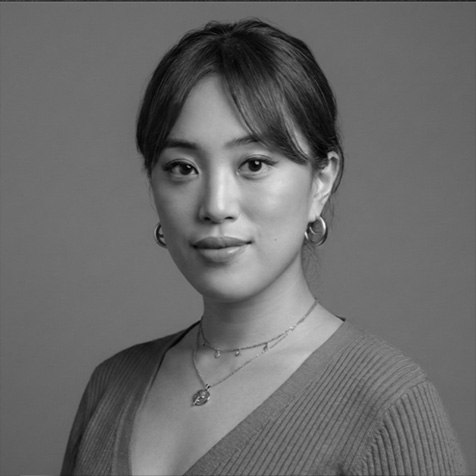
Cynthia Kim, speaker and coach on authentic leadership, says the retreat into like-minded groups (described by Edelman as “insularity”) raises the leadership stakes.
“Authenticity does not mean saying everything. It means being truthful about what you can say and bringing something of yourself into how you communicate it.
“For example, selectively disclosing what you are comfortable with... gives transparency to others, so they feel they are in the same boat.”
Kim likens it to what she calls the “Ripple Effect”, which starts with “The Drop”: a self-awareness and an inner clarity that become honest signals. These are “the small, consistent cues of conviction that others pick up on, that over time become ‘The Ripple’ and then ‘The Wave’ — a micro-culture where people around you start operating with the same honesty, because it has been modelled rather than mandated.
“We do not want to create more differences,” Kim continues. “We want to come together instead of splintering further.”
But leaders have to be willing to make the first move and make the workplace a safe environment.
Leadership trust and crisis situations
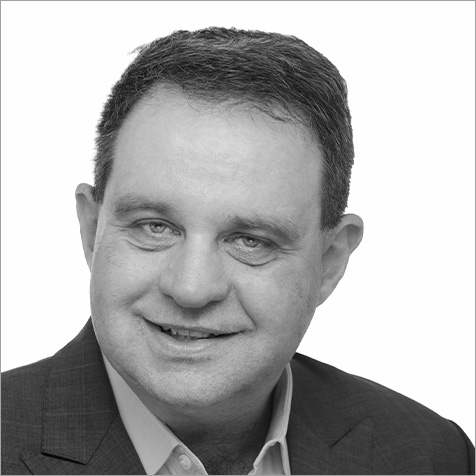
Professor Terry Flew, co-director of the Centre for Artificial Intelligence, Trust and Governance at The University of Sydney, Australia, says the real test of trust brokering comes when an organisation is under pressure.
“Being honest about issues, demonstrating a commitment over time to addressing them, and a degree of openness about how to resolve them builds integrity, and with that, trust.
“Trust is not something people think about every day. It is in crisis situations where questions of trust emerge. And that is the point at which people watch very closely.”
Non-performative vulnerability in leadership
Trust brokering does not mean CEOs are just being more visible online or adopting a less corporate tone, Flew says. As trust fractures, formulaic corporate communications and town halls can struggle to cut through.
Leadership can set the tone, but authenticity must be embedded in organisational culture, particularly as employees expect greater scope for self-expression.
"Trust is not something people think about every day. It is in crisis situations where questions of trust emerge. And that is the point at which people watch very closely."
Leaders do not need to perform emotion to show vulnerability. They should instead acknowledge the problem, explain what they can do and show what will be done.
“Professionals are not seeking remorse,” Flew says. “They are seeking accountability and openness when an issue has to be addressed.”
Trust is earned through proximity and observation
The Edelman findings suggest trust brokering — which the report calls “the response to insularity” — is not about consensus but creating the conditions for people with different views to work together. For CEOs, this means consulting with diverse voices when making business decisions and engaging with critics constructively.
Hamer says that accounting and finance leaders can do this without abandoning professional boundaries. He suggests asking better questions, acknowledging that they do not have all the answers, and taking a genuine interest in their people.
Trust, he says, is earned through proximity and observation — by seeing how leaders behave, treat others and live their values. Employees should be able to say, “I can see you, I can see your values, I can see how you show up, I can see how you treat people, and, therefore, that earns my trust”.
Authenticity is not universal; it is contextual, Hamer says. “Your role, audience and professional obligations determine what authentic leadership is.”
Production credit
Banner image Serhii Shleihel via Getty Images