Loading component...
At a glance
- Since the COVID-19 pandemic, there has been a greater appreciation of the value of the care economy.
- The World Economic Forum is backing a healthy care economy to deliver higher productivity and growth.
- Accountants and finance professionals play a key role in advising businesses about care economy risks and opportunities.
For a sector that often flies under the radar, the care economy is a big deal.
In fact, the International Labour Organisation estimates that unpaid care work, if compensated, would represent 9 per cent of global gross domestic product (GDP), or about US$11 trillion (A$16.83 trillion) a year.
Covering elements such as aged care, health care, disability support, household labour and child care, caregiving is a pillar of social and economic wellbeing.
Professor Irene Blackberry, director of the Care Economy Research Institute at La Trobe University, admits that before the COVID-19 pandemic, the term “care economy” had little recognition. Now it is widely seen as an important driver of inclusive growth.
“For many years, the care community has been taken for granted, particularly the unpaid or informal care,” Blackberry says. “But COVID-19 clearly demonstrated the importance of valuing care. We can no longer afford to keep care as something that just happens in the background.”
Promisingly, Blackberry says that more governments are starting to treat the care community as “critical infrastructure in the same way as transport, energy and health systems”.
Annabelle Daniel OAM is CEO of Women’s Community Shelters, an Australian for-purpose organisation that provides accommodation and support for women and children escaping violence and experiencing homelessness. She believes the care economy has been “staggeringly underestimated” in terms of how many lives it touches.
“At some point, most of us will have somebody in our network who will need aged-care services, for example, or access to disability support workers,” Daniel says.
She is encouraged by rising government, business and philanthropic support for her group’s shelters, along with more corporate and community leaders who are serving on the boards of local shelters as a way of giving back to their cities and towns.
“There is an understanding that domestic violence is a whole-of-society problem and it needs a whole-of-society solution. People are getting involved as part of a more caring Australia.”
An 'invisible service'
The Australian Government is confident the care economy can contribute to gender and socio-economic equality, poverty reduction, inclusive growth and sustainable development.
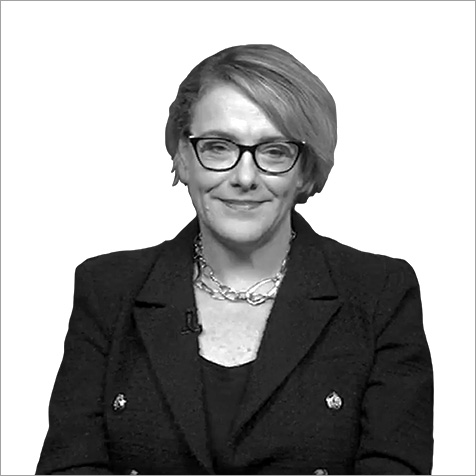
Public policy architect and executive director of the Chifley Research Centre Emma Dawson believes discussions about sharing economic wealth and investing in the care economy go to the heart of what a country wants to be. She says that GDP explicitly excludes unpaid domestic labour as an input to the economy.
While goods and services are treated as valuable outputs, domestic care has been an “invisible service” undertaken in the home.
“But it is critical,” she says. “You cannot leave the house in the morning without eating, washing or getting dressed. All of those things rely on the foundational care economy to provide you with the basics that enable you to do anything else.”
"You cannot leave the house in the morning without eating, washing or getting dressed. All of those things rely on the foundational care economy to provide you with the basics that enable you to do anything else."
Dawson says economists are still struggling with how to apply market-based metrics such as productivity growth to the care economy. However, she is encouraged that the Productivity Commission in Australia has expanded its focus to consider the care economy, social mobility and inequality through a gender lens. “That is a very good development,” she says.
“But more broadly, as a culture, we need to understand the importance of the care and education of young children, people with disabilities and elderly loved ones as a whole-of-economy concern. It is not just about the burden of women in the home.”
Gender-responsive models

The World Economic Forum’s Global Gender Gap Report 2025 notes that women make up 41.2 per cent of the global workforce, but they are mostly employed in lower-paying sectors such as care and education. The report predicts that gender parity could be as much as 123 years away.
Deepa Bharathi, senior gender equality specialist at the International Labour Organisation (ILO) in Thailand, says gender stereotypes and entrenched social norms systematically confine care work as a “woman’s responsibility”. These stereotypes result in undervaluation of the critical importance and contribution of care work to families, communities and economies.
Globally, women disproportionately bear the burden of paid and unpaid care work, a reflection of deep-seated gender inequality in the division of labour.
Recognising care as a critical economic sector and investing in gender-responsive care policies could act as a powerful lever for economic growth and gender equality. For example, the ILO estimates that every US$1 invested in closing childcare policy gaps could generate US$3.76 in global GDP by 2035.
Integrating care value into public investment projects could be a powerful job creation strategy with a strong gender dimension, according to Bharathi, who cites ILO research that indicates that such investments could create up to 299 million jobs by 2035. Crucially, nearly 80 per cent of these new positions (about 239 million) would be held by women, directly addressing their economic exclusion and boosting their participation in the formal labour market.

Iromi Perera, an economic justice advocate and director of the Centre for a Smart Future in Sri Lanka, says care work remains “one of the key reasons women are unable to earn a dignified income”. She points to research showing that more than 700 million women globally remain out of the labour force due to unpaid care responsibilities, compared with about 40 million men.
“Investing in the care economy not only enables better (female) participation in the workforce, but it also allows caregivers to reduce time poverty and enjoy their right to rest and leisure,” Perera says.
Sri Lanka’s “polycrisis”, a phenomenon whereby multiple crises combine to make a scenario worse, has resulted in many households struggling to make ends meet. “For caregivers, this means that their time poverty and care load have not reduced,” she says, “even as they take on additional income-generating activities.”
Perera believes governments and communities should allocate greater budgets to improve the “infrastructures of care”, including day-care centres, after-school programs for children and universal school meals.
“However, it is possible to provide these infrastructures in deeply unequal and meaningless ways. Therefore, proper frameworks for quality of care, investment in improving the quality of infrastructure, as well as investment in those working in the care economy, are a must.”
Addressing the financial timebomb of ageing Australia
Aged-care financial reform
As populations age, the provision of affordable but sustainable aged care will be one of the most critical challenges within the care economy.
In Australia, the June 2025 Aged Care Financial Performance Survey Report from StewartBrown indicates that the sector needs urgent investment to address workforce shortages and declining profitability across residential and home-care services. The survey participants reported an operating deficit of A$1068 per bed per annum, highlighting the cost pressures on such facilities.
For its part, the Australian Government has committed A$17.7 billion to support the Fair Work Commission’s case to increase award wages for 400,000 workers in the aged -care sector.
“That’s pleasing, but it is not enough,” says Daniel Nasrallah FCPA, CFO of VMCH, which provides aged care, retirement living, disability and in-home care services across Victoria. He believes aged-care providers are walking a tightrope as they balance a commitment to the care economy with additional compliance and red-tape provisions that can make it more difficult to sustain operations.
For example, recent government requirements ensure residents receive a set amount of direct care each day, a move that has added significant administrative responsibilities for providers. “If care minutes fall below the mandated level [215 per day], it is flagged and could impact future funding,” Nasrallah explains.
"Investing in the care economy not only enables better (female) participation in the workforce, but it also allows caregivers to reduce time poverty and enjoy their right to rest and leisure."
With an eye to the future, he believes it will take a “collaborative effort” between government, providers and care receivers to ensure quality aged care continues to be delivered. “We’ve all got to play a part in this and I think we will get there.”
Michael Holdom FCPA, chief operating officer of Goodwin, an Australian not-for-profit aged-care provider, agrees that reining in fragmented compliance obligations could help the sustainability of the aged-care sector. He points out that many providers have gone from having one manager handling compliance to now putting on dedicated teams. “It is death by a thousand cuts,” he says.
Holdom says Goodwin is proud to be playing its part in the care economy. One challenge that needs addressing, he believes, is finding a better way to balance care for older people in hospital versus care in an aged-care facility.
“What is the mechanism whereby we can get some of the frail or older individuals with complex needs out of the hospital and care for them in aged-care environments which are dedicated to their needs?” he asks. “There are programs out there trying to address this, but I don’t think we have come up with a perfect solution yet.”
Holdom also hopes that there can be a greater understanding of the role and challenges facing aged-care providers as they contribute to the care economy. He highlights out-of-date media reports suggests that aged-care providers are making significant returns and that government funding should be enough without contributions from residents and clients. “The full story never seems to get out about aged care.”
A role for accountants

For financial services and accounting professionals, the care economy presents an opportunity to help develop sustainable funding models, improve cost transparency and support investment in care infrastructure.
Dawson says having financial advisers who can bridge business and social needs is essential. “This is the fastest-growing sector of the economy and the labour force. We absolutely need the input of people who have the skills and expertise to assess where risks exist, and where investments can be made that deliver not just monetary returns but broader social returns as well.”
In a nod to his background as a CFO in the not-profit sector, Nasrallah has no doubt that accountants “who care about people and resident outcomes” can have an impact in delivering a thriving care economy.
Blackberry believes accountants and financial planners also have a key role to play in ensuring that elderly people plan properly in advance of entering a care environment, rather than waiting until they are ailing. “If you’re a financial planner or accountant, you need to help your clients to plan for a much longer life without earning any income.”
Rethinking values and value
Ultimately, the care economy represents a social contract and a growth opportunity. Governments and investors that recognise this dual value will be better positioned to meet the demographic and ethical challenges of the coming decades.
Bharathi says that there are still many care workers who work long hours without adequate pay or social security.
“Decent work for all care workers is critical. It contributes to quality care, to the recruitment and retention of workers and to the promotion of gender equality, while building resilient societies and economies, and counteracting a shortage of workers.”
She notes that the 2024 International Labour Conference of the ILO adopted the Resolution on decent work and the care economy, which emphasises a role for more public–private partnerships to meet growing demands from ageing populations and increased childcare needs.
As Dawson considers the future of the care economy, she encourages societies to take a broader view of the economic contribution of people — whether it is measuring how much a child contributes economically over the course of their lifetime, or how much can be gained by freeing up women from domestic labour.
“It is also about recognising that, in itself, having people live longer, happier, more enjoyable and more secure lives is surely the very purpose of the economy. We need to take it back to that foundational question: ‘What is the economy for?’ If it is to make our lives better, quality care is foundational to that.”