Loading component...
At a glance
Prime Minister and Minister for Finance Lawrence Wong delivers a 2026 budget that builds on better-than-expected economic performance in the 2025 financial year, to strengthen Singapore’s economy amid global volatility.
The key numbers from budget 2026
- Companies are to be given a 40 per cent corporate income tax rebate in the 2026 year of assessment (YA), with the total benefit for each company capped at S$30,000.
- S$1 billion to fund promising startups.
- S$37 billion in research and development funding.
- Up to 70 per cent funding for small-and-medium enterprises (SMEs) expanding overseas. Up to 50 per cent for non-SMEs.
- The launch of a second S$1.5 billion tranche for the Anchor Fund to attract high-quality Singapore Exchange listings.
- The Financial Sector Development Fund will also receive S$1.5 billion top-up.
- Double tax deduction for internationalisation, with a 200 per cent tax deduction for expanded categories of qualifying activities. The cap has also increased from S$150,000 to S$400,000.
Focus areas of the 2026 Singapore budget
- A national artificial intelligence (AI) strategy
- Capital market investment
- Funding boost for startups
- Tax rebates for companies
- SME support for global expansion
Singapore’s 2026 budget aims to further drive AI transformation of the Singapore economy while strengthening the capital markets, easing business costs and building a more skilled workforce.
Analysis of Singapore budget 2026
Joshua Ong FCPA (Aust.), Singapore Divisional Deputy President, CPA Australia, and Managing Partner, Baker Tilly
“Budget 2026 reinforces the Government’s commitment to strengthening capital market infrastructure and building investor and corporate confidence, positioning Singapore as a leading centre for growth capital.
“The efforts and initiatives to revitalise the equities market have yielded dividends, particularly from mid-2025. The additional S$1.5 billion to expand the Equity Market Development Programme underscores efforts to deepen liquidity, broaden investor participation and enhance market vibrancy, particularly for small- and mid-cap companies.
“At the same time, the second S$1.5 billion tranche for the Anchor Fund should strengthen the pipeline of high-quality companies preparing to scale and grow from Singapore.
“These measures reflect a coordinated strategy to support businesses through uncertain global conditions while cementing Singapore as a resilient and competitive capital markets hub for the long-term.”
Liew Li Mei CPA (Aust.), International Tax Leader, Deloitte Singapore
“Budget 2026 takes a calibrated, forward-looking approach that builds on Singapore’s strong economic fundamentals while addressing a more challenging global environment.
“It prioritises targeted investments in innovation, digital transformation, productivity and skills development, alongside continued support for businesses — particularly those expanding internationally — to strengthen competitiveness and resilience.
“AI features prominently, with initiatives ranging from a national AI council and dedicated AI park to efforts that equip the workforce with AI‑ready skills.
“This underscores Singapore’s commitment to remaining globally relevant and competitive. Continued support for workers and cost‑of‑living measures reflect inclusive growth, while prudent fiscal management focuses resources on long‑term economic sustainability.”
Greg Unsworth FCPA (Aust.), Singapore Divisional President, CPA Australia, and Digital Business and Risk Services Leader, PwC Singapore
“The Singapore Budget announced by Prime Minister Lawrence Wong will help businesses build resilience for the future while supporting the broader population in dealing with increasing costs of living and other challenges.
“For both businesses and individuals, embracing the enhanced use of AI technology tools will be accelerated as workers will be afforded six months of free access to premium AI tools when they take up selected AI training courses.
“The new National AI Council will also importantly provide leadership to help drive strategic technology adoption and transformation across key industry sectors to safeguard their competitive advantage. For the accounting sector these initiatives are good news and will help participants embrace AI technology developments with greater confidence.”
Budget measures
Corporate tax support
A corporate income tax rebate of 40 per cent for 2026 will be applied to all companies regardless of tax residency . The total benefit for each company is capped at S$30,000.
This provides broad-based support to improve business cash flow across all sectors.
Other tax changes and measures
The Prime Minister announced that Singapore will go ahead with the implementation of the top-up tax under Pillar Two of the Base Erosion and Profit Shifting (BEPS) 2.0 framework. This will raise the effective tax rate for large multinational enterprises operating Singapore to 15 per cent.
A double tax deduction for internationalisation was also announced. This is a 200 per cent tax deduction for expanded categories of qualifying activities, with the cap increasing from S$150,000 to S$400,000 (automatic benefit for eligible activities).
Additionally, Singaporeans will enjoy an enhanced Enterprise Innovation Scheme (EIS). This features a 400 per cent tax deduction (100 per cent base plus 300 per cent enhanced) on qualifying expenditure in five eligible categories:
- Research and development conducted in Singapore
- Registration of IP rights
- Acquisition/licensing of IP
- SkillsFuture-funded training aligned with Skills Framework
- Innovation projects with polytechnics, ITE or other qualified partners
AI-specific
- AI-related expenditure qualifies for the enhanced 400 per cent deduction for YA 2027–2028.
- The cap for AI expenditure is S$50,000 per YA.
- The cap for other EIS categories is S$400,000 per YA, with innovation projects capped at S$50,000.
Cash conversion
- Convert up to S$100,000 of qualifying expenditure to cash at 20 per cent rate.
- The maximum cash payout is S$20,000 per YA.
- The minimum expenditure is S$400.
- A given company must employ at least three local full-time employees for six months.
- Available from YA2024 to YA2028.
Business and company investment
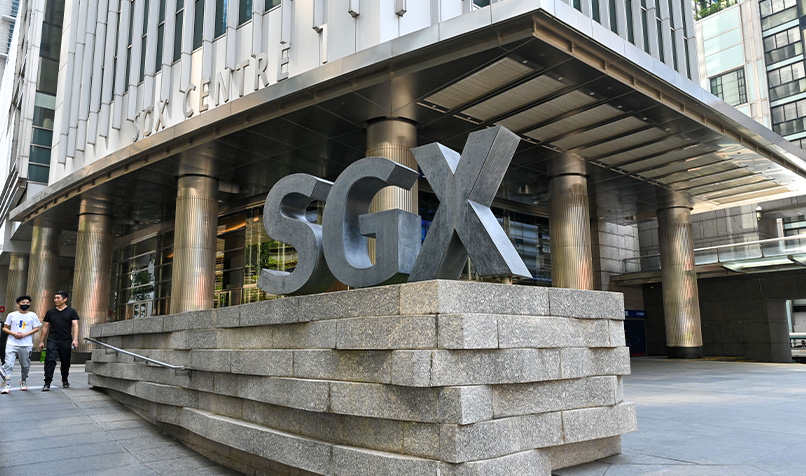
A second S$1.5 billion tranche for the Anchor Fund to attract high-quality Singapore Exchange listings. Additionally, the Financial Sector Development Fund to receive a S$1.5 billion top up.
A S$1 billion boost for a scheme to fund promising startups was also allocated.
Additionally, S$37 billion will be put into the Research, Innovation and Enterprise 2030 plan.
There will also be SME support and internationalisation, with grant-based support.
- Up to 70 per cent funding for SMEs expanding overseas, and up to 50 per cent for non-SMEs.
- The Market Readiness Assistance grant has been extended beyond 31 March 2026.
- Business Adaptation Grant available until 6 October 2027.
- Enhanced support under Global Innovation Alliance (GIA) programs.
Increased engagement with fast-growing markets, including Latin America, Africa and Middle East. Support spans market research, regulatory assistance, business matching and networking.
Economic Development Board Initiatives
- Focus on developing high-growth companies into global leaders.
- Support for firms across all stages to access capital, partners and scale-up pathways.
AI enhancements
A new National AI Council will be established, chaired by the Prime Minister. It will focus on advanced manufacturing, connectivity, finance and health care.
There will also be a “Champions of AI” program, a deep-support framework for firms executing full AI-driven business transformation. This includes enterprise transformation support and workforce training.
A larger AI park will also be established at One-North. It will build on a pilot initiative called Lorong AI, a dedicated co-working space for the AI community at Cross Street.
Green policies

The Energy Efficiency Grant has been extended. Up to 70 per cent co-funding for energy-efficient equipment has been extended to 31 March 2027.
Other measures include:
- Green financing support under the Enterprise Financing Scheme has been extended to March 2031, improving access to green loans for sustainability-related projects.
- Carbon tax rises to S$45 per tonne for 2026–27, progressing toward S$50–80 per tonne by 2030.
- Climate innovation ecosystem: Continued government support for sustainability R&D and commercialisation of environmental technologies. For example, RIE2030 innovation funds and built-environment sustainability centres.
- Energy transition progress: Ongoing expansion of solar deployment and diversification into low-carbon energy sources as part of Singapore’s long-term climate strategy.
- Singapore remains committed to achieving 100 per cent cleaner energy vehicles by 2040.
Salary and employment assistance
There’ll be support for workers with a Local Qualifying Salary, which sets the minimum salary that local employees must be paid in firms that hire foreign workers. It rises from S$1600 to S$1800 in 2026.
Other salary support:
Business wage support scheme
- A minimum benefit of S$1500 for each active company employing one or more local worker in 2025. Maximum benefit is capped at S$30,000, with automatic disbursement from Q2 2026.
Progressive Wage Credit Scheme extended
- Co-funding raised from 20 per cent to 30 per cent in 2026. The scheme has been extended to 2028.
- From 2027 the minimum qualifying wage increase rises from S$100 to S$200.
Foreign workforce policy adjustments
Employment Pass minimum qualifying salary for new applicants increases from $5600 to S$6000 from January 2027.
Foreign worker levy increases:
- Marine sector: +S$100 for basic-skilled workers
- Process sector: +S$150 for basic-skilled workers
- Manufacturing and services: Simplified levy structure
Senior employment support
- Senior Employment Credit has been extended to the end of 2026.
- Highest tier qualifying age raised to 69.
- Government co-funds up to 7 per cent of wages for workers aged 69+.
- Tripartite Workgroup on Senior Employment will convene in 2026.
Skills development
A new statutory board will be formed via a merger of SkillsFuture Singapore and Workforce Singapore, which will be overseen by the Ministry of Education and Ministry of Manpower.
This creates a one-stop national platform for training, career guidance and job placement.
SkillsFuture Enterprise Credit redesigned
Fresh S$10,000 credit for all firms with three or more resident employees. Available from second half of 2026.
Social and family support

An additional S$500 in Child LifeSG credits for every Singaporean child aged 12 and below in 2026. Other measures include:
- Eligible Singaporeans can look forward to another Cost-of-Living Special Payment this year. Those earning up to S$100,000 in assessable income who do not own more than one property will receive S$200 to S$400 in cash.
- More U-Save rebates are also coming. Eligible HDB households will receive up to S$570 in utilities rebates this financial year, which is 1.5 times the regular amount of U-Save rebates.
- S$500 in CDC vouchers will also be provided to all Singaporean households in January 2027.
New CPF investment scheme
- CPF members will soon have the option of putting funds in a new Lifetime Retirement Investment Scheme when it launches in 2028.
- The scheme is a life-cycle investment approach. Members take on more risk with greater exposure to equities when they are younger, and their investments are automatically rebalanced towards safer assets as they approach retirement.
- To help Singaporeans meet their basic retirement needs with confidence, those aged 50 and above with CPF retirement savings below the Basic Retirement Sum will receive a CPF top-up of up to S$1500. There will also be a one-year CPF transition offset for employers.
Economic performance and outlook
- Higher-than-expected economic performance in FY2025 boosted revenues, with corporate income tax as a major contributor.
- Additional revenue from asset-related sources, including vehicle quota premiums and stamp duty.
- FY2025 projected to end with a S$15.1 billion surplus or 1.9 per cent of GDP.
- FY2026 forecast shows a smaller surplus of S$8.5 billion or 1 per cent of GDP.
- Higher corporate tax collections expected from FY2027 following implementation of BEPS Pillar Two.