Loading component...
At a glance
- Beauty sales tend to remain strong during economic downturns. The market is expanding through wellness products, younger buyers, wider product ranges and digital discovery.
- K-Beauty is a major growth driver, reaching A$20.8 billion in 2025. Its success comes from quickly responding to consumer needs, affordable innovation and strong digital channels.
- Dupes, private labels and social commerce are growing rapidly. Physical stores are also becoming more experiential, while sustainable products must remain affordable.
In 2001, Leonard Lauder, then chairman of beauty empire Estée Lauder, noticed an unusual trend in cosmetic sales.
The US economy was down and consumers were cutting back on big-ticket purchases, but women were splurging on the small luxury of lipstick. Lauder called it the “Lipstick Index” — a theory that as parts of the economy come under pressure, people find affordable ways to treat themselves.
Fast-forward more than two decades and while many industries are struggling under tough conditions, the global beauty market is booming and consumer psychology is just one part of the puzzle.
Evolving definitions of beauty, expanded product categories and digital-first discovery are helping to fuel market growth, with McKinsey forecasting global beauty sales to increase by 5 per cent a year, reaching US$590 billion (A$819.5 billion) by 2030.
The Asia-Pacific region is a key engine of that growth, accounting for more than a third of global value in 2025. Korean beauty — or ‘K-Beauty’ — accounts for much of the market, recording 22 per cent year-on-year growth to reach US$15 billion (A$20.8 billion) in the same year.
“It is important to see K-Beauty not just as a beauty trend but as a business model built around consumer insight, innovation and speed,” says Minji Kim, senior research analyst at Euromonitor in Seoul.
“Korean brands are very good at reading what consumers want, such as visible results, ingredients they can understand and good value, then turning those needs into products very quickly. Trends like [music genre] K-pop and social media help raise awareness, but the bigger strength is how this model connects consumer needs, product development and digital channels.”
Innovation and Creativity short course
Beauty's changing face
The beauty market has grown beyond its traditional boundaries of skincare, hair care, fragrance and colour cosmetics, expanding into wellness categories such as sleep care and supplements.
There is also a change in consumer profiles, with the global men’s grooming products market projected to hit US$115 billion (A$159.7 billion) by 2028. The beauty buyer base is also getting younger with Gen Alpha, the demographic cohort born from 2010 to 2024, now engaging with skincare and beauty products at around age eight — roughly five years earlier than Gen Z did.

“Beauty now intersects with the broader wellness market, and consumers are much more knowledgeable about ingredients and the products they want to buy. This is largely because of social media and digital discovery, as products can be easily demonstrated, reviewed and discussed online,” says Kylie Archer FCPA, interim CFO of beauty retailer Adore Beauty.
“The range of products within brands themselves has also expanded,” she adds. “For example, you might have a retinol product available from one brand that comes in a range of different strengths.”
Feedback via digital channels also enables brands to respond quickly to customer needs.
“The beauty sales market in particular is very digital, with e-commerce accounting for about 62 per cent of beauty sales in South Korea,” says Kim. “Brands can read consumer reactions almost in real time. Western beauty companies often have strengths like heritage and global brand power, while Korean brands often compete through flexibility, feedback and a short path to launch.”
Luxe for less
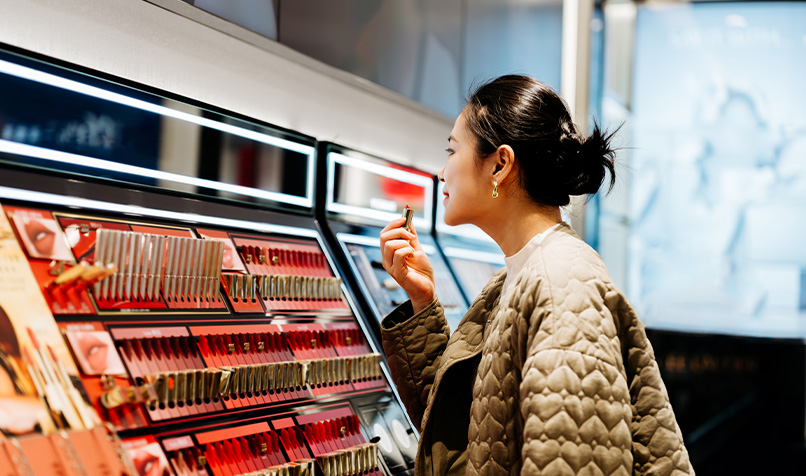
Market growth brings more competition. The McKinsey report notes consumers are embracing lower-priced brands that boast clinical credibility without luxury price tags. Meanwhile, luxury skincare faces pressure from non-surgical cosmetic procedures, such as dermal fillers and laser therapies designed to enhance physical appearance.
The global “dupe” beauty market, which comprises affordable products that closely mimic the performance, colour, texture, scent or branding of a luxury beauty item, is also poised for strong growth over the next decade, expanding from US$4.6 billion (A$6.4 billion) in 2026 to US$14.8 billion (A$20.5 billion) by 2036.
One of the biggest players in the dupe market, MCoBeauty, founded by Australian entrepreneur Shelley Sullivan, was sold in February 2026 in a deal that valued the company at above A$1 billion.
“The dupe industry treads a fine line in how it navigates intellectual property laws,” says Isabel Ley, lawyer and trademark attorney at Litton Legal. “There is often not enough true innovation in product formulas for patents to be an issue, as many do not meet the threshold to be patentable.
Also, words like ‘glow’ and ‘flawless’ may be closely associated with the names of certain luxury products, but the words themselves are not trademarked.”
"In beauty specifically, we are seeing growing demand for in-store experiences where customers can touch and sample products. Given the sheer volume of choice available online, the ability to go into a store and have a one-on-one experience has become increasingly valuable."
Growth in private labels — products that a retailer develops and sells under its own branding — is also increasing competition across the industry. The global private label beauty market is projected to reach US$18 billion (A$25 billion) by 2032, up from US$12.3 billion (A$17.1 billion) in 2024.
Adore Beauty, which stocks more than 14,000 products and recorded revenue of A$207.3 million for FY26, has four private label brands that together make up about 5.8 per cent of total revenue.
“That is something we are definitely focused on growing as a percentage of our overall sales,” says Archer. “There are margin benefits to doing that, and it also gives us more control over what we are offering to the customer.
“But in terms of our broader offering, we focus on five key categories across the business: skincare, hair care, make-up, fragrance and wellness. Within each of those categories, we make sure there is something for customers from entry-level right up to premium and luxury, so a customer can shop their entire basket — high and low — from us.”
Switching channels

The beauty retail landscape is also evolving. E-commerce accounts for the greatest share of beauty market sales by channel (28 per cent), followed by supermarkets (19 per cent) and specialty beauty retail stores (18 per cent).
McKinsey finds that social commerce is growing faster than any other channel.
The Asia-Pacific region led in this space in 2025, capturing approximately 72.3 per cent of total worldwide revenue.
“TikTok Shop in particular is very important, because it makes it much easier for people to move from seeing a product to buying it,” says Kim. “For example, in the US, online beauty sales grew by about 16 per cent in 2025 while TikTok Shop grew by 123 per cent.
But Amazon still accounted for almost 47 per cent of online beauty sales, so this shows that people may discover a product on one platform and buy it on another.”
While online channels take the biggest share of beauty sales, research from Deloitte shows a rise in experiential retail — physical stores that seek to engage customers beyond transactions.

Louise Heath, partner and consumer products and retail sector lead at Deloitte Australia, says beauty is particularly well suited to this experiential model.
“In beauty specifically, we are seeing growing demand for in-store experiences where customers can touch and sample products,” she says. “Given the sheer volume of choice available online, the ability to go into a store and have a one-on-one experience has become increasingly valuable.
“There is also an important human element,” Heath continues. “Customers can have a conversation with a team member or expert who can respond immediately, offer advice and help them try products. That brings products to life in a way that a static website or piece of content cannot.”
K-Beauty giant Olive Young’s flagship store, which opened in Seoul’s Seongsu-dong neighbourhood in 2024, goes well beyond retail. Spanning five storeys and 4620 square metres, the store surpassed 2.5 million cumulative visitors in its first year. More than 30,000 customers have used its beauty consultation services, and more than half were international visitors.
Leading prestige beauty retailer Sephora recently reopened its flagship store at Singapore shopping destination ION Orchard. One of the busiest stores for Sephora worldwide, its experiential offering extends to skincare services and AI-powered make-up colour matching.
In Melbourne, beauty retail giant Mecca opened its 4000 sqm flagship store in 2025. In addition to product offerings from more than 200 brands, it offers more than 80 services across a range of categories.
Meanwhile, Adore Beauty recently expanded into physical stores after more than two decades as an e-commerce platform. “We felt we were under-represented in the beauty market as a whole,” explains Archer. “Some research suggests about 80 per cent of the addressable beauty market is in the offline environment, so we simply were not showing up where the customers were.”
"Beauty now intersects with the broader wellness market, and consumers are much more knowledgeable about ingredients and the products they want to buy. This is largely because of social media and digital discovery, as products can be easily demonstrated, reviewed and discussed online."
The retailer now has 21 stores across Adore Beauty and its IKOU private label brand, with five more due to open by the end of 2026. Archer says physical stores enable services to be added to its existing digital capabilities.
“It also extends the customer experience. We have built in-store treatment rooms with experienced dermal therapists into most of our stores. That serves as a continuation of the expert beauty advice we already provide online.”
Archer adds that there is value in customers using multiple channels to purchase.
“Omnichannel customers have 2.5 times the lifetime value of online-only customers,” she says.
While platforms like TikTok and Instagram are important discovery channels for beauty brands and retailers, Archer says they also accelerate the life cycle of products and trends.
“They change so quickly now,” she says. “The ability for a customer to stay up to date with beauty trends and what is available is facilitated by digital discovery engines. We are continually reviewing and refining our brand offerings and ranges to meet customer needs.
“Over the last financial year, we brought in 16 new brands and discontinued 48, so there is quite a significant pace of change,” adds Archer. “The beauty industry is moving so fast.”
Adore Beauty CFO on steering a beauty industry IPO
What does “clean beauty” mean?
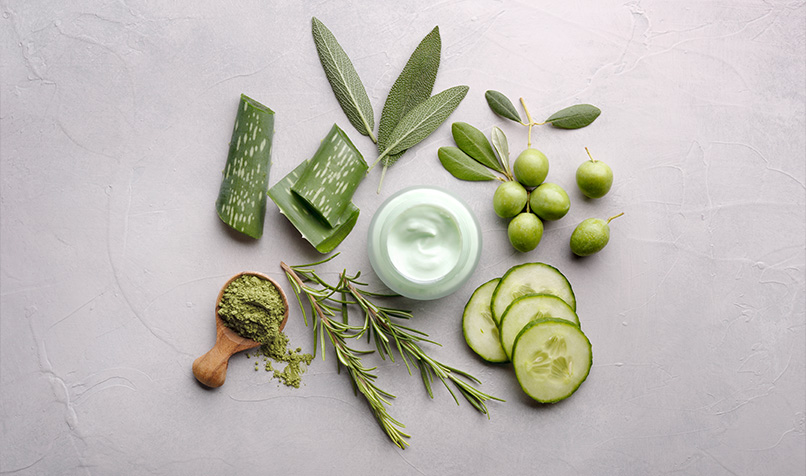
Data from Euromonitor shows sustainable health and beauty products grew at a rate of 9 per cent compounded annually between 2020 and 2023, outpacing their non-sustainable counterparts. In its 2025 global beauty survey, nearly 46 per cent of fragrance consumers said they choose products with at least one “green” feature, while about one-quarter of global consumers were classified as “clean beauty advocates”, favouring, among other things, eco-friendly packaging.
Michelle Ruzzene, editor of independent retail beauty business magazine Retail Beauty, says that while many consumers would like to buy sustainable products, the popular umbrella term of “clean beauty” presents challenges.
“The definition of ‘clean beauty’ is quite opaque,” she says. “For some brands, it means formulating without certain ingredients. For others, it extends to vegan formulations, sustainable sourcing, packaging or broader environmental credentials. The problem is that there is no single, universally agreed definition of what ‘clean’ actually means.
“When brands use the term without explaining the standards behind it, particularly where sustainability or environmental benefits are implied, greenwashing can be a risk across the industry.”
Although consumers have a desire to make sustainable choices, price plays an important role in their purchase. Euromonitor analysis shows global beauty consumers are becoming more price-sensitive and value-driven, engaging in more deliberate purchasing, trading down in some categories and seeking greater value rather than simply cutting beauty spending altogether.
“If two products are similarly priced, consumers are more likely to choose the sustainably or ethically sourced option, but they may not be willing to pay a significant premium for it in today’s market,” says Louise Heath, partner and consumer products and retail sector lead at Deloitte Australia.
“Sustainability, ethical sourcing and sustainable packaging are increasingly becoming underlying expectations rather than features that automatically justify a higher price.”
Production credit
Banner image Iana Kunitsa via Getty Images