Loading component...
At a glance
- Airports face immense pressure as soaring passenger demand, disruptive technology and geopolitics collide with long-term infrastructure and capital commitments.
- Record profits at Australian airports have reignited monopoly concerns, prompting regulators and policymakers to reassess pricing power, transparency and investment oversight.
- To stay resilient, leading airports are expanding non-aeronautical revenues and digital services, waging that reinvestment can align profitability with passenger value.
Think about the logistics and finances required to run the airports of the future.
McKinsey & Co envisages a day not too far away when airports use flying taxis to transport people, while using artificial intelligence and biometrics to allow travellers to smoothly pass through ticketing, bag checks and security. They will also have to cater for about 18.8 billion passengers a year in 2045, up from 10.2 billion now.
Not that running airports is easy today. As gateways to travel and trade, they must generate sustainable profits to keep operating and continually reinvent their infrastructure and services — all while navigating numerous threats.
As one of the biggest aviation hubs in the world, for example, Dubai International Airport typically hosts 92 million passengers per year. In 2026, however, it has been caught in the crossfire of the Iran war, leading to a virtual shutdown of flights — and revenue.
Such scenarios highlight the business-model complexities of modern airports, as they balance profitability and public interest while simultaneously managing infrastructure expansions and security imperatives.

As Varun Saxena, an aviation specialist and partner at Asia-based consultancy YCP, puts it: “Airports face challenges that most businesses do not. They operate as public infrastructure, they are commercially regulated and they must make 30-year capital commitments in markets that can swing sharply in a single year.”
Simon Westaway, CEO of the Australian Airports Association, agrees that aviation is an inherently complex and high-risk operating environment, with airports exposed to a wide range of external factors beyond their control.
Geopolitical instability, such as conflicts in the Middle East, can quickly impact fuel costs, airline operations and passenger demand, underscoring the sector’s volatility. At the same time, airports manage rising costs, workforce shortages and the need to invest in long-term infrastructure.
“Balancing these pressures while delivering safe, efficient and high-quality passenger experiences remains a core challenge,” Westaway says.
Monopoly concerns
The sheer level of profit that airports generate raises questions in some quarters about monopolies and market power, including in Australia.
In its March 2026 Airport Monitoring Report, Australia’s competition regulator the Australian Competition & Consumer Commission (ACCC) reports that Australia’s four biggest airports — Sydney, Melbourne, Brisbane and Perth — each collected record-high revenues in 2024–25.
"It is really important for productivity in Australia that there is a good check on market power … because we do want to make sure that these assets are efficiently invested in and efficiently used. We think it is time to have a look and make sure that customers are being properly protected."
They collectively made A$1.2 billion in operating profits from aeronautical activities (that typically cover landing charges, passenger service fees, aircraft parking and airbridge usage), which is 9.8 per cent higher than the previous year. Sydney Airport’s 20.8 per cent return on aeronautical assets was the highest recorded by any Australian airport in more than two decades of ACCC monitoring.
Such results raise the question: are high profits evidence of efficient capital management or of monopoly pricing power? A new review by the Productivity Commission into regional aviation, along with a Senate inquiry into the state of the aviation sector, including delivery of services in rural, regional and remote communities, means that 2026 is shaping as a critical year for the sector.

On the back of the four airports’ rising profits, ACCC commissioner Anna Brakey has issued a warning about a lack of constraints on airport monopolies, calling for the government to direct the Productivity Commission to undertake a new inquiry into the economic regulation of airports which would consider proposals such as an arbitration regime.
Although the ACCC still supports the rights of airports and airlines to negotiate independently over aeronautical charges, Brakey says there should be access to “binding arbitration in the event that they cannot agree”.
“It is really important for productivity in Australia that there is a good check on market power... because we do want to make sure that these assets are efficiently invested in and efficiently used,” she says. “We think it is time to have a look and make sure that customers are being properly protected.”
Brakey says the ACCC does not want to affect the financial viability of any industry, as that could hurt customer outcomes, “but we do think the major airports hold a very high degree of market power within their geographic location, and that gives us cause for concern”.
Adelaide Airport managing director Brenton Cox says Australia’s current airport business model, following privatisation of major capital city airports in the late 1990s, has delivered significant benefits for the nation — unlocking private capital investment and removing a financial burden from taxpayers.
“Our major airports are widely held by institutional investors, particularly superannuation funds, and have delivered stable, long-duration returns typical of core infrastructure assets,” he says. “Evidence of strong and sustained returns has made them attractive for retirement savings portfolios.”
Cox adds that a key strength of the privatisation model has been regulatory stability. “Airports operate under a long-term lease and monitoring regime, which has historically provided certainty to investors while avoiding heavy-handed price controls. This ‘light-handed’ approach has generally encouraged investment and efficiency, ensuring capital flows without ongoing fiscal cost.”
Climate risk and tourism in APAC: Effects and strategies
Transparency is key
For its part, the Australian Airports Association also supports strong regulatory oversight and transparency in the sector. Westaway notes that four successive Productivity Commission inquiries have found that the current regulatory framework remains appropriate and that airports “have not systematically exercised market power”. He also points to the commission’s previous findings that a negotiate-arbitrate model for airports would likely deliver limited benefits and could introduce additional regulatory burdens.
“Importantly, the Productivity Commission has also made clear that underinvestment in infrastructure could itself be a form of exercising market power, which is why continued, large-scale capital investment is so critical,” he says. Airport charges set through long-term commercial agreements remain “a relatively small component of overall airfares and help fund these major upgrades”.
"Airports face challenges that most businesses do not. They operate as public infrastructure, they are commercially regulated and they must make 30-year capital commitments in markets that can swing sharply in a single year."
Referencing the highly competitive Asian market, Saxena believes the “greedy airport monopoly” narrative is outdated, at least for large aviation hubs. He says there are more structural checks on pricing than many realise, including the regulation of aeronautical charges. Likewise, he notes that non-aeronautical pricing is competitive, with global brands at leading airports such as Changi in Singapore and Incheon in South Korea having to compete with high-street counterparts on pricing.
As a result, they do not pursue price premiums at their airport outlets. “At the network level, airports compete for airlines,” Saxena says. “Pricing incentives, service commitments, route support: these are competitive levers. They constrain tariffs naturally.”
Beyond aeronautical charges
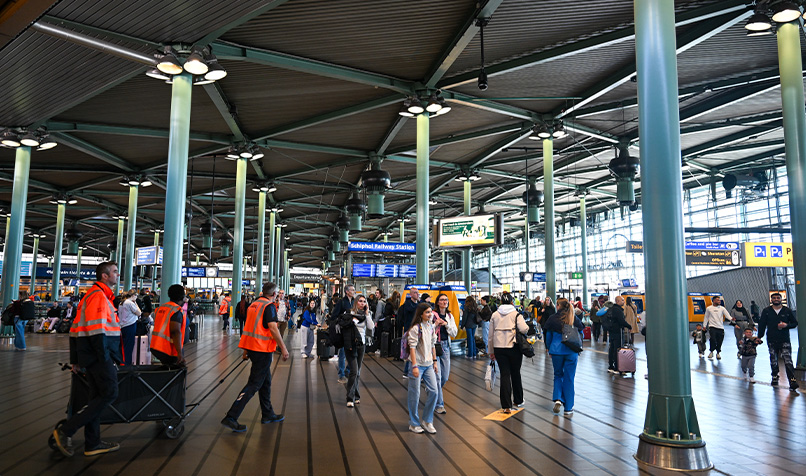
Just how big is the international airport business?
According to the Airports Council International (ACI), global airports will require US$2.4 trillion (A$3.35 trillion) in capital expenditure from 2021 to 2040 to meet future demands. McKinsey forecasts that by 2053, annual aircraft movements will hit almost 176 million, almost twice that of today.
Such scale demands that modern airport business models extend far beyond aeronautical operations. While landing fees and passenger charges make up the biggest proportion of airport income, the best airports are ramping up non-aeronautical revenue streams such as car parking, commercial leasing and property development. The ACI estimates that non-aeronautical revenue now accounts for 36.7 per cent of total revenue globally.
Elite airports have become destinations [see breakout on previous page], not mere transportation hubs. Saxena notes that Hamad International Airport in Doha uses public art and premium lounges to anchor high-spending transit passengers.
Frankfurt and Schiphol airports in Europe analyse loyalty data by layover duration and flight time to push personalised offers, essentially turning a three-hour connection into a revenue window. “This is no longer a side game,” he says. “Dwell-time monetisation is now the primary margin lever at leading hubs.”
In Australia and elsewhere, car parking is seen as the “gold mine” of airports, delivering exceptionally high margins. Sydney, Melbourne and Brisbane airports have also expanded their logistics and warehousing zones in recent years, capitalising on the e-commerce and air-freight boom.
In Adelaide, Cox says the airport is delivering a A$1 billion infrastructure program, of which A$600 million is allocated to aeronautical infrastructure. “This investment supports our record passenger numbers, which topped 9 million at the end of 2025,” he says.
About half of Adelaide Airport’s revenue comes from aeronautical charges, with the remainder being drawn from car parking, retail and land development. “These revenue streams provide important services and amenities for passengers, while enhancing the quality of facilities available,” Cox says. “Around 75 per cent of revenue is linked to passenger volumes in some way, being aeronautical charges, car parking and retail.
Property and development is about 25 per cent of revenue, which provides some important diversification for the business and contributes to the broader function of the economy through providing space and facilities.”
He adds that diversification of revenue streams reduces overall business risk, enhances credit quality and provides ongoing stable revenue in the event of an aviation shock such as the fallout from the COVID-19 pandemic.
Westaway believes Australian airports can learn from international peers such as Changi and Schiphol. Changi has invested heavily in digital, streamlined border processes that reduce friction and move people through quickly and efficiently.
“In Australia, there are clear opportunities to take practical steps in that direction, starting with ditching the paper Incoming Passenger Card and accelerating digital border solutions.”
Likewise, he says airports such as Schiphol demonstrate the value of commercial diversification, with strong retail and hospitality revenue streams that help to support long-term investment. “Together, these approaches can improve the traveller experience while also unlocking productivity gains across tourism, trade and the broader economy.”
Soaring higher
Ultimately, debates about private versus public interest with airports may lie partly in how they reinvest their revenue. If strong returns are spent on modernising infrastructure and improving passenger amenities, profitability could well align with public interest. However, if profits flow primarily to private investors without visible service improvements, regulatory scrutiny is likely to intensify.
What is clear is that billions of dollars will flow into airport upgrades around the world in the years to come, including at Sydney (which plans to link two domestic terminals), Melbourne (a new runway), Brisbane (a new terminal) and Perth (a new runway and terminal).
The Australian Airports Association says about A$33 billion in investment is planned to expand or upgrade Australian airports over the next decade, most of which will be privately funded.
The ACCC’s Brakey says it is important for Australian airports to deliver upgrades that customers are going to value. “Of course, we want customers to be well served, but customers also need to value [the upgrades] and be willing to pay for them.”
Westaway concludes that airports are long-term infrastructure assets that require sustained investment, regulatory certainty and strong collaboration with government and industry partners.
He believes there is a clear opportunity to improve the travel experience through border modernisation and digital transformation. “Ultimately, a strong, resilient airport sector is essential to supporting Australia’s economic growth, regional connectivity and global engagement.”
Elite destination airports in Singapore and Hong Kong
Australia’s airports can learn from leading APAC counterparts that successfully balance profit, service excellence and public value.
Changi airport
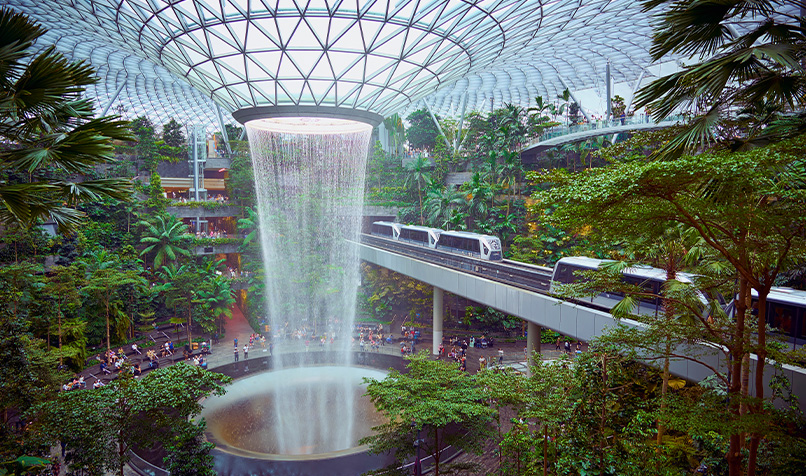
This award-winning Singapore airport exemplifies operates less as a transit hub and more as a combined retail, hospitality and entertainment precinct. YCP’s Varun Saxena says Changi’s Jewel complex, built around the world’s tallest indoor waterfall, attracts about 80 million visitors a year. “It is the playbook, along with Hong Kong’s SKYTOPIA shopping and entertainment precinct: non-aeronautical revenue streams that run independently of the flight cycle.”
With a carefully curated mix of luxury and local brands as well as dining, passengers tend to arrive early and stay longer at the airport by choice, increasing dwell time and spending. Saxena says that by delivering an integrated airport-city experience, Changi cultivates loyalty, generates enormous non-aeronautical revenue and enhances Singapore’s brand as a global gateway.
Hong Kong international airport
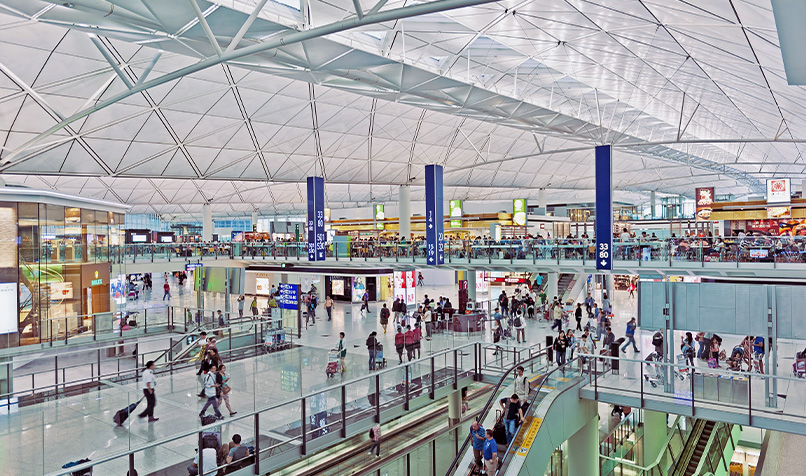
As one of the world’s busiest airports, Saxena says the success of Hong Kong International Airport (HKIA) rests on three pillars: a natural geographic advantage as a transit and cargo hub, financial autonomy and a commercial strategy that treats infrastructure as a revenue platform, not just a cost centre.
The hub airport and its anchor airline, Cathay Pacific, are symbiotic: one provides the network gravity and the other the infrastructure. Saxena says Cathay Pacific's long-haul network fills HKIA with premium transfer traffic, while the airport’s scale and facilities keep Cathay Pacific competitive.
“You see this replicated in Dubai (Emirates), Changi (Singapore Airlines) and Istanbul (Turkish Airlines). The hub is not built by infrastructure alone, it is built by networks,” he says. “The best airports understand this asymmetry and structure incentives accordingly.”