From ledgers to AI: Inside the new world of accounting


Loading component...
At a glance
- The accounting profession has evolved far beyond traditional bookkeeping with advances in technology and broader organisational roles.
- Tools like generative AI and cloud software are automating routine tasks, enabling faster reporting and shifting the skill set needed toward higher-value tasks.
- Sustainability, integrated reporting and ESG considerations are expanding what accountants are expected to contribute in organisational decision-making.
To get a sense of the evolution of accounting over the past 140 years, consider the profession’s terminology and talking points.
While “ledgers“ is still common parlance, it is “large language models“ that sparks water-cooler conversations. Old-school “calculators” and “depreciation schedules” have ceded ground to “the cloud” and “agentic artificial intelligence (AI)” as the topics everyone is talking about.

The reinvention is about more than words, of course. The day-to-day work of modern accountants is vastly different to that of their late-19th-century peers. Dr Jasvinder Sidhu, an accounting academic and historian, says the profession can celebrate moving from a narrow focus on bookkeeping to becoming a strategic powerhouse that shapes organisational decision-making, public policy and digital transformation.
“Today, accountants are not just record-keepers; their role has expanded and continues to evolve,” he says. “They are risk advisers, data interpreters and governance leaders working within different teams and making significant contributions.”
Momentous times
In Australia, part of this force for change started in 1886 when 45 accountants met in Melbourne to discuss the future of the profession.
Recognising the need for greater rigour and substance in accounting, the group decided to form the Incorporated Institute of Accountants, Victoria (IIAV), which was formally registered in 1887. In so doing, those accountants became the founders of what is now known as CPA Australia.
Over the years, CPA Australia has grown to include over 176,000 members while opening offices in New Zealand and key Asian jurisdictions such as Singapore, Hong Kong, China and Malaysia.

Kaushika Jayalath CPA, a technology consultant at Oracle and a member of the CPA Australia board, says the professional body has made an indelible mark on accounting in the Asia-Pacific region, helping members stay engaged and informed on topics such as AI, cloud computing and environmental, social and governance (ESG).
“These are all aspects that I see a CPA Australia member being able to tap into much quicker than others because of our core program, as well as the professional development offerings available at our fingertips.”
Turning points
While the earliest known evidence of accounting practice dates back more than 7000 years to ancient Mesopotamia with primitive transactions involving animals, livestock and crops, the profession has truly progressed and thrived in more recent centuries.
In the 1880s, American railroads needed dedicated bookkeepers and accountants to keep trains on track financially. The Great Depression put the spotlight on weaknesses in financial reporting and auditing, triggering the establishment of the Securities and Exchange Commission in 1934 to tackle abuses and fraud in securities markets.
The world wars accelerated cost accounting. From the 1960s, the broad rise of multinationals fast-tracked global accounting standards. The Asian financial crisis in 1997 and the global financial crisis in 2008 underscored risk oversight. Earlier this decade, the COVID-19 pandemic demonstrated how accountants support resilience, cash-flowmanagement and government stimulus management.
“These events consistently expanded the profession’s scope and public value,” Sidhu says.
The Asia-Pacific region has also been at the forefront of changes, notably because of globalisation in the 1980s and the outsourcing of services and production from developed countries to the developing world. Key milestones have included the establishment of major professional bodies and the rapid rise of global capital markets requiring robust, harmonised reporting.
“More recently, the push toward integrated reporting and sustainability disclosure has been especially influential across the Asia-Pacific region,” Sidhu says. “Given the environmental and other sustainability challenges that we face, the role of accountants has become much more important in terms of sustainability and environmental reporting.”
Welcoming women
One of the most compelling subplots in the history of accounting has been the rise of women in the profession. Today, women make up about 50 per cent of CPA Australia’s membership.
This is a far cry from the days of Mary Addison Hamilton, who in 1915 became the first Australian woman to be admitted to a professional accounting body when she joined the Institute of Accountants and Auditors of Western Australia (a precursor to CPA Australia).
Likewise, the 1977 appointment of Price Waterhouse’s Elizabeth Alexander as the first female partner of any of the nation’s largest accounting firms stands as a pivotal moment.
Alexander remarked at the time that “once [male partners] realised I was serious about having a career and was prepared to put my shoulder to the wheel to achieve it, my sex became irrelevant”. In 1988, she went on to become the first female national president of CPA Australia (then known as the Australian Society of Accountants).
Patrick Ryan's unique collection of accounting history
AI and automation
The growth of accounting has been fuelled by rapid advances in the technology used to perform many of its functions. From the first calculators and spreadsheets to cloud platforms, automation and generative AI, the advent of increasingly impressive technology platforms has allowed accountants to do their work with greater precision and scope.
One clear example of this tech transition is research that shows high adoption rates of digitalisation strategies among Chinese accounting firms.
Accounting software providers such as Xero and MYOB have also been game changers in recent decades, enabling automation for small and medium-sized enterprises that no longer depend on expensive in-house servers.
Today, AI in all its forms promises to take automation and capability to new levels.
An accountant can now deliver a report in a matter of minutes, not days. “That, in effect, changes the skill set needed to be an accountant, because now you need to be good at prompt engineering,” Jayalath says.
With an eye to the future, he believes CPAs will play crucial roles as “AI auditors who direct, control and validate the technology”.
The next phase
As economic trends, geopolitical tensions, ESG requirements and AI adoption reshape the profession, CPA Australia members are preparing for the next phase of change.
Expect the core values of integrity, accuracy and stewardship to be complemented by an expanded set of capabilities such as AI proficiency, data governance capabilities and sustainability reporting expertise, as the profession’s ethical landscape grows more complex.
Skills will also evolve as accountants respond to the need for new advisory services for environmental stewardship.
Jayalath believes that while the language of accounting will evolve, the fundamental meaning of the job, to hold people accountable, will remain a constant.
“Yes, we have gone from ledgers and books to calculators and computers and now to prompt engineering,” he says. “So accounting and its requisite skills will change, but the profession is still very much needed for the sustenance of the world.”
Timeline
| 1886 On 12 April, in the offices of Davey, Flack & Co in Melbourne, a group of accountants set up the Incorporated Institute of Accountants, Victoria (IIAV, now known as CPA Australia) with a remit to improve the profession’s training, standards and ethics. |
1887 The IIAV is officially registered. The IIAV is officially registered. |
| Late 19th century As the impact of the Industrial Revolution peaks, demand grows for skilled financial accountants, external auditors and cost accountants to manage increasingly complex operations and investments such as railways, large enterprises and limited liability companies. |
| 1914-18 During World War I, Australian accountants are instrumental in the rollout of a centralised federal taxation system to help fund war efforts. In 1915, a federal income tax is introduced in Australia, requiring new accounting expertise. |
1915 Mary Addison Hamilton becomes a member of the Institute of Accountants and Auditors of Western Australia as the first woman to be admitted to a professional accounting body in the Commonwealth. Mary Addison Hamilton becomes a member of the Institute of Accountants and Auditors of Western Australia as the first woman to be admitted to a professional accounting body in the Commonwealth. |
1929 The Wall Street crash and the start of the Great Depression expose weaknesses in financial reporting, leading to the development of accounting principles including stronger disclosure rules and an expanded role for accountants. The Wall Street crash and the start of the Great Depression expose weaknesses in financial reporting, leading to the development of accounting principles including stronger disclosure rules and an expanded role for accountants. |
| 1936 The first Australasian Congress of Accounting takes place, gaining media attention for its commentary and warnings to the Australian Government over its finance policy and high government debt. Meanwhile, the first issue of The Australian Accountant (the forerunner to INTHEBLACK) is published. |
| 1939 With the British Government informing its allies that it cannot supply munitions as it had done in World War I, the Menzies government turns to the Australian accounting profession for advice, appointing a panel drawn from the senior ranks of the profession to help negotiate contracts with private munitions producers. |
| 1940 The Register of Australian Accountants for National Service initiative begins, providing voluntary, part-time and afterhours services to the federal government bureaucracy to support the war effort. This unprecedented act adds legitimacy and public respect to the profession of accounting. |
| 1952 The Commonwealth Institute of Accountants and the Federal Institute of Accountants merge to form the Australian Society of Accountants. The society goes global in the mid-1950s, with official representatives appointed in London and Singapore. |
| 1960-80 The post-war and Cold War environments give rise to multinational corporations and the need for global standards for financial reporting and auditing. |
|
1961 The first official Australian Companies Act 1961 passes, establishing a uniform, Australia-specific set of rules for corporations, including uniform accounting practices. |
| 1969 The LANguage for Programming Arrays at Random (LANPAR) is created. It is one of the first electronic spreadsheets for mainframe and time-sharing computers, and it later inspires other alternatives to paper-and-pen financial analysis. |
1970 Inflation soars amid rapid oil price increases and rising wages, highlighting the need for accounting to track price-level and purchasing-power changes. This prompts the development of a different accounting system: Continuously Contemporary Accounting. Inflation soars amid rapid oil price increases and rising wages, highlighting the need for accounting to track price-level and purchasing-power changes. This prompts the development of a different accounting system: Continuously Contemporary Accounting. |
| 1979 Electronic spreadsheet VisiCalc is released and later transforms the personal computer into a business tool. |
| 1981 IBM releases a personal computer that allows third-party hardware and software add-ons, sparking a personal computer revolution and shifting accounting tasks from manual to electronic tabulation. |
| 1983 The application Lotus 1-2-3 is released, handling larger spreadsheets than VisiCalc and fuelling sales of the IBM personal computer. |
1984 The Australian Society of Accountants launches its first national TV campaign Not Your Average Accountant to promote its designation. The Australian Society of Accountants launches its first national TV campaign Not Your Average Accountant to promote its designation. |
1985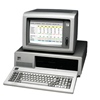 Microsoft Excel is unveiled, making automation of simple and common accounting tasks faster and easier. Microsoft Excel is unveiled, making automation of simple and common accounting tasks faster and easier. |
| 1988 The Australian Society of Accountants establishes its Singapore, Malaysia and Hong Kong branches. |
| 1990 The Australian Society of Accountants changes its name to the Australian Society of Certified Practising Accountants (ASCPA). |
| 1992 QuickBooks is developed, providing accessible accounting tools to small-to-medium businesses. |
| 1995 As Australian Society of Certified Practising Accountants passes the 75,000-member mark, it launches a website. |
| 2000 The Australian Society of Certified Practising Accountants becomes CPA Australia. |
| 2002-08 CPA Australia opens offices in China, New Zealand and Vietnam. |
| 2005 Australia adopts the International Financial Reporting Standards. |
| 2006 Accounting software company Xero is founded, which becomes popular cloud-based accounting software for small-to-medium businesses. |
2008 CPA Australia releases its first Sustainability Annual Report on corporate social responsibility activities and carbon emission goals, positioning itself as a leading advocate for a new and socially responsible way of doing business. CPA Australia releases its first Sustainability Annual Report on corporate social responsibility activities and carbon emission goals, positioning itself as a leading advocate for a new and socially responsible way of doing business.The global financial crisis fast-tracks accountants’ role as strategic advisers, including for stress-testing business models and assessing liquidity and cash-flow risks.  Drawing on blockchain technology, the cryptocurrency Bitcoin is launched as a form of digital currency that does not rely on banks. This ultimately requires accountants to advise businesses on the newest forms of revenue and asset tracking. Drawing on blockchain technology, the cryptocurrency Bitcoin is launched as a form of digital currency that does not rely on banks. This ultimately requires accountants to advise businesses on the newest forms of revenue and asset tracking.
|
| 2020 The COVID-19 pandemic sees accountants play a crucial role in cash-flow strategies, the reconfiguration of supply-chains and the rollout of government stimulus measures such as JobKeeper in Australia. |
| 2020 to today Generative AI automates many accounting tasks such as first-draft financial statements, audit testing and tax research, allowing accountants to spend more time shaping policy, strategy and reform agendas for clients. |
| 2026 CPA Australia has more than 176,000 members in over 100 countries and regions, supported by 20 offices around the world. |