Biodiversity loss: A guide for today's finance leaders

Loading component...
At a glance
- More than half of global GDP depends on nature, which includes biodiversity, ecosystems and ecosystem services.
- Global frameworks help organisations assess, report and act on nature-related risks and opportunities.
- Finance leaders play a pivotal role in translating nature-related risks and opportunities into business strategy.
By Beth Wallace
Biodiversity loss is one of the greatest threats to the planet — and increasingly, to business.
The term refers to the variety of all life forms on earth, from genes and bacteria to entire ecosystems such as oceans, forests and deserts. “Biodiversity loss” refers to any decline in this complex web.
According to the Intergovernmental Science-Policy Platform on Biodiversity and Ecosystem Services, about one million animal and plant species face extinction, many within decades, though some estimates suggest the number could be much higher. Human activities including deforestation, habitat fragmentation and climate change are accelerating its decline.

Beyond environmental consequences, the economic exposure is significant. The World Economic Forum estimates that USD$44 trillion (A$62.32 trillion) of economic value generation — more than half of global GDP — is moderately or highly dependent on nature and ecosystem services.
For businesses, the impacts of biodiversity loss are no longer abstract.
“Companies are encountering it through water constraints, degraded land, volatile commodity supply, and rising regulatory and investor scrutiny,” says Alexandra Banks, EY Global nature lead.
“For finance teams, that brings nature squarely into the realm of material risk. It shifts biodiversity from being an abstract environmental issue to something that directly affects asset values, cash flows and long-term resilience.”
Nature loss in value chains
Businesses are directly and indirectly dependent on nature across their entire supply chain, from access to water, land and raw materials through to the stability of the systems that support production, transport and infrastructure.
“When those natural systems are stressed or degraded, the impacts tend to show up as financial and operational issues rather than environmental ones,” says Banks.
"Companies that take nature seriously tend to make better long‑term decisions. They are more thoughtful about where and how they operate, how resilient their supply chains are, and how exposed they may be to future regulation or market shifts."
Many of the material dependencies on nature only become visible when they fail, she adds. “Businesses experience them through production delays, cost volatility, asset impairment or loss of access to critical inputs.”

Research by the Australian Sustainable Finance Institute (ASFI) shows ecosystem condition directly affects profitability, productivity, land values and loan serviceability in nature-dependent sectors such as agriculture.
Nature degradation such as declining soil health, reduced water availability or vegetation loss can weaken asset performance over time.
“Without better integration of nature-related risks and opportunities into financial decision-making systems, businesses in nature-dependent sectors may not be actively identifying, mitigating and managing material financial risks to the long-term value of their business,” says Kristy Graham, CFO of ASFI. “For financial leaders, biodiversity loss is fundamentally a risk-management issue.”
Seeds of change
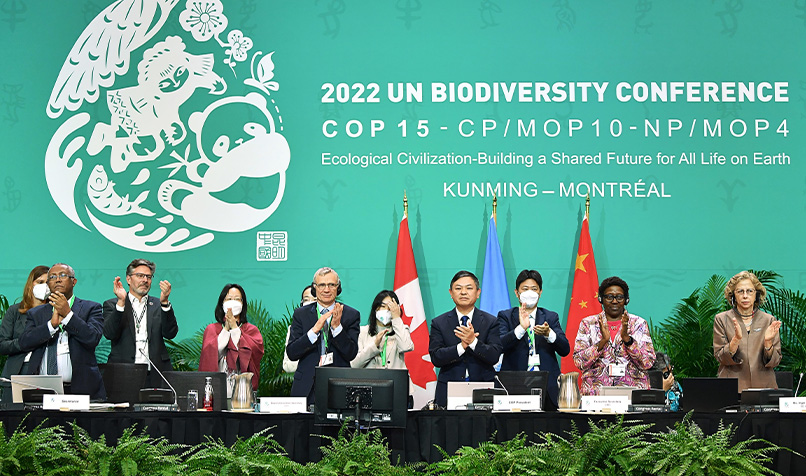
In December 2022, almost 200 countries adopted the Kunming-Montreal Global Biodiversity Framework at COP 15, committing to halt and reverse biodiversity loss by 2030.
Meanwhile, the Taskforce on Nature-related Financial Disclosures (TNFD) has developed a risk management and disclosure framework to help organisations assess, report and act on nature-related risks and opportunities.
Ahead of COP30 in 2025, the TNFD announced that 733 organisations across 56 jurisdictions had committed to making TNFD-aligned public disclosures.

While nature reporting may feel like an additional burden after climate reporting, Patrick Viljoen FCPA, CPA Australia’s environment, social and governance lead, says the two cannot be separated.
“You cannot view climate change and biodiversity in isolation from each other.”
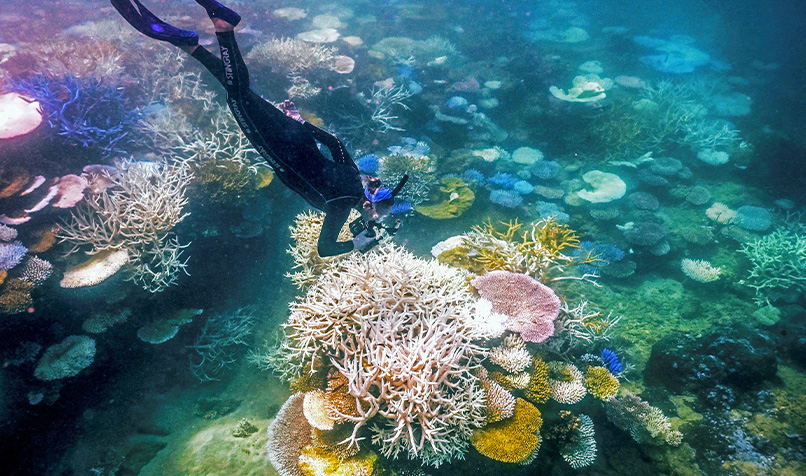
Viljoen uses the Great Barrier Reef in Australia as an example of biodiversity loss (and in this case coral bleaching) being intertwined with climate change. “One is very dependent on the other,” he says.
“We need to think more broadly and in a more holistic fashion about how nature and climate interact with each other, and how we can avoid deploying solutions for one that have detrimental impacts on the other.”
Disclosure requirements are also evolving.
In the European Union, companies above a certain size must disclose the risks and opportunities they identify from social and environmental issues, as well as the impacts of their activities on people and the environment.
While mandatory reporting of this scale is not currently required in the Asia-Pacific region, in late 2025 the International Sustainability Standards Board (ISSB) announced plans to introduce incremental disclosure requirements on nature-related risks and opportunities not already reflected in IFRS S1 General Requirements for Disclosure of Sustainability-related Financial Information and IFRS S2 Climate-related Disclosures.
Drawing on TNFD recommendations such as the LEAP (Locate, Evaluate, Assess, Prepare) approach as appropriate, the ISSB is considering amending existing standards or introducing a new standard.
"It is about understanding your business model and your value chain and identifying, as part of your normal risk-identification process, where you are heavily dependent on nature and where your impacts on nature could be."
“From a standard-setting perspective, I think the TNFD is robust enough to cover most concerns and considerations around nature,” says Viljoen.
However, he warns that nature reporting will be more complex than climate reporting.
“Climate is a global problem and therefore needs global solutions. But nature is extremely location-specific,” Viljoen says. He notes that nature-related challenges and solutions can differ dramatically even within the same country — for example, between the southern and northern states in Australia.
“This is where I think we are going to find a lot of complexity,” he says. Viljoen points out that, unlike carbon, there is not a standard metric for nature, let alone across different jurisdictions. “Yes, we might have an overarching reporting regime, but having comparable reporting is going to be difficult.”
Nature system
One emerging approach is natural capital accounting.
Carl Obst, director at IDEEA Group, works with organisations to develop natural capital accounts, applying internationally agreed standards such as the United Nations System of Environmental-Economic Accounting.
“While having accounting standards is positive, usually our discussions begin with ‘Where does your business connect with nature?’” he says. This starts with describing the business’s “nature system” by recording relevant stocks and flows.
“An accounting framework for nature recognises that a business depends on the environmental assets it owns, uses and manages.”
Each environmental asset — whether a wetland, agricultural land, forest or river — is treated as a distinct asset.
“You need to account for each environmental asset: how much of it you have, its condition or health and what ecosystem services it provides,” Obst says. “Natural capital accounts are basically describing these details at a point in time and then tracking changes, just as a set of company accounts would do for business transactions.
Once you have got that set of accounts, you can report performance, identify risks and opportunities, and run scenarios such as: What would change if we invested here? What would happen if we lost this asset? What services would we lose and who else might be affected?”
Over time, this builds a dataset that can inform strategic decisions. One possible outcome might be that organisations participate in environmental markets, such as Australia’s Nature Repair Market, to counterbalance negative nature impacts.
Organisations may also use the data to identify efficiencies in their use of the environment, “weed out waste” and make their dependence on nature more sustainable.
“You are saving costs because you run in a more efficient manner, and at the same time you are doing good from a nature perspective,” says Viljoen. “It is about balance and viewing these things from more than a cost perspective.”
The topic of capital
A nature financing gap of US$4.1 trillion (A$5.83 trillion) must be closed by 2050 to meet climate change, biodiversity and land degradation targets, according to the United Nations Environment Programme’s State of Finance for Nature report.
Most funding for nature-based solutions comes from the public sector. In Australia, initiatives such as the Nature Finance Council aim to unlock greater flows of private capital.
“ASFI research shows private finance has a critical role to play in closing the nature funding gap, primarily by embedding nature considerations into mainstream financial decision-making,” says Graham.
In its research report Integrating nature into finance, ASFI outlines that scaling private capital requires clear, decision-useful information about how natural capital condition affects financial performance, risk and resilience; and how capital flows most effectively where risk-return dynamics are transparent and measurable.
At present, barriers remain. “Natural capital indicators are not yet consistently integrated into land valuation methodologies, credit assessments or risk-modelling frameworks,” says Graham. “Where improvements in the condition of ecosystems are not reflected in asset pricing or in lending terms, these incentives risk misalignment.”
She says private finance can support progress by integrating nature-related risk and resilience into credit and investment frameworks, developing products that recognise sustainable land management and ecosystem stewardship, and applying consistent criteria to identify activities that support long-term economic and environmental outcomes.
“Ultimately, unlocking larger flows of private capital depends on strengthening the infrastructure of measurement, valuation and disclosure,” Graham says. “Where nature-related performance is visible and financially material, capital allocation should adjust accordingly.”
From compliance to value
At its core, a nature‑positive strategy strengthens the systems a business relies on. “Companies that take nature seriously tend to make better long‑term decisions,” says Banks.
“They are more thoughtful about where and how they operate, how resilient their supply chains are, and how exposed they may be to future regulation or market shifts.”
There is also a value-creation opportunity.
“We are seeing growing demand from investors, customers and employees for businesses that can demonstrate credible action on nature,” Banks says. “Organisations that get ahead of this curve are often better placed to attract capital, build trust and maintain their social licence to operate.”
Beyond emissions: The future of sustainability reporting
Get started
Integrating nature into decision-making and implementing natural capital accounting requires collaboration across sectors and disciplines, from business and government to Indigenous communities and scientists, says Obst. “Making it a shared journey is key.”
Meanwhile, Viljoen advises organisations not to treat climate and nature as separate silos.
“It is about understanding your business model and your value chain and identifying, as part of your normal risk-identification process, where you are heavily dependent on nature and where your impacts on nature could be.”
For Banks, progress matters more than perfection.
“Nature loss is already shaping economic outcomes, whether businesses choose to acknowledge it or not,” she says. “Finance leaders have a critical role to play. When nature‑related risks and opportunities are translated into the language of capital, value and trade‑offs, they start to surface in boardroom conversations where they genuinely influence outcomes.”
Where to begin
- Getting started with adoption of the TNFD recommendations is a practical guide to help organisations start tracking, assessing and disclosing nature-related risks.
- Nature-related risks and opportunities: Guidance for accountants and business leaders helps CPA Australia members to assist their employers when approaching sustainability issues.