Capability unlocked: Adaptability and lifelong learning


Loading component...
At a glance
Accounting and finance professionals now operate in an environment defined by accelerated technological change, rising scrutiny, regulatory complexity and shifting workforce expectations.
Technical expertise remains essential, but it is no longer sufficient on its own.
This six-part series of articles shines a spotlight on the critical capabilities professionals must unlock to remain relevant, trusted and future-ready.
Unlock adaptability and lifelong learning
As the pace of change increases, adaptability is emerging as a vital skill for future success. It involves responding quickly to changing ideas, responsibilities, trends, processes and technologies, and it requires a commitment to lifelong learning.
Factors such as artificial intelligence (AI) disruption, workforce composition and rapid job role transformation are creating a growing imperative for professionals to adapt. For example, CPA Australia’s Business Technology Report 2025 found that 89 per cent of organisations in the Asia-Pacific region are using AI in some capacity and 17 per cent reported a decline in hiring for entry-level or junior accounting and finance roles.
Data from the Accenture Pulse of Change report 2026 also shows the rate of change affecting businesses has surged, with 82 per cent of c-suite leaders expecting a higher level of change in 2026.

Erandi Wickramaarachchi FCPA, group chief financial officer at CIC Holdings PLC Sri Lanka, says adaptability requires willingness and a curiosity to learn new skills — and learn from mistakes.
“The need for adaptability is greater now, because change is coming day by day,” she says.
“I began my career in the finance profession about 25 years ago, when we were dependent on manual bookkeeping. I look back on how I have adapted to change, and I can say I would not have reached this level in my career if I had not been constantly open to learning.”
Why are adaptability and lifelong learning important for the future?
Significant change requires reskilling, and governments across the Asia-Pacific region are responding at scale.
In Singapore, the SkillsFuture initiative has more than 600,000 participants in subsidised training annually, while Malaysia’s MyDIGITAL agenda and Indonesia’s Vision 2045 are embedding lifelong learning into national workforce strategy.
In South Asia, Sri Lanka is developing a National Policy and Framework on Micro-Credentials aimed at promoting lifelong learning and workforce reskilling in response to rapid technological change.
What do adaptability and lifelong learning look like in practice?
Employers and professional bodies have an important role to play in continuous upskilling.
“In our organisation, we focus on cross-functional learning and cross-border activities, as we work with a number of overseas customers and suppliers. Their technology and approaches to areas relating to environmental, social and governance (ESG) and new reporting requirements can be different,” Wickramaarachchi says. “That continuous learning keeps us sharp.
“Professional bodies like CPA Australia also prioritise emerging learning areas, like ESG, sustainability and rapid technology changes, helping professionals maintain professionalism and objectivity,” she adds.
“I encourage my employees to take part in these types of learning opportunities, through available recorded sessions, regional seminars or webinars. That learning process has helped us a great deal.”
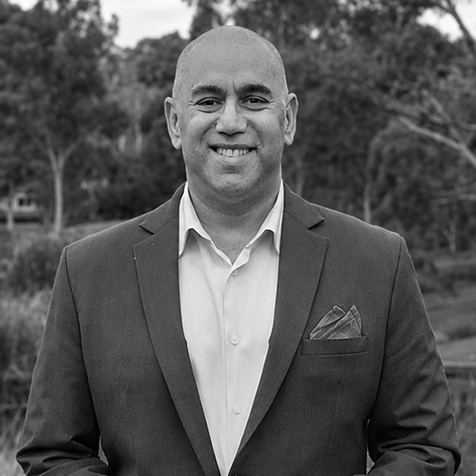
Errol Amerasekera, leadership expert and author of From Fear to Flow: The Adaptive Safety Revolution says investing in learning opportunities can also help employers retain valuable talent.
“People have an intrinsic need to learn, grow, evolve and move towards some kind of mastery in their profession,” he says. “Organisations that can provide that learning pathway go a long way toward improving employee retention.”
However, Amerasekera adds that organisations must establish a culture of psychological safety so that employees feel encouraged to learn new skills without the fear of making mistakes.
“It is one thing to have an intent to be adaptable or to build a learning culture, but without a foundation of safety — what I call adaptive safety — in the organisation or team, that learning stalls really quickly,” he says.
Adaptability is how we convert experience into capability, Amerasekera says. This requires what he describes as “reflective capability”.
“For example, after a team meeting, you might do a five-minute debrief and ask questions like: ‘How was trust today? Whose voices were or were not heard? What did we learn?’ When that becomes a ritual after every team meeting, you are building the capability of a team and of individuals to reflect on their own process and extract the learning from it, rather than the learning that only happens at a workshop or a training day held every three months.”
The importance of adaptability
AI is rapidly changing professions like accounting, but Wickramaarachchi says some skills will remain valuable despite technological disruption.
“The first is analytical skills. AI can throw numbers at you, but you need your human brain to analyse them,” she says.
“The second is technical knowledge, which is non-negotiable. As finance leaders around the world, we speak one common language because of our shared basis in accounting, financial reporting and standards of integrity and honesty, regardless of what AI or new tools come to market.
"I began my career in the finance profession about 25 years ago, when we were dependent on manual bookkeeping. I look back on how I have adapted to change, and I can say I would not have reached this level in my career if I had not been constantly open to learning."
“The third is business partnering, which requires strong communication, and the fourth skill is negotiation — being able to reach an agreed position.”
Wickramaarachchi believes adaptability is the fifth essential skill.
“The tools we use and the environments we work in are always changing,” she says. “I believe learning is never finished.”
How can you build your adaptability and lifelong learning skills?
Amerasekera likens adaptability and lifelong learning to physical exercise.
“If you go to the gym once every three months, nothing really changes,” he says.
“If you go a few times a week, you get stronger. If adaptability is a muscle, we need to train it regularly, which can require being a bit uncomfortable — the same as a regular workout — so that it is there when we need it.”
Amerasekera recommends creating learning rituals within the rhythms of workflow, either as an individual or as a team.
"People have an intrinsic need to learn, grow, evolve and move towards some kind of mastery in their profession. Organisations that can provide that learning pathway go a long way toward improving employee retention."
“It could be an end-of-week 15-minute debrief with the team, or a post-project deep learning session that goes beyond outcomes, budget and timelines, and asks ‘How was collaboration? Where did trust break down or where did it hold? Where did communication get bottlenecked?’ Then you keep asking ‘why’ until you get to the root cause, so you can address it and do better next time.”
Wickramaarachchi also recommends exploring micro-credentials for upskilling and using AI to support learning.
“You can gather knowledge from AI but never compromise your code of conduct or technical knowledge as a finance professional,” she says. “What technical knowledge gives me is the ability to question my AI agent.
“That opens up the discussion with my team,” Wickramaarachchi continues. “It is not a one-sided decision — we put the options on the table, discuss them, and my team brings their own suggestions and experience.
“Irrespective of your age, where you are in the world or which industry you are in, your learning should not stop,” she says.
Capability-building tip
“Do not become so reliant on technology that you lose balance. You have to adapt, but you should not use AI without using your own brain. Use AI as a tool to manage your most valuable resource — time — wisely and effectively. Your brain should always be superior to AI. Human thought should always come first.”
Erandi Wickramaarachchi FCPA, CIC Holdings PLC
Production credit
Banner image Techa Tungateja via Getty Images