Modular housing explained: Costs, barriers and opportunities


Loading component...
At a glance
- Modular dwellings are gaining traction across APAC as rising building costs, higher interest rates and limited ownership prospects push buyers toward faster, flexible housing options.
- Despite strong demand and fast construction, modular housing faces key barriers including lending caution, valuation challenges and outdated accounting practices.
- Integration challenges, factory-to-site logistics and market differences mean modular housing must evolve alongside traditional models to scale effectively.
Demand for alternative dwellings is growing as housing shortages intensify across the Asia-Pacific. Rising interest rates and housing costs are having an impact, with one study finding young people today feel they have little hope of owning their own home.
Lending and accounting standards need to catch up to support more widespread adoption of new housing options. Can modular homes alleviate the housing shortage?
Prefabricated housing has a range of benefits, and modular housing is just one of several emerging models, including tiny homes, that have the potential to take some of the pressure off a stretched housing market and address housing affordability.
Modular homes can be configured from just a couple of modules through to much larger, more complex designs. This contrasts with tiny homes, which are often built to be transported on a trailer.

“You could once easily pick a modular build from a traditional one,” says Jess Berry, managing director of registered builder and modular manufacturers, PIQUE and Fox Modular. “What has really changed is the level of design and execution. You cannot tell the difference between a modular home and a traditional build.”
The size of the modules that can be transported is the only real limitation, with a five-metre limit on height and a width restriction of about four metres.
By contrast, another affordable housing option, called a “granny flat” in some countries, is normally a second, fully self-contained residence next to a primary house that contains a separate laundry, bathroom and kitchen to comply with building code standards.
Another option for building more affordable housing is 3D printing, with the printer producing the concrete components of the house on site. “At the moment, this is mainly being used for single-storey family homes,” says Mark Cooper, senior director of thought leadership for Asia-Pacific at the Urban Land Institute.
“The construction process is not cheaper, but it is much quicker, which can reduce costs overall. The technology is also labour efficient. It is a parallel technology to modular housing, but not a replacement.”
He says that the construction industry will need to become familiar with building practices that involve 3D printing for the technology to be widely adopted.
A growing market
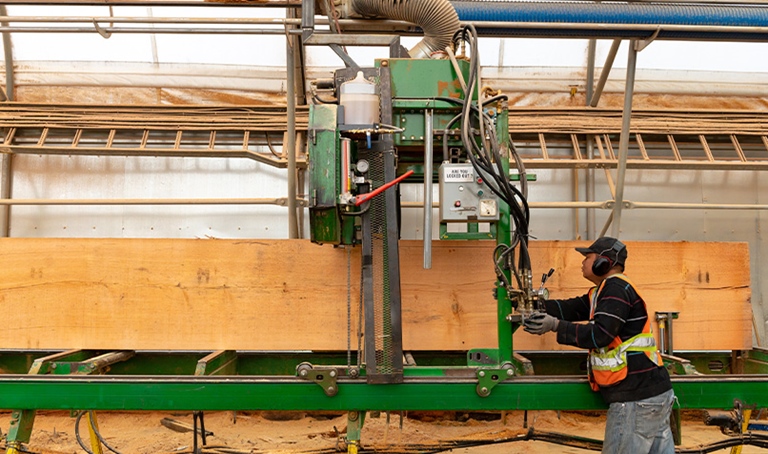
With pressure on the housing market due to rising building costs and a lack of supply, the market for less traditional residential structures is changing.
“At the start of the housing crisis, we saw a big push toward granny flats, especially with lockdowns and more kids moving back into the family home,” says Berry. “That demand shifted into modular housing as more people started moving out into regional areas.”
Demand for modular homes has transitioned back into metropolitan areas since the end of the pandemic. “We have been pulled into these markets more than we have actively targeted them. It shows the demand out there, especially as modular builds are so much faster,” she continues.
Berry’s companies operate at one end of a growing market. For example, a recently announced Built Group/Wesfarmers joint venture is establishing a new manufacturing facility to produce more than 2000 high-quality modular and precast apartments per year.
Construction and procurement of specialised manufacturing equipment is expected to start in the second half of 2026, with manufacturing targeted for early 2028.
“Some of the more innovative developers are working out how they are going to integrate modular housing into traditional estates,” Berry says. “It has been a really positive shift to see, because it will start to put modular on a completely level playing field to traditional housing.”
APAC adoption
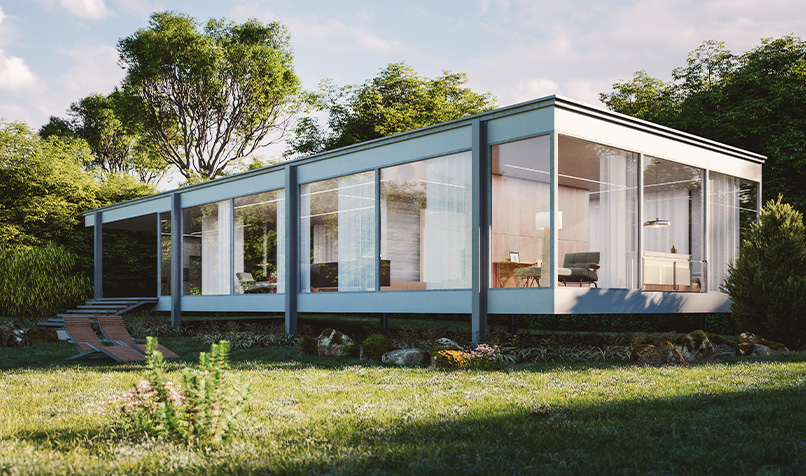
In the Hong Kong residential housing market, modular housing is used for public housing, not so much for affordability but for speed.
“There are two categories of temporary public housing, transitional and light public housing, where modular construction is being used to build quickly,” Cooper says.
“The idea is to build temporary housing for people who have been waiting for public housing for a long time. There is a big list, and the government is using modular construction to accelerate delivery.”
Different Asian countries are adopting modular housing in different ways depending on the market’s idiosyncrasies, with Singapore’s Housing Development Board among public housing bodies across the region rolling out modular construction.
"At the start of the housing crisis, we saw a big push toward granny flats, especially with lockdowns and more kids moving back into the family home. That demand shifted into modular housing as more people started moving out into regional areas."
“The logistics between the factory and the construction site is an important factor in modular housing,” Cooper says. “Your cost and time savings disappear if the factory is a long way from where you are building.
The longer the journey time between the construction site and the manufacturing site, the more difficult and expensive the whole process is.”
This also tends to be why modular housing manufacturers are not located where real estate is expensive, he continues. “If it is an expensive place to build housing, then it is probably also an expensive place to build a factory. That is why modular housing is not necessarily a panacea.”
Lending layers
Banks approach new property models such as modular housing and tiny homes with caution, to ensure they understand the risks involved in the property and the underlying security.
Yet while lenders have traditionally struggled to accept the risks associated with this form of housing, new financing options are starting to emerge.
The Commonwealth Bank of Australia has updated its lending policy to make it easier for customers to finance prefabricated homes by allowing them to access funding during the offsite construction phase. Historically, customers had to cover significant upfront costs themselves.

“If there are issues in terms of repaying the loan, the bank’s ultimate recourse would be to sell the property to realise the value,” says Patrick Viljoen FCPA, ESG lead at CPA Australia.
The valuation risk is a major hurdle because property values are typically based on a home’s resale potential.
“When a property is offered for sale, its value is based on the dwelling and the land combined. They are immutable,” Viljoen continues. “Whereas for a modular home, the purchase of the land and the purchase of the modular unit are not viewed as the same.
Traditional valuation models therefore face difficulty when applied to modular dwellings.”
Building hurdles
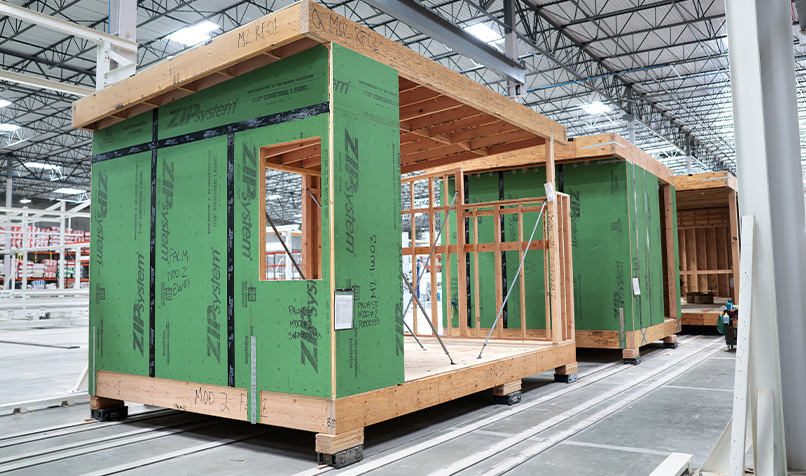
Given the non-traditional risk profile, the credibility of the builder is paramount.
“When buying a modular home, the onus falls on purchasers to do their due diligence into the provider’s credentials to understand the risk,” Viljoen says. To help streamline buyer choice and the lender’s processes, for example, Commonwealth Bank provides a list of CommBank Assessed Manufacturers that meet the bank’s criteria for this form of lending.
Traditional residential building accounting practices also do not typically align with construction, which is another hurdle the modular building industry is grappling with.
“The build time with modular is so much faster than a traditional build, so work-in-progress (WIP) accounting methods tend to lag behind reality, working in reverse,” says Berry. “In practice, WIP needs to be treated more as a forecast-to-completion, rather than a straight earned revenue view, otherwise it does not reflect what is happening on the ground.
"About 75 per cent to 80 per cent of carbon emissions contained in buildings are embedded as part of the construction process. Modular housing reduces construction emissions because providers can gain factory efficiencies as part of the construction or assembly process and reduce construction waste."
“If you try to apply standard construction metrics or even typical earned revenue models, they are always slightly out of sync, which means you are not getting a true read on performance at any point in time. It has taken a bit of time and adjustment to get that understanding with our accountant. But once you adjust the lens, it starts to make a lot more sense.”
Viljoen believes this comes back to the matching principle, where revenues and expenses are matched up.
“Modular homes fall within the catchment of a construction contract, which has staged payments. It does cause an issue, because until now accounting for construction contracts were for big property developments and gave you a lot of flex in the time period for that matching to happen. If you squeeze that into a tighter timeline, recognition becomes tricky,” he says.
Another consideration is that modular building comes with significantly higher overhead costs as construction takes place on the builder’s land, rather than the client’s land.
“From an operational perspective, you always need to keep the yards at capacity, which means thinking about the business from both a manufacturing and construction standpoint,” Berry says. “If you treat it purely like traditional building, you miss a number of cost and efficiency factors that are critical to managing risk and keeping the model sustainable.”
Sustainable strategies for fixing housing supply gaps
A green alternative
Accounting and other challenges associated with modular housing should moderate over time. If they do, modular homes could be part of the transition to a more sustainable building sector.
“About 75 per cent to 80 per cent of carbon emissions contained in buildings are embedded as part of the construction process,” Viljoen notes. “Modular housing reduces construction emissions because providers can gain factory efficiencies as part of the construction or assembly process and reduce construction waste.”
While modular homes have sustainability benefits, position still matters. “It is a question of space and location in terms of where modular housing can be used. There is much more in the outer-lying regions of our cities, not in CBD areas,” he continues.
While it is theoretically possible to buy an inexpensive kit home and ship it internationally, when environmental factors are a consideration it is important to weigh up the carbon dioxide emissions this produces.
“Anything brought in from overseas still has to meet strict Australian compliance requirements,” says Berry. “A lot of our design approach is driven by climate considerations, particularly site orientation and performance.
Because of that, it is not realistic to design a module that works universally across every orientation and every site condition — it has to be tailored to the location.”