Loading component...
At a glance
Hong Kong’s first Five-Year Plan for Economic and Social Development (2026–2030) sets out an ambitious road map for the city’s next phase.
Among the key priorities are deeper integration with the Chinese Mainland, a stronger role as an international financial centre, and expansion of its wealth management, Renminbi (RMB) and commodity markets — each creating new opportunities and considerations for accountants.
Unveiled by Hong Kong chief executive John Lee on 16 September 2026 and followed by a detailed Policy Address, the plan outlines a strategic vision to strengthen Hong Kong’s position as “Four Centres and One Hub”.

Samantha Yim, advisor, business investment and international policy, standards and external affairs at CPA Australia, says the plan could open the door to cross-border accounting work while creating fresh opportunities to advise clients expanding between Hong Kong, the Chinese Mainland and overseas.
“The accounting profession is well positioned to play a key role in supporting the development of ‘Four Centres and One Hub’ by delivering internationally recognised services aligned with global standards and helping to facilitate investment,” she says.
“We are pleased to see the plan align with many of the policies that CPA Australia has previously advocated for, such as the expansion of RMB-denominated investment and risk-management products, the development of Hong Kong’s commodity trading ecosystem and greater cross-border financial connectivity.”
A stronger global financial centre
In 2025, Hong Kong surpassed Switzerland to become the world’s top cross-border wealth management centre. Data from Boston Consulting Group shows cross-border wealth in the region rose 10.7 per cent to US$2.9 trillion (A$4.17 trillion).
Hong Kong is also home to more than 3380 single-family offices, representing growth of more than 25 per cent over the past two years.
The Five-Year Plan seeks to build on this through tax, investment-product and cross-border infrastructure measures that make Hong Kong a strategic base for wealth management.
Examples include broadening investment products, such as alternative-asset funds and real estate investment trusts, as well as expanding cross-border investment channels like Wealth Management Connect.
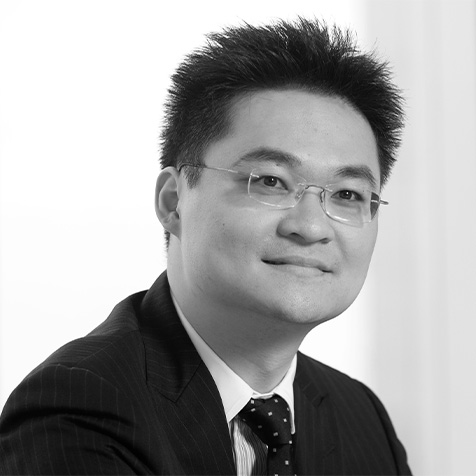
“This expansion puts the spotlight on accounting and finance professionals to help their clients look at things like their business and portfolio operations, risk management, and tax and accounting matters,” says Anthony Lau, tax and business advisory Hong Kong leader at Deloitte China.
“There is a growing amount of capital being deployed here, driving a growing demand for skilled finance and accounting professionals to support the single-family offices that are newly established .”
Expanding Hong Kong’s offshore RMB market
As the world’s largest offshore RMB business hub, Hong Kong is seeking to strengthen its position by enhancing market infrastructure and expanding its range of offshore RMB products and services.

Cyrus Cheung FCPA, director of group finance and capital management at New World Development Company Limited and CPA Australia divisional council president for Greater China, says demand is likely to increase for roles such as RMB treasury and cash management, cross-border financing and trade settlement, Dim Sum bond issuance, foreign exchange and interest-rate hedging, as well as tax, accounting and regulatory advisory for RMB transactions.
“As RMB internationalisation continues and cross-border business activities expand, firms with expertise in both Hong Kong and the Chinese Mainland regulations, financial reporting and tax frameworks will be well positioned to help clients manage funding, liquidity, compliance and reporting requirements across the two jurisdictions,” he says.
Increasing Greater Bay Area cross-border integration
Hong Kong also plans to modernise its capital markets by streamlining listing requirements and reducing compliance costs, making it easier for overseas, Chinese Mainland and technology companies to list.
In practice, this includes simplifying prospectus requirements, encouraging dual-primary and secondary listings, and reviewing the market-capitalisation threshold for specialist technology companies.
It will also expand cross-border market access through investment channels such as Stock Connect and Bond Connect, enabling greater investment flows between the Chinese Mainland and Hong Kong.
"As cross-border business integration deepens, demand is likely to increase for professionals with expertise in accounting, finance, tax regulations, treasury management, risk and insurance, sustainable finance and regulatory compliance."
Yim says this will help foster Greater Bay Area integration.
“Our recent research found that Chinese enterprises are entering a more advanced stage of globalisation, transitioning from opportunity-driven expansion to capability-driven growth,” she says.
“Over the next one to three years, 67 per cent of Chinese Mainland companies will prioritise market expansion. As integration deepens, Hong Kong’s accounting and finance professionals will play an increasingly important role in providing the expertise and financial services needed by Chinese companies seeking to access international markets.”
Making it easier to expand globally
Lau adds that Hong Kong is an ideal platform for Chinese Mainland enterprises to “go global”.
“One of Hong Kong’s unique advantages is that there are no foreign-exchange controls, and tax rates are relatively low,” he says.
“Another important point is that beyond using Hong Kong as a holding-company location, many Chinese companies going global can benefit from setting up a corporate treasury centre here.
“Initially, they might use Hong Kong to make a capital contribution to an overseas operation or provide it with a loan,” Lau adds.
“As those operations become more mature and generate sustainable profits, they can pay dividends back to Hong Kong.”
Lau explains how that cash can then be retained in Hong Kong for foreign-exchange risk management and hedging, rather than being immediately repatriated to the Chinese Mainland. The funds can subsequently be used to invest in other new markets.
“That is why Hong Kong has a unique proposition for Chinese Mainland companies looking to go global, particularly from a corporate-treasury perspective, combined with the preferential 8.25 per cent tax rate,” he says.
A dual-engine strategy helping to set Hong Kong apart
The Five-Year Plan also positions Hong Kong’s Northern Metropolis as a new growth engine and a hub for innovation and technology.
“We now have a south–north dual-engine strategy,” Lau says. “The south is our financial strength, and the north is our booming innovation and technology centre.”
Development of the Northern Metropolis may be accelerated thanks to new preferential policy packages, including land grants, financial subsidies and tax incentives to attract high-value industries and high-potential enterprises.
"The accounting profession is well positioned to play a key role in supporting the development of ‘Four Centres and One Hub’ by delivering internationally recognised services aligned with global standards and helping to facilitate investment."
Lau adds that the Five-Year Plan’s initiatives may help to set Hong Kong apart from other hubs in the Asia-Pacific region competing for the same capital and talent.
“For example, Hong Kong is now providing a specific tax incentive to fund managers, with profit-sharing compensation exempt from tax,” he says.
“That means a lot of asset managers will be attracted to Hong Kong, because if you give the same compensation in those other jurisdictions, take-home pay for individuals in Hong Kong will be higher.
“We are already seeing a lot of feedback and comments from overseas managers saying that if they want to enter Asia, they will consider Hong Kong as a preferred jurisdiction.”
What Hong Kong’s Five-Year Plan means for accountants and finance professionals
With the Five-Year Plan reinforcing Hong Kong’s role as an international financial centre and gateway to the Greater Bay Area, Cheung says finance professionals can expect to be in high demand.
“As cross-border business integration deepens, demand is likely to increase for professionals with expertise in accounting, finance, tax regulations, treasury management, risk and insurance, sustainable finance and regulatory compliance,” he says.
“The focus on Northern Metropolis development, innovation and technology, supply-chain headquarters and green finance is also expected to generate opportunities in project finance, valuation, ESG reporting, capital markets and corporate governance.
“The Five-Year Plan and Policy Address reinforce Hong Kong’s role as an international financial centre, offshore RMB hub, risk management centre and gateway to the Greater Bay Area.”
Production credit
Banner image ?? via Getty Images