Loading component...
At a glance
- Longer lifespans and lower birth rates are straining retirement systems as fewer workers support more retirees.
- Businesses can benefit from retaining experienced employees, but must tackle ageism, skill gaps and added workforce costs.
- As people work longer, access to financial advice, training and inclusive cultures becomes increasingly important.
By Domini Stuart
Over just 50 years, average life expectancy has increased by more than a decade in developed nations. Around the world, this is raising questions about ageing and retirement for individuals, organisations and governments.

“A combination of increasing life expectancy and falling birth rates means there are fewer workers to support a growing number of retirees,” says Richard Webb, superannuation lead at CPA Australia.
“This is what economists call a declining dependency ratio — and it is putting governments under pressure to delay retirement. The longer people pay tax, the more they contribute to the rising costs of ageing.”
In Australia, where retirement savings are largely built through superannuation, there is a risk that individuals will start to outlive their savings. This will make them more reliant on the Age Pension, which is a significant government cost. In 2024–25, Age Pension expenditure was A$62.2 billion, which was 8.4 per cent of the federal Budget.
“The Age Pension sits at the foundation of the retirement system by underwriting a base level of income for all retirees,” says Geoff Warren, a researcher and academic with retirement think tank The Conexus Institute. “These benefits provide a significant safety net for retirees whose savings do not stretch far enough.”
The impact on business
The OECD estimates that building multigenerational workforces and giving older employees more opportunities to work could raise per capita GDP by 19 per cent over the next 25 years.
Meanwhile ageism remains a significant barrier to longer working lives. Research from the Australian Human Rights Commission found that only 56 per cent of employers were highly open to hiring workers aged between 50 and 64, despite older workers rating higher than their younger colleagues for loyalty, reliability and ability to cope with stress. Nearly 60 per cent of respondents also said that the departure of older workers led to a loss of key skills.
“Some occupations, including accounting and financial advice, are experiencing an acute shortage of talent,” Webb says. “In this case, it makes even more sense to retain older, highly experienced people for as long as reasonably possible.”
"A combination of increasing life expectancy and falling birth rates means there are fewer workers to support a growing number of retirees. This is what economists call a declining dependency ratio — and it is putting governments under pressure to delay retirement. The longer people pay tax, the more they contribute to the rising costs of ageing."
However, an older workforce can also bring extra costs. These include potentially higher salaries, accumulated benefits such as long service leave and continuing contributions to superannuation.
“In the past, there were age limits and other restrictions around some superannuation contributions for employers,” Webb says. “Those rules have largely been removed, and employers are now generally required to continue making superannuation guarantee contributions for all employees, regardless of their age.”
How much super do you need to retire in Australia?
The advice gap
A shortage of financial advisers is causing headaches for the people who choose to work longer.
“They may have a number of ways to use their super, so the decisions they need to make can be complex,” Warren says. “Addressing the advice gap is a big challenge for policymakers and the super industry. Super funds have been slow to develop their retirement offerings, in part due to the difficulty of building infrastructure to support retirees with differing needs.”
This lack of professional advice is driving some retirees to go it alone, potentially putting their trust in AI for help or direction.
"I believe that true wisdom, especially as you age, lies in having the humility to ask younger generations for help and recognising that mentorship is a two-way street."
“This creates risk for people making financial decisions in which they may be poorly equipped,” Webb says. “They might also be exposed to nefarious players. This will create challenges for regulators.”
An older workforce can also increase regulatory complexity and governance for business.
“As people work longer, organisations need payroll systems that comply with ongoing super obligations, HR systems that support flexible and later-career work arrangements, and compliance processes that keep pace with changing employment and retirement policies,” Webb says.
Developing new skills
Training is traditionally associated with employees young enough to be building their careers. These days, as new technologies infiltrate every area of an organisation, most employees need to use digital tools. If older workers are to remain relevant and productive, they must have the same opportunities to learn.
Some organisations are resistant. They fear a poor return on investment for those with fewer years of employment ahead. There is also a widespread belief that technology is something of a blind spot for older people.
Both assumptions are being challenged. Drawing on Australian workforce data, McCrindle estimates that workers over 45 stay in one job for an average of 6 years and 8 months, compared with 2 years and 8 months for those aged 25–35.
Many studies also suggest that, when training is relevant, well designed and tailored to the way older adults learn, they can quickly become confident in the use of digital tools.
Webb suggests reverse mentoring as an inexpensive way to support training.
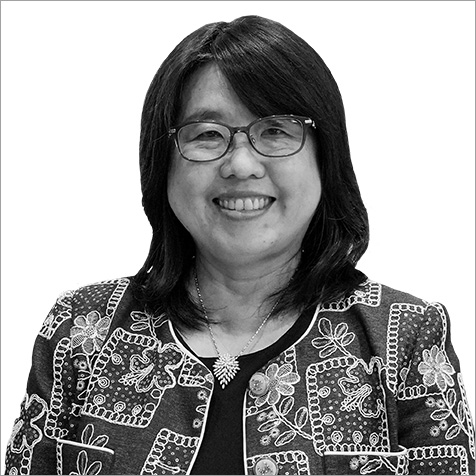
“It creates a two-way exchange of information where older workers contribute experience and institutional knowledge, and younger workers help them to adapt to technological change,” he says. “It can also build relationships that help overcome any tendency towards ageism.”
Lay Keng Tan FCPA, formerly Malaysia people advisory services (PAS) tax leader at EY, has experienced the benefits.
“During my AI training, I hit a roadblock on a specific module,” she says. “I reached out to one of my younger managers, who quickly clarified what I needed to do. I believe that true wisdom, especially as you age, lies in having the humility to ask younger generations for help and recognizing that mentorship is a two-way street.”
Reasons to stay

Tan spent over two decades at EY Malaysia leading the local practice. She also headed the Asia-Pacific PAS business for 18 months, overseeing more than 100 partners and 3000 professionals. After 37 years with the firm, she retired at the end of June this year — but retirement was short-lived.
Almost immediately, she took on a new role as COO of the Sustainable Finance Institute Asia.
“I am one of the fortunate ones who still want to keep working,” she says. “I want to continue doing something meaningful and purposeful, both for the community and for my own growth.”
In Malaysia, some companies encourage leaders to step aside at retirement age, creating space for the next generation to move into leadership roles. In others, senior leaders approaching retirement are asked to stay on to help prepare their successors. During this handover period, providing the right support and empowerment is critical.
“A smooth transition is important for business continuity,” Tan says. “A big part of leadership is developing others to take over when you leave. I take that responsibility seriously, and I believe every member of my senior team is at least as capable as I am.”
The importance of culture
For employees, the psychological impact of delaying retirement depends on several variables.
“Continuing work can be associated with higher wellbeing indicators such as life satisfaction and better physical health — but that only applies where there is a choice,” says Daniela Andrei, associate professor in the School of Management and Marketing at Curtin University.
“Our data shows that about one third of retirees consider their retirement involuntary irrespective of their age when they retire. These people typically have worse mental and physical health indicators and adjust less well to retirement.”
"Continuing work can be associated with higher wellbeing indicators such as life satisfaction and better physical health — but that only applies where there is a choice."
For those who do choose to work, the culture of the organisation is critical to both their wellbeing and their productivity.
“In research, we call this successful ageing at work,” Andrei says. “Professor Sharon Parker and I developed a framework to support this: Include, Individualise, Integrate.
“In my view,” she continues, “employers need to encourage leaders to create and support environments where [cultural] issues are not tolerated.”
The advantages of a multi-generational workforce
How organisations can prepare
Richard Webb, superannuation lead at CPA Australia, suggests three ways that organisations can prepare for the changes ahead.
- Judge people by what they can do, not by their age. Focus on the skills, knowledge and capabilities that employees bring to their roles rather than making assumptions based on age. By assessing people on what they can do, businesses can make better workforce decisions and make greater use of the talents available to them.
- Capture knowledge. Document the experience, corporate knowledge and know-how of older employees, regardless of their retirement plans.
- Plan for employee departures. Strengthen talent management and succession planning so the organisation is prepared when employees retire or move on. Good workforce planning helps to align staffing needs with both the organisation’s financial resources and its long-term strategic goals.
“Organisations that view experience in the same way they do innovation are going to have a clear competitive advantage in the decade ahead,” Webb says. “The winners will be those that combine the wisdom of experienced employees with the possibilities created by new technology.”
A framework for successful ageing at work

Daniela Andrei, associate professor in the School of Management and Marketing at Curtin University, and her colleagues developed a framework to support successful ageing at work. The framework has three pillars: Include, Individualise and Integrate.
Include means creating an environment in which workers are welcomed, accepted for their uniqueness and fairly treated.
Individualise focuses on maintaining job quality and the fit between the job and the person. “What constitutes a good job shifts as we get older,” Andrei says. “We cannot expect people of different ages to work in exactly the same way.”
Integrate is understanding how to manage different age groups. “We see that the perception of age bias and discrimination is consistently linked to higher turnover,” Andrei says. “Even things that might be dismissed as minor jokes and ambiguous comments can have a huge impact on how comfortable older workers feel.
“I have interviewed many recent retirees from the financial sector and I was surprised by how often they told me that the decision to retire was quite sudden — a reaction to negative experiences and age-based discrimination.”
Production credit
Banner image Moor Studio via Getty Images