How Indigenous governance offers lessons for modern accounting


Loading component...
At a glance
- Accounting can be a core governance tool shaping decisions, priorities and definitions of success within and outside of organisations.
- Indigenous governance highlights the need to embed social, cultural and environmental considerations into decision-making.
- Benjamin Murray CPA says that accountants can learn from Indigenous business governance to adopt a broader, more holistic approach.
Accounting is often described in functional terms as compliance, assurance and financial reporting. These are important factors, but Benjamin Murray CPA suggests that they are far from the whole story.
Over decades of work with Indigenous organisations, Murray, a descendAnt of the Anaiwan people in northern New South Wales, has come to see the profession differently.
Rather than as a support function that sits alongside governance, accounting is one of the primary tools through which governance itself is exercised, he says, and shapes what organisations pay attention to. It influences what counts as success, what risks are recognised, what decisions are made and whose interests are prioritised.
Murray has contributed at a broader, system-wide level to the design and implementation of governance frameworks. That has brought into sharp relief the realisation that Western accounting is not neutral, he says.
The discipline is instead built on a particular worldview. “Western governance systems prioritise efficient, effective financial performance. Those prioritisations are deeply embedded in accounting itself.”
In the Indigenous business governance space, reporting and accountability involve extra layers of complexity. Indigenous governance frameworks assume a broader set of considerations, including the intergenerational, cultural, environmental and social impacts of business decisions.
These are matters that have only relatively recently appeared on the radar of Western businesses and the structures around them, through ESG reporting and carbon emissions requirements.
While Western systems are increasingly incorporating elements generally defined as being related to sustainability, Murray suggests that these elements may often be treated as secondary.
“They can sometimes seem like something supplementary,” he says, “something reported on after decisions have been made.”
That sequencing, he argues, misses the point. “Why report on social and environmental outcomes when those outcomes were not factored into the decision-making process in the first place? If the outcomes you report on were not considered, then reporting risks becoming a retrospective narrative rather than a genuine expression of priorities.”
This distinction is where Indigenous governance offers valuable lessons for non-Indigenous organisations. Meaningful governance requires alignment between an organisation’s identity and purpose, its decision-making and its reporting.
When that alignment exists, reporting is authentic — not because it is more detailed, but because it reflects an organisation’s fidelity to its identity and purpose.
Expanding the pipeline of Indigenous accountants
A social practice
Murray sees accounting as operating at the intersection of multiple fields including information technology, human resources, legal compliance and organisational design. Accountants must understand how the various fields interact across a business and within regulatory frameworks.
“The holistic perspective is a strength of accounting,” he says. “It allows you to see how a decision in one field intersects with other fields, and forces you to turn your attention to whole-of-organisation consequence.
“You do not need to be a specialist in a particular field. But you do need to understand the place of that field in the system as a whole, and how it might affect governance, reporting and accountability.”
This interdisciplinary approach has shaped Murray’s view that accounting is, in a very real sense, a social practice. It is a practice that operates within organisations, relationships and communities. “Accounting is not neutral or purely technical,” he says. “It is built inside social spaces and social relationships.”
This becomes especially clear in Indigenous organisations, where organisational boundaries often overlap with community life. Decision-makers live in the communities that experience the consequences of those decisions.
“The important relationships are not just economic,” Murray says. “They are social. That changes how accountability is experienced.”
In this context, trust is not a by-product of good governance, but a prerequisite. When trust, not just within economic markets but within communities, becomes a guiding consideration, accounting still requires strong technical rigour. But it must also be paired with an ability to navigate complex social dynamics without compromising ethical and professional obligations.
Murray’s work in governance, including a recent role with the Office of the Registrar of Indigenous Corporations, involves understanding how various elements interact across an organisation and a framework. Then he designs infrastructure that can work within that framework, as well as satisfy regulatory requirements.
“I take a step back and look at it in a more strategic way around what the needs are, costing the needs, thinking about the various consequences,” he says. “I think this is the advantage of being a CPA. You can understand and add value in a lot of different corporate functions.”
This broader view has helped to shape Murray’s career beyond traditional accounting. It has led him to areas such as IT systems and organisational design, into spaces where accounting training is not always obvious, but where its value can be profound.
For those in accounting who expect their reporting to impact decisions, a wider, multi-discipline view that takes stakeholders outside the business into account is increasingly essential, he believes. So much so, in fact, that Murray says accounting should be considered a fundamentally social practice.
Diverse thought
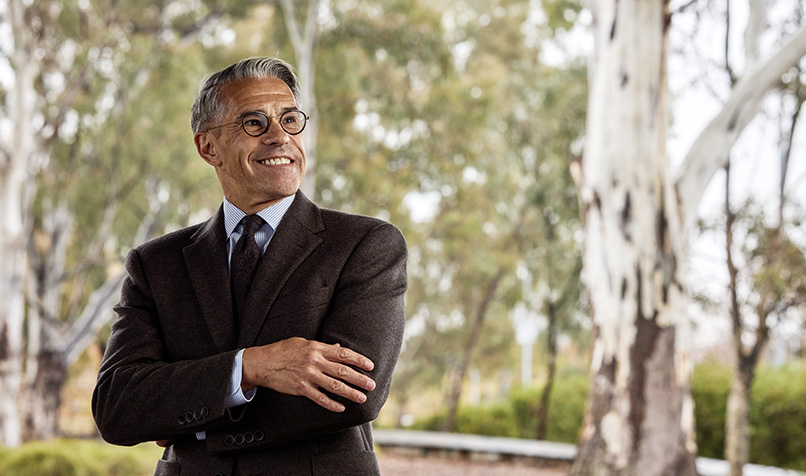
A constant theme in Murray’s leadership approach is diversity — though not in a narrow or tokenistic sense.
“When we talk about diversity, what really matters is diversity of thought,” he says. “You might have people from different ethnic groups who still approach problems in the same way.”
Education, social class, professional training and institutional incentives can often homogenise thinking, even across people in diverse categories. Without genuine differences in how problems are framed and challenged, Murray suggests, diversity risks becoming superficial.
“Genuine diversity shows up in how people frame issues. It is in the assumptions they question and the solutions they consider possible.”
At its core, this mindset reflects Murray’s belief that governance and reporting are not purely technical exercises. Instead, they are deeply human ones. What does a conscious, deliberate approach to diversity look like in practice?
First, it is about combining technical experts in particular areas — legal, accounting, HR, IT — with technical experts from other areas. Then it requires the introduction of people who understand the broader organisational function and strategy, and those with a firm grasp on the community impact of organisational decisions across all impacted communities.
“An IT problem is not just an IT problem,” he says. “It can affect all of your systems and a wide range of stakeholders.”
Of course, this mindset is particularly important when designing systems that will be used by diverse groups of people, each with their own expectations, constraints and ways of working.
Diversity, Inclusion and Belonging
Organisational introspection
Many Indigenous organisations operate within a policy environment that emphasises self-determination.
According to the Australian Human Rights Commission, “self-determination is an ongoing process of ensuring that peoples are able to make decisions about matters that affect their lives.
Essential to the exercise of self-determination is choice, participation and control”. This is occurring at the same time that longstanding structural inequality is being navigated. Many Indigenous businesses are located in regional and remote areas, for instance, often with limited access to professional services and infrastructure.
“There are frequently real constraints,” Murray says. “Access to accountants, long-term staff and good advice is not always there.”
Many Indigenous organisations are also delivering essential services as they face challenging regulatory and funding obligations with little support.
“It is demanding,” Murray says. “You are dealing with multiple accountabilities that do not necessarily pull in the same direction.” Yet those pressures also encourage deeper reflection before decisions are made, forcing governance discussions to extend beyond simple financial metrics, he says.
The combined effects of a push for self-determination and the need to fit into a particular governance framework lead to a fine balancing act that Indigenous entities must master. They must remain accountable to their communities while meeting formal regulatory requirements.
They must maintain trust and cultural grounding while producing financial reports that comply with relevant standards.
“Because the people who are recipients of the services you deliver see and feel the results of those decisions, there is a kind of immediacy to that accountability,” Murray says.
However, the deeper discussions around these challenges engages decision-makers in the consideration of much more than efficiencies and profit, he argues. That process of organisational introspection potentially makes those entities more sustainable, more trustworthy and better members of society.
Tracy Thelander CPA: Finding purpose in accounting
Lessons for the profession
For Murray, the experience of Indigenous organisations offers important lessons for accountants working in all sectors. There is great opportunity, demonstrated within the Indigenous business space but scalable outside of it, for the profession to embrace a more holistic view of how accounting offers value, he says.
While accounting has a focus on financial metrics, it could equally prioritise intergenerational, social, cultural and environmental outcomes, all of which should then guide organisational decision-making.
There is value for accountants working in any context to reflect on the nature of their client relationships and the assumptions and expectations that underpin the delivery of the work.
“This is really about recognising that accountants are not just technical service providers, but participants in governance,” Murray says. “They should be asking whether current ways of working acknowledge that reality.”
That reflection may challenge conventional business models, including approaches that leave little room for deeper engagement or long-term value creation.
“A trusted relationship will always be of greater value than a purely transactional one,” he says. At the heart of this view is the recognition that accountants are not merely chroniclers of organisational financial performance, but are active participants who shape that performance.
“I think it is important for accountants to recognise how influential their role is,” Murray says. “This includes the accountant asking what role they want to play, and analysing whether the relationship is set up to allow for that.”
It could lead to a reconsideration of standard business models such as strict billable-hour structures, particularly in situations where standard approaches do not align with client needs.
“Some entities that you have to work with will be challenging,” he says. “What scope do you have to step outside of that for a bigger, or a different, outcome?
“There is scope for the broader business community to learn from governance frameworks that value things beyond what appears in standard financial reports. Accountants are uniquely placed to help build those frameworks if they are willing to step into that responsibility”.
One piece of advice
“Technical accounting matters, but governance works best when accountants help Indigenous organisations build and maintain accountability systems that reflect their unique identities and purposes.”