Loading component...
At a glance
The quantitative benefits of AI can be substantial, but relying solely on metrics such as time saved in relation to EBITDA risks overlooking its broader impacts. The additional value lies in its ability to expose inefficiencies, challenge entrenched processes and open the door to entirely new ways of working.
When used well, AI becomes a catalyst for deeper insight and more informed decision‑making over the long term.
Businesses are working through this. Nevertheless, there are ways to measure the impact AI is already having in an organisation that will likely become more sophisticated over time. Here are five.
1. Link AI investment to problem solving, not task completion
Many organisations struggle to track the return on AI because they measure activity — such as the number of tasks automated — rather than outcomes.
A more effective way to assess ROI is to look at whether AI is helping people solve real business problems and changing how work gets done.
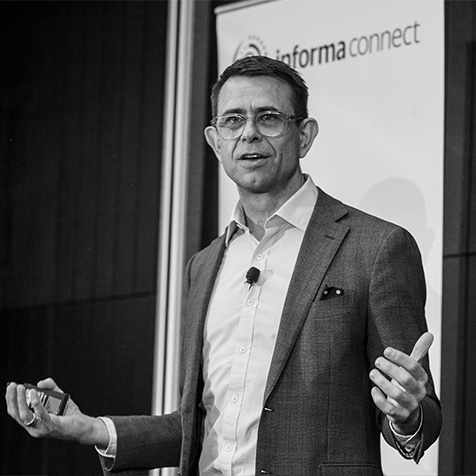
“Organisations are treating AI as a special-purpose technology to be applied to specific tasks. AI’s full benefit comes from enabling your workforce to apply it to an ever-increasing range of work — not from automating a handful of predefined use cases,” says future-of-work expert Dr Sean Gallagher, founder of Humanova.
This distinction matters when evaluating impact. One major HR software company invested in in-house AI training focused on prompting and use cases but struggled to see meaningful change, which made returns difficult to quantify.
“They were not getting any real behavioural change,” Gallagher continues. “We rebooted their program around AI intuition, which is an understanding of how AI processes context and thinks, which helps people know when and how to collaborate with it effectively.
"Organisations are treating AI as a special-purpose technology to be applied to specific tasks. AI’s full benefit comes from enabling your workforce to apply it to an ever-increasing range of work — not from automating a handful of predefined use cases."
“We taught people how to apply AI to solving problems, not just performing tasks. The result was 90 per cent satisfaction and a wide range of new use cases that excited employees.”
AI has its place, but AI delivers real value when it is deployed as an enterprise wide initiative aligned to strategy. If it does not link to strategy, it should not proceed.
2. Use integration and compliance metrics
AI has promise across many applications, but three aspects need to be addressed before AI can deliver a return: data silos, security and trust.
“Most departments are still working in silos and using their own AI. The finance team is using its own AI, the fraud team is using its own AI and customer onboarding is using their own as well,” says Goh Ser Yoong, head of compliance at global digital transformation company, Advance.AI.
“Organisations can prove they have overcome data silos and security barriers by tracking initial metrics in integration, compliance and trust. When AI models start pulling from unified datasets that are compliant, audits get faster, breaches could reduce and customer confidence rises. That’s when ROI [return on investment] becomes visible beyond just financial savings.”
AI delivers the greatest value when it is scaled across the organisation, not implemented in departmental silos, with impact measured at an enterprise level.
It should be noted that different AI engines have different strengths, making it important to match the tool to the task. For example, some AI platforms excel at generating and reviewing code, while others are better suited to tasks such as content creation, data analysis or workflow automation.
3. Monitor AI performance metrics to understand where it creates capacity
Understanding how AI is freeing up capacity and saving time can help with forward planning.

“Measuring ROI for artificial intelligence adoption requires careful alignment with expected benefits. For most organisations, the primary benefit from enterprise AI tools is time saving,” says Dr Michael G Kollo, chief AI transformation officer at Qualitas, an ASX-listed Australian alternative real estate investment manager.
“Tracking metrics such as the number of messages, projects or custom GPTs [generative pre-trained transformers] helps technology leaders identify where capacity is being created across teams and activities.”
This supports more informed decisions about resource allocation and future AI investment.
4. Calculate additional value that is being added
It is important to avoid asking AI to perform unfamiliar tasks, because it is impossible to evaluate the output without extensive human involvement.

“Think about the task you’re using AI for, because that is going to drive the outcome,” says Michael Davern, professor of accounting and business information systems at The University of Melbourne.
“I get worried about macro measures such as hours saved. It might be OK to measure AI’s effects that way from an efficiency perspective, but there is a lot that could mess up EBITDA and make it impossible to meaningfully interpret what you’re getting out of AI.”
For instance, a large language model AI can draft an email in 20 seconds and agentic AI will enable some automation that may provide efficiency gains. But there is another value to the efficiency, because the person who previously completed the given task can now use their time to add value to the work the AI has performed.
This needs to be taken into account when measuring AI’s ROI.
The real value of AI lies in how well it connects people, processes and technology to improve productivity, efficiency and resilience. A practical example is using AI to retain the knowledge of a retiring employee, which reduces disruption and supports faster upskilling of new staff.
5. Evaluate customer-facing innovation
Achieving ROI on AI is about the nexus of intelligence, data and humans. Retail credit underwriting is an example, as it involves multiple micro-decisions such as gathering applicants’ data, assessing risk and pricing products.

“Tasks such as interpreting incomplete documents, verifying income irregularities or resolving ambiguities in credit histories that were once performed manually can now be enhanced with AI,” says Swinburne University associate professor, Dr Dimitrios Salampasis.
“While this doesn’t represent full automation, enhancement with AI allows you to document classified documents, extract income information and detect fraud or simulate scenarios in a much more sophisticated way,” he says.
When it comes to evaluating AI use case benefits, removing structural or manual bottlenecks makes the workflow more consistent.
"It is more than just accelerating steps to yield measurable returns, which are not only financial. It is also about customer-facing innovation that in turn improves customer retention and customer acquisition."
“It is more than just accelerating steps to yield measurable returns, which are not only financial,” Salampasis continues. “It is also about customer-facing innovation that in turn improves customer retention and customer acquisition.”
Measuring the improvement AI delivers to the customer experience is critical. Making life easier for customers can strengthen loyalty and deliver long term commercial benefits.